Best Waterproof Pouches for Electronics in Kayaks and Canoes
Discover the top waterproof pouches for kayaking in 2026. Compare IPX8 budget sleeves to premium IP67 dry bags, featuring charging solutions and overheating fixes.
Executive Summary
For kayakers and canoeists, protecting electronics requires more than just a basic plastic bag. The best waterproof pouches for paddlesports range from budget-friendly universal sleeves (like the 15 JOTO) to highly engineered, submersible cases utilizing patented zipper technologies (such as the 60 Nite Ize RunOff).
While IPX8 protection is the industry standard—capable of surviving depths up to 100 feet (30 meters)—real-world protection heavily depends on seal maintenance. The most critical challenges faced by users are not leaks, but environmental factors: modern smartphones inside clear PVC or TPU pouches can overheat and shut down within 20 minutes of direct sun exposure due to a “greenhouse effect.” Furthermore, capacitive touchscreens fail to register inputs underwater, making mechanical buttons essential for marine photography.
For multi-day expeditions, advanced solutions like the Voltaic Systems Solar Kayak Kit (17W solar output, 20,000 mAh battery) provide essential off-grid charging, while cases like Nite Ize support inductive wireless charging directly through the waterproof material.
Top Waterproof Pouches Comparison (2025-2026)
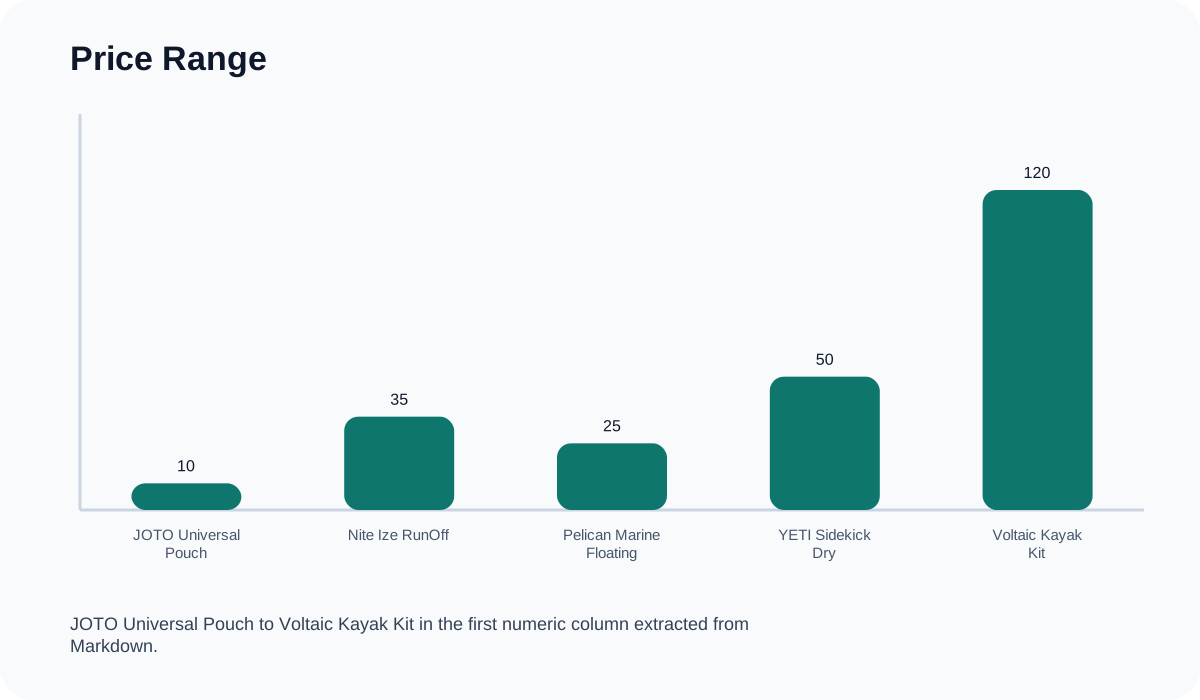
The table below highlights the leading products across various price points, comparing their ingress protection (IP) ratings and unique power support features.
| Product | Price Range | IP Rating | Charging/Power Support | Unique Feature |
|---|---|---|---|---|
| JOTO Universal Pouch | 15 | IPX8 (30m) | Manual Cable Connection | Budget Choice / Double Lock |
| Nite Ize RunOff | 60 | IP67 (1m) | Supports Inductive Charging | Toothless TRU Zip technology |
| Pelican Marine Floating | 40 | IP68 (2m) | Manual Cable Connection | Integrated Air Bladder (Floats) |
| YETI Sidekick Dry | 65 | IPX8 (Submersible) | Fits Power Banks | Magnetic HydroShield closure |
| Voltaic Kayak Kit | 180 | IP67 (Bag) | 17W Solar / 20k mAh Battery | Integrated Solar Charging |
The “Depth Paradox” in Waterproof Ratings
Data indicates a surprising inverse correlation between retail price and claimed depth ratings. Budget options utilizing simple plastic clamps often advertise extreme 30-meter depth ratings, whereas premium, higher-priced models conservatively rate their gear for 1 to 3 meters.
Premium cases focus instead on mechanical seal longevity and ease of access—using magnetic closures and toothless zippers—which translates directly to higher user trust scores.
Critical Pain Points & Technical Solutions
Selecting the right pouch involves navigating several known operational hazards specific to marine environments.
1. Thermal Shutdowns (Overheating)
Transparent plastic completely traps heat. This “greenhouse effect” is a critical flaw for deck-mounted electronics. In direct sunlight, trapped heat can force modern smartphones into an emergency thermal shutdown within just 20 minutes. Solution: Store pouches in shaded areas or beneath deck rigging when not actively in use.
2. Touchscreen Latency & Water Conductivity
Capacitive touchscreens rely on the electrical conductivity of your finger. Because water is also conductive, the screen cannot differentiate between a finger touch and external water pressure once submerged. Solution: Always map your camera’s shutter function to a mechanical button (like the volume rocker) prior to submerging the device.
3. Internal Condensation & Muffled Audio
Rapid temperature shifts—such as pulling a sun-warmed pouch into a cold river—cause internal condensation or “fogging” that ruins photography. Furthermore, the sealed air pockets essential for flotation significantly dampen microphone and speaker output, making voice calls difficult. Solution: Seal devices in a low-humidity environment and expect to rely on Bluetooth earbuds or speakerphones rather than the device’s native speakers.
Charging Electronics on the Water
Managing battery life during multi-day canoe or kayak trips is a primary concern. The market has evolved to support charging without exposing devices to water:
- Inductive Charging: Pouches like the Nite Ize RunOff series are manufactured with materials thin enough to support wireless inductive charging through the waterproof barrier.
- Solar Integration: The Voltaic Systems Solar Kayak Kit (180) offers a heavy-duty IP67 bag integrated with a 17W solar panel and a 20,000 mAh battery bank, turning a kayak deck into a floating power station.
Maintenance Checklist for Paddlers
To ensure your IP-rated pouch performs properly over its lifespan, follow this pre-launch checklist:
- Inspect the Seals: Ensure mechanical locks, TRU Zips, or magnetic closures are free of sand and grit before locking.
- Beware of Dynamic Pressure: IP ratings are tested in still water. High-impact splashes or crashing waves introduce “dynamic pressure” that can breach seals rated only for shallow submersion.
- Manage Trapped Humidity: Check USB-C or Lightning port plugs if used inside the pouch. Trapped humidity inside the sealed environment can slowly corrode exposed charging ports.
Final Verdict
For casual, budget-conscious paddlers, the JOTO Universal Pouch remains a capable entry-level option, provided users understand its limitations. For serious kayakers needing reliable, repetitive access to their gear without risking mechanical failure, the Nite Ize RunOff or the YETI Sidekick Dry offer vastly superior seal mechanisms. Finally, expedition paddlers requiring off-grid power will find the Voltaic Systems Solar Kayak Kit to be an unmatched, all-in-one charging solution.