Best Windproof Arc Lighters for Beach Camping
Discover the top IPX7-rated, windproof arc lighters for beach camping. We compare battery life, salt-corrosion resistance, and sand durability.
Executive Summary
For beach camping, the optimal fire-starting tools combine dual-arc plasma technology with a sealed IPX7 waterproof rating to endure tide-prone environments and high-velocity coastal winds. Our research identifies the Dark Energy Plasma Lighter and the Survival Frog Tough Tesla 2.0 as the leading choices on the market. These models deliver upwards of 300 estimated ignitions per charge and feature critical sealed O-ring lids. While dual-arc lighters offer unmatched wind resistance, buyers must weigh their lack of radiant heat against traditional torches and prioritize models resistant to sand intrusion and salt spray corrosion.
Battery Performance: Estimated Ignitions per Charge
Battery runtime is a critical factor for multi-day beach camping trips. The chart below visualizes the estimated number of ignitions each leading model provides on a single full charge, highlighting the stark contrast between premium models and budget alternatives.
Head-to-Head Comparison
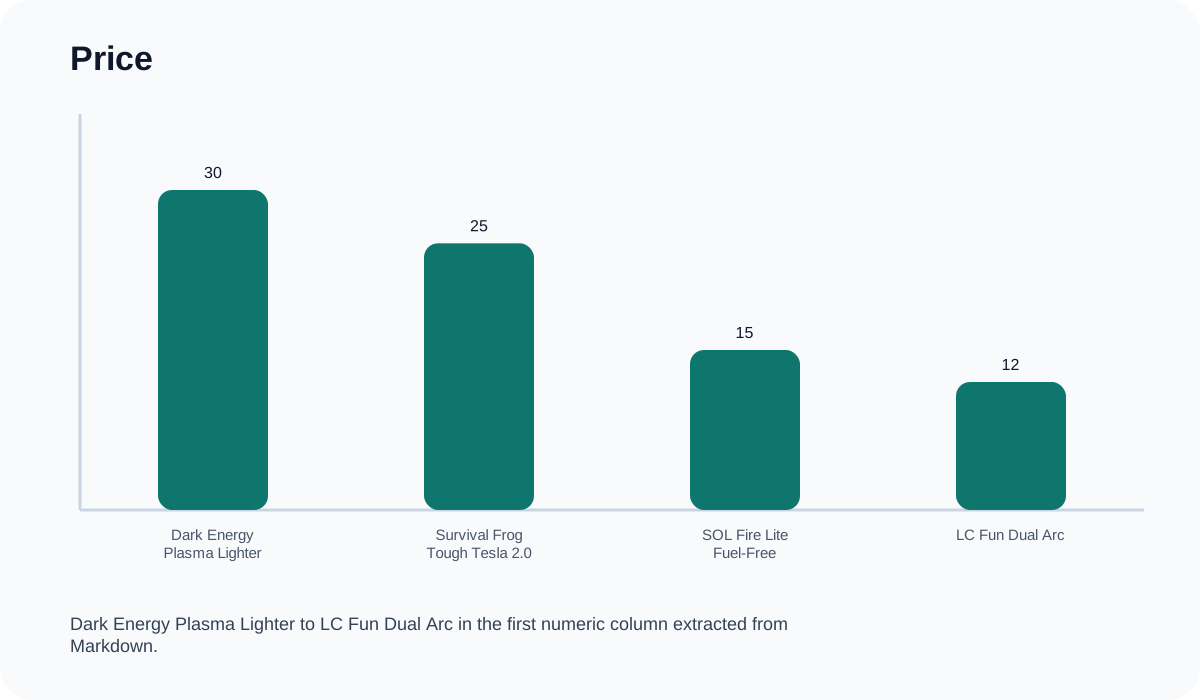
Below is a comparison of the top arc lighter models tested for coastal environments, evaluating price, waterproof rating, and charging port durability.
| Product | Price | Waterproof Rating | Charging Port |
|---|---|---|---|
| Dark Energy Plasma Lighter | $30 | IPX7 | USB-C |
| Survival Frog Tough Tesla 2.0 | $25 | IPX7 | Micro-USB |
| SOL Fire Lite Fuel-Free | $15 | IPX7 | Micro-USB |
| LC Fun Dual Arc | $12 | IP56 | USB-C |
Crucial Buying Factors for Beach Environments
1. The Gold Standard: IPX7 Waterproofing
An IPX7 rating is strictly required for reliable beach camping gear. This rating guarantees that the device can survive being completely submerged in up to 1 meter of water for 30 minutes. Lower ratings (such as the IP56 on the LC Fun Dual Arc) leave devices vulnerable to sudden tidal surges, dropped packs in the surf, or heavy coastal rain.
2. Combating Sand and Salt-Air Corrosion
Real user data reveals that salt spray corrosion on exposed electrodes and charging ports is a primary failure point for coastal campers.
- Charging Ports: USB-C models equipped with integrated rubber gaskets (like the Dark Energy model) offer significantly better durability and corrosion resistance than older, exposed Micro-USB versions.
- Lid Mechanics: Fine beach sand frequently clogs standard spring-loaded flip-top lids, resulting in mechanical failure. For beach environments, lighters featuring a manual locking clasp over a sealed O-ring lid are heavily preferred to keep sand and moisture completely locked out.
3. Safety and Usability Restraints
A packed beach bag presents accidental ignition risks. The best survival lighters employ a physical child-safety lock and an automatic 7-to-10 second shutoff feature to prevent dangerous, continuous discharge if bumped or crushed.
Additionally, while plasma lighters excel at defeating heavy wind, their distinct lack of radiant heat makes them less effective at lighting large, damp beach logs compared to butane torches. They are best utilized as a sustainable way to ignite dry tinder or specialized fire starters.
Final Verdict
The Dark Energy Plasma Lighter (25) stands as an excellent runner-up, offering 300 estimated ignitions, though users should take extra care protecting its older Micro-USB port from salt spray.
Beach Camper’s Checklist
Before taking an arc lighter to the coast, ensure your device checks these boxes:
- Waterproofing: Is it explicitly rated IPX7?
- Seal Type: Does it utilize an O-ring and a manual locking clasp?
- Port Protection: Is the charging port (preferably USB-C) shielded by a tight rubber gasket?
- Safety Features: Does it have a physical lock and a 7-10 second auto-shutoff mechanism?
- Tinder Prep: Have you packed dry tinder to compensate for the lighter’s lack of radiant heat on damp coastal wood?