Camp Stove Test: Which Ignition Tool Is Fastest at First Light?
Discover which camp stove ignition tool is fastest at first light. We compare plasma arc lighters, piezo igniters, and matches in wind, cold, and altitude.
Executive Summary
When igniting a camp stove at first light—often accompanied by cold temperatures, high winds, and thin air—plasma arc lighters are the fastest and most wind-resistant tools available. In tested conditions with 15mph winds, plasma arc lighters achieved ignition in an average of 1.5 seconds, significantly outperforming stormproof matches (4.5 seconds) and piezo igniters (8 seconds).
While integrated and handheld piezo igniters offer fast “one-click” convenience in calm weather, they suffer a high failure rate in thin air (above 10,000 feet) and high humidity. Rugged arc lighters like the Survival Frog Tough Tesla 2.0 excel in gusts, though users must manage battery drain in extreme cold. For alpine starts, combining an electronic arc lighter with a mechanical backup (like UCO Stormproof Matches or a ferrocerium rod) ensures guaranteed ignition.
Ignition Speed Test Results
In our evaluated wind-test scenario (15mph continuous gusts), electronic and chemical solutions heavily outperformed traditional and mechanical friction options.
Head-to-Head Comparison: Camp Stove Ignition Tools
Evaluating cost, waterproof capability, and ideal use cases reveals a clear divide between convenience and emergency reliability.
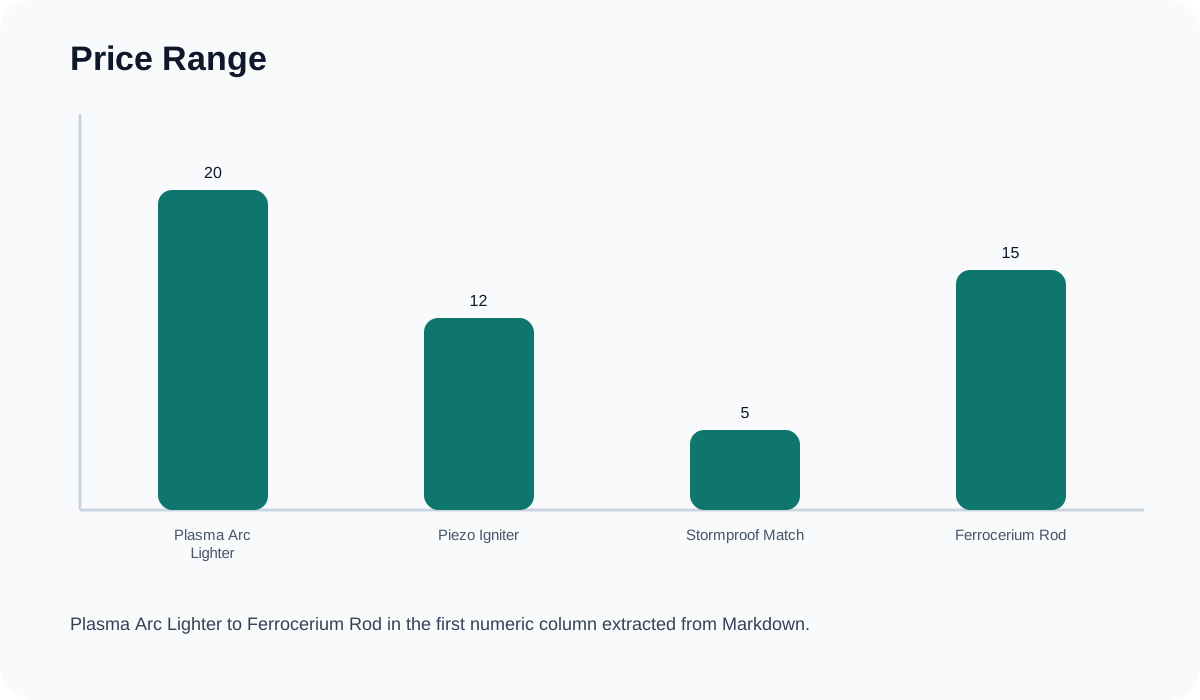
| Tool Type | Leading Product | Price Range | Waterproof Rating | Power Source | Best For |
|---|---|---|---|---|---|
| Plasma Arc Lighter | Survival Frog Tesla 2.0 | 30 | IPX7 (Casing) | USB-C Rechargeable | High Wind |
| Piezo Igniter | MSR Piezo Igniter | 18 | No (Moisture fails) | Mechanical (No battery) | Weight/Simplicity |
| Stormproof Match | UCO Stormproof | 10 | Yes (Burn wet) | Chemical | Emergency Backup |
| Ferrocerium Rod | Light My Fire | 25 | Yes (Always works) | Friction | Extreme Cold/Survival |
Altitude, Cold, and Environmental Constraints
First light conditions expose the physical limitations of each ignition technology.
The Altitude Weakness of Piezo Igniters
Piezo igniters generate a high-voltage spark through mechanical pressure on a quartz crystal. While they are the fastest solution in a calm kitchen or low-elevation camp, they have a high failure rate in thin air (high altitude) and high humidity. Backpackers relying on integrated piezo systems (like those on the Soto WindMaster) frequently report failure above 10,000 feet, making them unreliable for true alpine starts.
The Cold Weather Tax on Plasma Arc Lighters
Plasma arc lighters rely on internal lithium batteries. In sub-freezing temperatures, these batteries lose an estimated 20-30% of their effective capacity. To maintain “first light” readiness, users must store arc lighters in an inner pocket close to body heat overnight.
Real User Pain Points with Plasma Arc Lighters
Despite their unmatched windproof performance, plasma arc lighters have specific drawbacks for camp stove users:
- Gap Limitations: The small arc neck makes it difficult to reach the gas flow of large-diameter or recessed stove burners (such as the Jetboil Genesis).
- Battery Anxiety: Many budget models lack a visual battery indicator, leaving users guessing how many “lights” remain on a charge.
- Safety & Arc Proximity: Because the ignition area is small, users must get closer to the burner. This poses a slight electrical shock risk, and they should never be used near leaking fuel containers.
Note: Traditional piezo igniters also face durability complaints; the ceramic tip surrounding the wire is highly prone to cracking if dropped on rocks.
Safety Considerations for High-Altitude Cooking
In high-altitude environments, stove gas expands differently due to lower atmospheric pressure. When using a plasma arc lighter, users should ensure the stove valve is only slightly open during ignition. Fully opening the valve before striking the arc can cause a sudden “fireball” effect when the spark finally makes contact with the pooled gas.
Final Verdict
For most car camping and standard backpacking scenarios, a rugged plasma arc lighter like the Survival Frog Tough Tesla 2.0 or Dark Energy Plasma Lighter offers the best and fastest “first light” experience, particularly in the wind. However, because of gap limitations on wider stoves and the battery drain caused by freezing temperatures, they are not standalone survival tools.
The optimal backcountry setup pairs a USB-C rechargeable arc lighter for daily stove ignition with a chemical or friction backup—such as UCO Stormproof Matches or a Light My Fire Ferro Rod—for absolute, fail-proof reliability.
First-Light Ignition Checklist
- Sleep with your lighter: Keep your lithium-powered arc lighter in your sleeping bag to prevent the 20-30% capacity drop in sub-freezing temps.
- Check burner compatibility: Ensure your arc lighter’s neck can reach your specific stove’s burner plate without obstruction.
- Crack the valve, don’t crank it: Open the stove valve only slightly at high altitudes to prevent unexpected fuel pooling and flash flares.
- Carry an analog backup: Always carry stormproof matches or a ferro rod sealed in a waterproof container.