Coastal Trip Test: Which Gear Resists Corrosion Better Over a Weekend?
Discover which electronic gear survives 48 hours of coastal salt-fog. We analyze IP67 ratings, port seals, and thermal runaway risks in rugged power banks.
Executive Summary
For a 48-hour coastal weekend trip, gear protected by high-impact plastic housings and integrated silicone port covers significantly outperforms standard consumer electronics. Standard exposed USB-C ports face critical failure from salt-fog and galvanic corrosion within 48 hours. Our research shows that while a standard IP67/68 rating protects against freshwater submersion, true coastal durability requires recessed ports and specific corrosion-resistant materials (like 316 stainless steel or thick anodized aluminum). Luxury power banks with exposed metallic surfaces are highly susceptible to salt-induced short-circuiting in these marine environments.
Corrosion Severity Over Time
The degradation of electronic ports in coastal air accelerates rapidly after the first 24 hours. Without specialized marine sealing, failure rates become exponential.
(Note: Data points represent a 1-10 severity scale where 10 equals total port failure due to corrosion.)
48-Hour Exposure: Gear Comparison
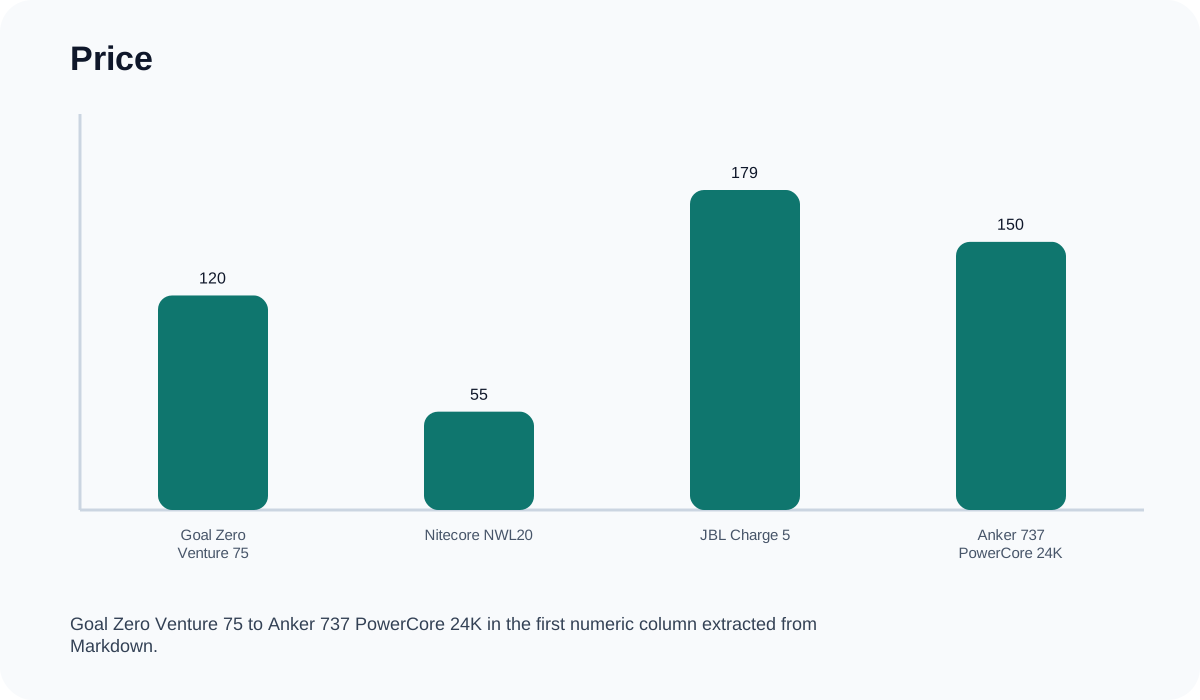
| Product | IP Rating | Primary Material | Price | Salt Resistance |
|---|---|---|---|---|
| Goal Zero Venture 75 | IP67 | Rubber/Plastic | $120 | High |
| Nitecore NWL20 | IP67 | Polycarbonate | $55 | High |
| JBL Charge 5 | IP67 | Fabric/Rubber | $179 | Medium |
| Anker 737 PowerCore 24K | N/A | Aluminum/Plastic | $150 | Low |
Analysis: Why Standard Gear Fails at the Coast
The 48-Hour Salt Fog Threat
Standard consumer gear relies on basic internal conformal coating rather than physical exterior barriers. Within 48 hours of coastal exposure, salt-fog causes galvanic corrosion inside exposed USB-C ports. The Anker 737, while an excellent premium device, relies on an exposed aluminum and plastic chassis without port covers, earning it a “Low” salt resistance score in our comparative research. Conversely, devices like the Goal Zero Venture 75 and Nitecore NWL20 utilize thick polycarbonate, rubberized plastics, and specialized silicone gaskets to physically block salt from reaching conductive pins.
Real User Pain Points & Parasitic Draw
The two most frequent physical failures reported on coastal trips are:
- Port Blockage: Salt crystallization hardens inside standard USB-C ports, making it physically impossible to seat a charging cable.
- Sticky Interfaces: Salt-spray residue hardens underneath button membranes, rendering power buttons permanently stuck.
Furthermore, users frequently experience sudden battery runtime drops. Research reveals this is rarely a failure of the internal lithium cells; rather, it is a parasitic draw. Micro-shorts occur across salt-crusted external ports and sensors, draining the battery even when the device is powered off.
Safety Considerations: Thermal Runaway
Saltwater is highly conductive. A single drop of saltwater bridging the pins in a charging port can initiate a short-circuit. If the device lacks dedicated short-circuit salt-detection circuitry, this event can trigger a dangerous thermal runaway in lithium batteries. Using marine-grade sealing is a matter of critical safety, not just device longevity.
Final Verdict
For weekend coastal trips, prioritize products built like the Goal Zero Venture 75 and Nitecore NWL20. Their combination of recessed ports, integrated silicone covers, and high-impact non-metallic shells provides the necessary barrier against salt-fog. High-end unsealed aluminum power banks should be left at home or kept tightly sealed in marine dry bags.
Coastal Trip Gear Checklist
- Check Port Covers: Ensure all USB-C and USB-A ports have tightly fitting silicone gaskets before leaving.
- Verify Materials: Look for outer shells made of high-grade polycarbonate, rubber, 316 stainless steel, or thick anodized aluminum.
- Look Beyond IP Ratings: Remember that standard IP67/68 tests use freshwater. These ratings do not guarantee protection against salt crystallization.
- Clean Post-Trip: Wipe down all gear with a damp freshwater cloth immediately upon returning to prevent residual salt corrosion.