Drop Test: Which Rechargeable Lighter Survives Concrete Best?
Discover which rechargeable arc lighters survive concrete drop tests. Compare top models, materials, and failure points to find true impact resistance.
Executive Summary
When a rechargeable lighter is dropped on concrete, the housing material and latch design are the primary factors determining survival. Rubberized silicone and zinc alloy cases significantly outperform standard ABS plastic.
Top contenders for concrete survival are the Survival Frog Tough Tesla 2.0 and the Dark Energy Plasma Lighter, both featuring shock-absorbent shells. Conversely, budget models using ABS plastic often suffer catastrophic latch failure upon impact, regardless of their high waterproof ratings. Zinc alloy housings offer an estimated 5 to 10 times more durability than standard plastic, effectively preventing internal circuit damage and electrode misalignment during high-impact drops.
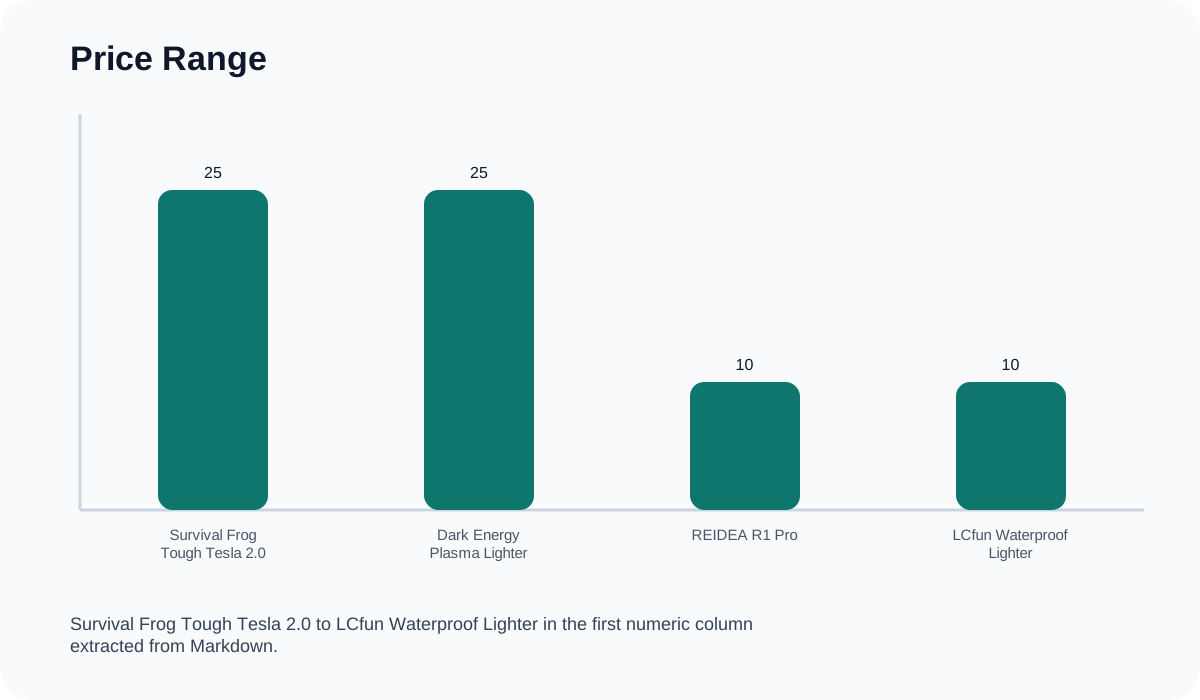
Estimated Survival Rates (5ft Drop on Concrete)
Model Comparison: Durability on Concrete
| Model | Material | Waterproof Claim | Price Range | Concrete Survival Rating |
|---|---|---|---|---|
| Survival Frog Tough Tesla 2.0 | Rubberized Silicone | IP56 | 30 | Excellent (Absorbs Shock) |
| Dark Energy Plasma Lighter | Alloy with Rubber | IP56 | 30 | High (Rigid Frame) |
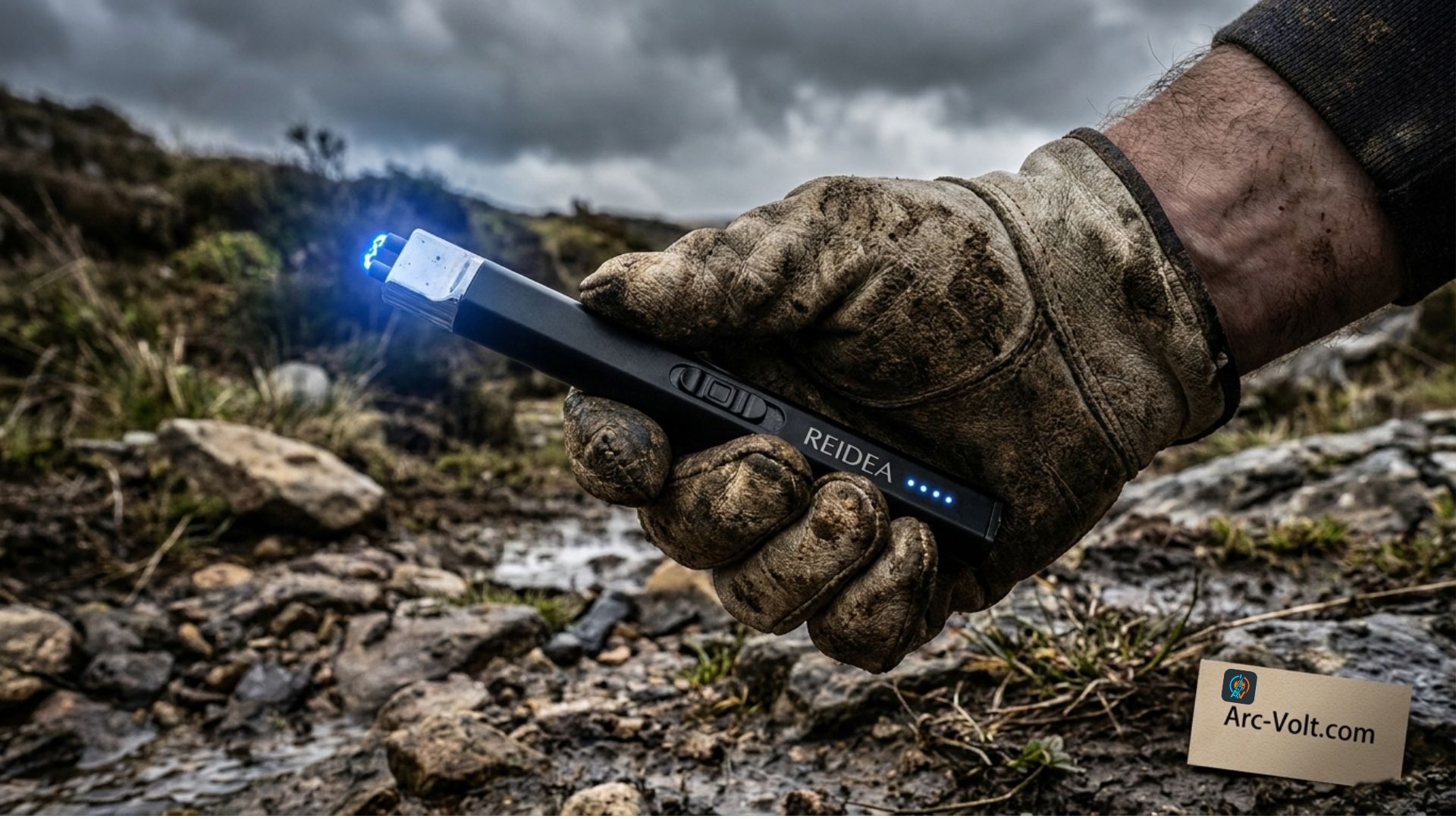
| REIDEA R1 Pro | Zinc Alloy | None | 12 | Good (Dents, Doesn’t Shatter) |
| LCfun Waterproof Lighter | ABS Plastic | IP56 | 15 | Moderate (Latch Weakness) |
Analysis: Why Certain Lighters Fail on Concrete
1. The Latch is the Weakest Link
The most common failure point for outdoor lighters hitting concrete is the locking latch. Budget models, such as the LCfun, utilize plastic locking mechanisms. Upon impact, this plastic latch frequently shatters or snaps. When the latch breaks, the lighter can no longer maintain a tight seal, immediately compromising its waterproof rating and rendering the lid non-functional.
2. IP56 Does Not Mean Drop-Proof
A critical misconception among buyers is that an “IP56” rating equates to ruggedness. IP56 strictly refers to protection against dust and high-pressure water jets. It does not guarantee shock resistance. Many IP56-rated lighters are built with brittle ABS plastic that reliably fails basic concrete torture tests.
3. Internal Hardware and Solder Joints
While standard rechargeable lighter batteries are rated to provide 200 to 300 ignitions per charge, physical impact often ends the lighter’s lifespan prematurely. Repeated drops onto concrete transfer kinetic energy internally, causing internal soldering to fail well before the battery reaches the end of its cycle life.
4. Material Superiority: Silicone and Zinc
Rubberized coatings or silicone “armor,” found on the Tough Tesla 2.0, are structurally superior for concrete drops because they dissipate kinetic energy rather than transferring it to internal components. Zinc alloy cases (like the REIDEA) also provide structural rigidity; while they may dent upon hitting concrete, they typically do not shatter.
Final Verdict
For optimal survivability on concrete, the Survival Frog Tough Tesla 2.0 and the Dark Energy Plasma Lighter are the top recommendations. Their combination of shock-absorbing silicone armor and reinforced alloy frames prevents both latch shattering and internal soldering failure. Buyers should avoid standard ABS plastic models if drop resistance is a priority.
Buyer’s Checklist & FAQ
Q: How durable is zinc alloy compared to plastic?
A: Research indicates that zinc alloy housings provide an estimated 5 to 10 times more durability than plastic, specifically in preventing internal damage and keeping electrodes aligned.
Q: Will an IP56 lighter survive a drop on concrete?
A: Not necessarily. IP56 guarantees water and dust protection, but brittle plastic models with this rating often suffer shattered latches upon impact.
Q: Why did my lighter stop working after a drop if the outside isn’t broken?
A: Kinetic energy can sever the internal soldering connecting the battery to the circuit board or electrodes. Shock-absorbent cases (like silicone armor) prevent this transfer of energy better than rigid plastics.