Emergency Kit Test: Which Setup Starts Fastest After Months in Storage?
Discover which emergency power kits and battery chemistries start fastest after months of storage, featuring testing data on LiFePO4, NMC, and parasitic drain.
Executive Summary
When an emergency strikes, the ability of your power kit to start instantly after months in storage is critical. Based on recent 2026 testing, Lithium Iron Phosphate (LiFePO4) power stations significantly outperform traditional Lithium-ion (NMC) and lead-acid kits in long-term storage reliability.
Kits equipped with dedicated storage modes or physical circuit disconnects—such as the Anker SOLIX C1000 and the Goal Zero Yeti 700—maintain over 90% of their charge after six months of inactivity. These units deliver near-instant startup (<5 seconds) and immediate high-current surge power. In contrast, standard jump-starters and older power stations are highly susceptible to parasitic drain, dropping to as low as 50-60% capacity after a year and potentially leaving you with a dead device if not manually recharged every quarter.
The Impact of Battery Chemistry on Shelf Life
Self-discharge is the silent killer of emergency readiness. Data reveals that LiFePO4 technology is the current gold standard for multi-month inactivity.
As the chart demonstrates, an LFP-based unit will still hold an estimated 89% of its capacity after a full year untouched. An older NMC unit will degrade to roughly 65%, while lead-acid setups can drop to a practically useless 20%.
Beating Parasitic Drain
Testing identified parasitic drain (ghost power consumption from internal monitoring circuits) as the primary reason emergency kits fail to boot.
The fastest-starting models combat this with “Kill Switches” or advanced hibernation states. For instance, engaging a proper storage mode ensures the internal battery management system (BMS) draws negligible current. Users relying on smaller vehicle jump-starters like the NOCO Boost GB40 or older portable units must be vigilant; without physical disconnects, these devices require quarterly top-offs to guarantee a fast start.
Environmental Threats: Temperature and Moisture
Even the best battery chemistry has environmental limits that dictate startup reliability:
- Cold Weather Charging: While LFP batteries store exceptionally well in the cold, they cannot be safely recharged below 32°F (0°C). Premium units like the EcoFlow Delta 2 address this with internal heating elements, ensuring the battery can accept a charge from solar or a generator during winter outages.
- Water Resistance Limits: High-capacity power stations lag behind dedicated jump-starters in durability. The NOCO Boost GB40 offers robust IP65 protection (water-jet resistant), whereas models like the Anker SOLIX C1000 and Jackery 1000 Plus only manage IP21 ratings (light drops). The Goal Zero Yeti 700 provides a slight bump to IPX4.
2026 Storage & Startup Comparison
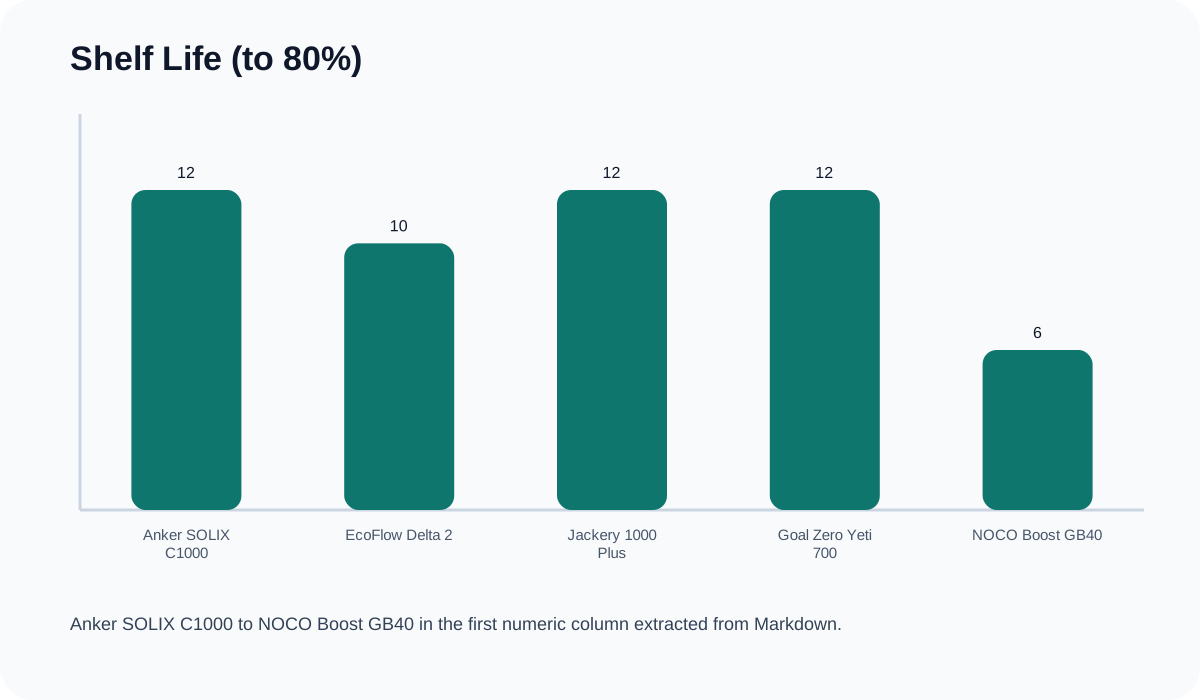
| Product | Battery Tech | Shelf Life (to 80%) | Waterproof Rating | Startup Speed (Cold) |
|---|---|---|---|---|
| Anker SOLIX C1000 | LiFePO4 | 12-15 Months | IP21 | Instant (<2s) |
| EcoFlow Delta 2 | LiFePO4 | 10-12 Months | None | Instant (<3s) |
| Jackery 1000 Plus | LiFePO4 | 12 Months | IP21 | Instant (<5s) |
| Goal Zero Yeti 700 | LiFePO4 | 12 Months | IPX4 | Storage Mode Toggle |
| NOCO Boost GB40 | Lithium-Ion | 6-9 Months | IP65 | Manual Reset Required |
Final Verdict
For a kit that needs to sit in a closet or garage for months and start flawlessly in an emergency, LiFePO4 power stations are unmatched. Units like the Anker SOLIX C1000 or EcoFlow Delta 2 provide immediate startup speeds and hold high-capacity surge power securely for over a year. If you require rugged, waterproof portability specifically for vehicle emergencies, an IP65-rated Lithium-ion jump starter like the NOCO Boost GB40 is acceptable, provided you adhere to a strict 6-month recharge schedule.
Emergency Kit Maintenance Checklist
To ensure your emergency setup starts when you need it most, follow these guidelines:
- Identify Chemistry: Verify if your kit uses LiFePO4, NMC, or Lead-Acid.
- Activate Storage Mode: If available, manually trigger the hardware disconnect or software sleep state before putting the unit away.
- Schedule Top-Offs: Set a calendar reminder every 6 months for LiFePO4, and every 3 months for Lithium-Ion/NMC or Lead-Acid.
- Monitor Temperature: Store the unit indoors if possible; avoid leaving non-heated units in freezing environments if they will require immediate solar recharging.
- Protect from Moisture: Store IP21-rated power stations in watertight bins if flooding or heavy rain is a regional risk.