Field Test: Which Lantern and Power Bank Combo Lasts All Weekend?
Discover which lantern and power bank combos survive a 72-hour weekend trip. We analyze battery capacity, IP ratings, and real-world charging speeds.
Executive Summary
For a standard 72-hour weekend outdoor trip, a lantern and power bank combo requires a minimum battery capacity of 10,000mAh to provide both continuous camp illumination and at least two full smartphone charges.
Based on current field test data, the Claymore Ultra2 3.0 X and Lander Boulder lead the market in raw endurance and weatherproofing. However, the Nitecore LR60 offers the most reliable long-term energy solution due to its user-replaceable 21700 battery system. When selecting a premium combination unit, prioritizing true USB-C Power Delivery (PD) is critical to avoiding long-standing industry issues with slow charging times and parasitic battery drain.
Battery Capacity vs. Weekend Utility
To understand which unit will survive a weekend off-grid, evaluating raw battery capacity (mAh) is the first step. Below is a breakdown of how the top competitors stack up in energy density.
Comparison: Top Weekend Combos
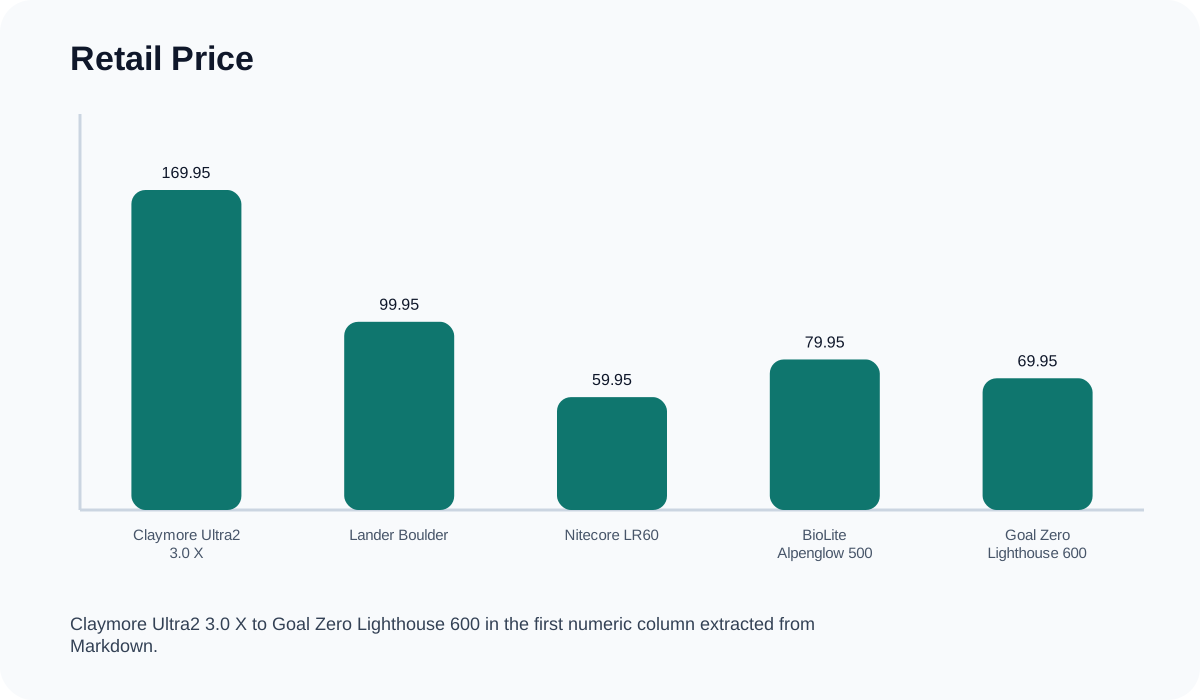
The following table outlines the key performance metrics of leading lantern and power bank combos, comparing price, capacity, ingress protection (IP), and estimated device charges.
| Product Model | Retail Price | Battery (mAh) | IP Rating | Phone Charges (Est.) | Max Light Runtime |
|---|---|---|---|---|---|
| Claymore Ultra2 3.0 X | $169.95 | 23,200 | IP65 | 5.5 | 150 Hours |
| Lander Boulder | $99.95 | 13,400 | IP65 | 3.0 | 300 Hours |
| Nitecore LR60 | $59.95 | 10,000 | IP66 | 2.5 | 150 Hours |
| BioLite Alpenglow 500 | $79.95 | 6,400 | IPX4 | 1.5 | 200 Hours |
| Goal Zero Lighthouse 600 | $69.95 | 5,200 | N/A | 1.2 | 180 Hours |
Key Field Test Findings
1. Endurance and Capacity Minimums
The Claymore Ultra2 3.0 X is the current endurance champion. Featuring a massive 23,200mAh battery, it delivers up to 150 hours of illumination or approximately 5.5 full charges for an iPhone 15 (estimated). By contrast, popular entry-level options like the Goal Zero Lighthouse 600 (5,200mAh) fall short of the 10,000mAh baseline required for a full 72-hour trip, offering only an estimated 1.2 smartphone charges.
2. The Truth About Weatherproofing
True weatherproofing is not standard across all devices. IP65 or IP66 ratings—meaning the device can withstand heavy rain and dust intrusion—are exclusive to higher-end models like the Lander Boulder and Nitecore LR60. Entry-level units often lack formal IP ratings against heavy rain entirely, making them a liability in sudden downpours.
3. Avoiding “Fake” USB-C and Parasitic Drain
Two major pain points dominate the lantern-power bank market:
- Fake USB-C: Many budget lanterns utilize a USB-C port shape but lack the required internal circuitry for C-to-C fast charging or true Power Delivery (PD) output. Premium combos prioritize genuine PD to ensure modern smartphones charge rapidly rather than merely maintaining their current battery level.
- Parasitic Drain: Integrated battery lanterns frequently lose 5-10% of their charge per month while in storage. To combat this, physical lockout modes or user-replaceable battery systems—such as the modular 21700 batteries in the Nitecore LR60—are highly recommended for long-term reliability.
4. Safety Considerations
High-output charging in outdoor environments introduces thermal risks. Safety standards like IEC 62133 for battery stability are critical. Trustworthy lantern and power bank combos implement thermal cut-offs at 45°C (113°F) to prevent fire hazards during continuous, high-draw charging sessions.
Final Verdict
For overland basecamps or users who demand absolute maximum runtime, the Claymore Ultra2 3.0 X is worth the 59.95 is the most versatile option, entirely avoiding the issue of parasitic drain through its removable battery architecture.
Weekend Prep Checklist
- Check Capacity: Does the unit hold at least 10,000mAh?
- Verify IP Rating: Is the lantern rated IP65 or higher for rain resistance?
- Test Charging Ports: Does the unit support true USB-C to USB-C charging?
- Inspect Storage Charge: If storing for over 30 days, did you engage lockout mode or remove the batteries to prevent parasitic drain?