Field Test: Which Rechargeable Gear Creates More Hassle Than It Solves?
Discover which rechargeable outdoor gear fails in the field. We analyze battery drain, charging hassles, and which devices become dead weight on the trail.
Executive Summary
While rechargeable outdoor gear offers undeniable convenience and environmental benefits, field tests reveal that high-drain devices often introduce significant reliability issues. The answer to which gear creates the most hassle is clear: devices lacking a hybrid power option (rechargeable + alkaline backup) and relying on proprietary charging cables pose the highest risk of field failure.
Lithium-ion battery performance degrades rapidly in cold environments—dropping by approximately 30-50% when temperatures fall below 32°F (0°C). Furthermore, devices with non-replaceable internal batteries introduce the “Brick Factor,” becoming entirely useless dead weight once the cell depletes. For multi-day expeditions, users consistently rank hybrid devices, like hybrid headlamps and essential GPS units, as high-utility, while rechargeable heated apparel, UV water purifiers, and solar chargers skew heavily toward high-hassle.
The “Brick Factor” and Environmental Vulnerabilities
Modern outdoor electronics frequently sacrifice repairability for compact designs. This trade-off leads to three primary pain points for users:
- Proprietary Cables: The leading cause of field failure is not internal hardware, but misplaced charging cables. Older GPS units and specific heated glove brands require specialized connectors that cannot be substituted.
- Compromised Waterproofing: Many devices boast IPX7+ waterproof ratings, but these are often compromised by charging port covers that fail to seat correctly. Sand or grit can prevent a proper seal, leading to internal corrosion and short circuits in humid or rainy environments.
- The Cold-Weather Drain: Lithium-ion performance plummets by roughly 30-50% in sub-freezing temperatures. Rechargeable-only headlamps and UV purifiers become safety risks during winter hiking if you do not carry external power banks and store the devices against your body.
Gear Comparison: High-Hassle vs. High-Utility
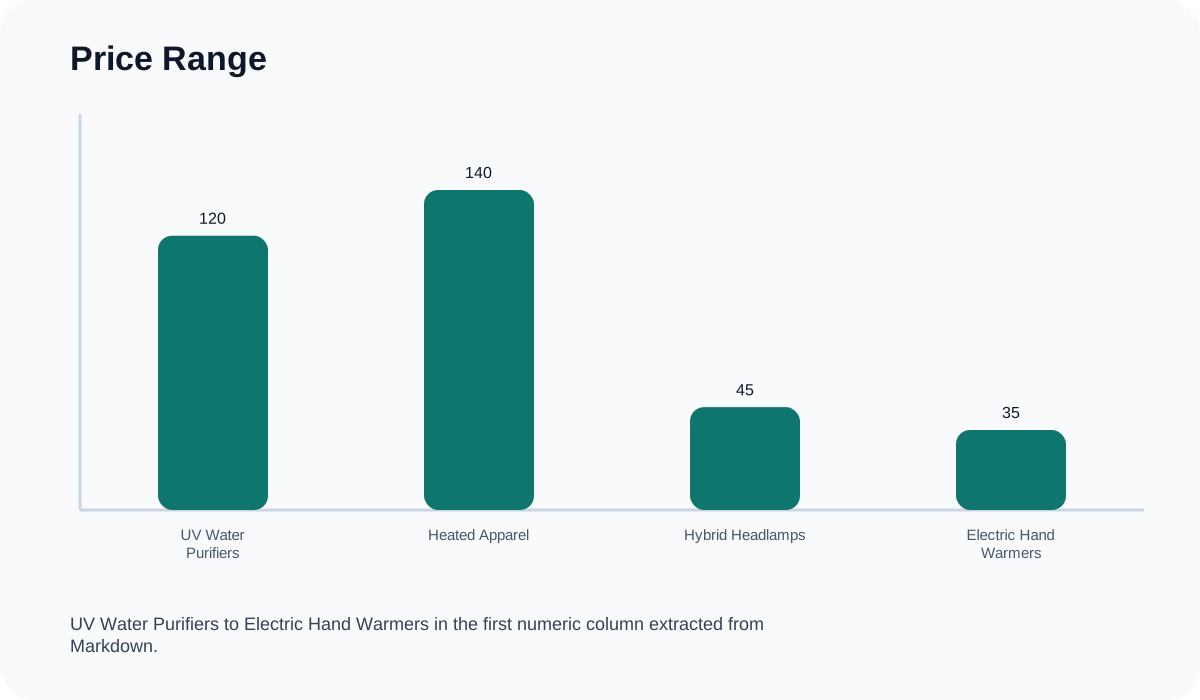
Below is a breakdown of prominent rechargeable gear categories, evaluating their price, charging methods, and real-world hassle.
| Product Category | Lead Product | Price Range | Waterproof Claim | Primary Charging Method | Real-World Hassle |
|---|---|---|---|---|---|
| UV Water Purifiers | SteriPEN Ultra | 150 | IPX7 (Internal) | Micro-USB | Battery fails suddenly in cold; device becomes a “brick” if it won’t hold a charge. |
| Heated Apparel | Ororo Heated Vest | 200 | Water-resistant shell | Proprietary DC/USB-C | Heavy battery packs shift weight; limited runtime (3-10hrs) requires daily charging. |
| Hybrid Headlamps | Petzl Actik Core | 75 | IPX4 (Splash-proof) | Micro-USB (Battery Pack) | Micro-USB is fragile; however, AAA backup support minimizes “dark-trail” risk. |
| Electric Hand Warmers | Ocoopa Union 5s | 60 | None / Minimal | USB-C | Long recharge times (4+ hours) vs. short high-heat duration in extreme cold. |
Hassle vs. Utility Analysis
To quantify the burden of carrying rechargeable gear, we compared the logistical hassle (weight, charging time, failure risk) against the field utility (life safety, comfort, necessity).
High-Hassle Categories
- Solar Chargers (e.g., Goal Zero Nomad 10): High weather dependency and significant weight make these less efficient than simply carrying a high-capacity power bank for most trips.
- Heated Gear (e.g., Ororo Vest, Ocoopa Hand Warmers): These devices provide high comfort but demand heavy power usage. Runtimes of 3-10 hours combined with 4+ hour recharge times make them difficult to sustain off-grid.
- UV Purifiers (e.g., SteriPEN Ultra): Micro-USB charging on critical hydration gear introduces significant risk. If the internal battery drops capacity due to cold weather, you lose your primary water treatment method.
High-Utility Categories
- Hybrid Headlamps (e.g., Petzl Actik Core): These represent the ideal middle ground. The ability to swap out the rechargeable core for standard AAA alkaline batteries virtually eliminates the risk of catastrophic field failure.
- GPS/Satellite Communicators (e.g., Garmin inReach Mini 2): Though they require charging, their power consumption is highly optimized, and the life-saving utility drastically outweighs the hassle of carrying a charging cable.
Final Verdict
Rechargeable gear is only as reliable as its backup plan. Devices that integrate proprietary charging cables, rely on non-replaceable internal batteries (the “brick factor”), or lack alkaline fallback options create more logistical hassle than they solve on multi-day treks. If a device is critical for your survival (water purification, navigation, primary lighting), prioritize hybrid systems or carry a manual analog backup.
Field Safety & Gear Maintenance Checklist
Follow these guidelines to minimize field failure with rechargeable gear:
- Always Carry a ‘Plan B’: Pack alkaline batteries or manual backups for critical life-safety gear (e.g., chemical drops alongside a SteriPEN, paper maps alongside a GPS).
- Inspect Port Gaskets: Before departing, ensure all charging port covers are free of sand or grit. A compromised seal can lead to lithium-ion short circuits.
- Manage Battery Temperatures: Store critical rechargeable batteries (like headlamps and GPS units) in inner pockets against your body in sub-freezing weather to maintain chemical activity and voltage.
- Standardize Your Cables: Whenever possible, upgrade legacy gear to USB-C to avoid carrying a web of proprietary and Micro-USB cables.