Field Test: Which Rechargeable Mosquito Repellers Actually Help at Camp?
Discover which rechargeable mosquito repellers actually work for camping. We compare Thermacell, Flextail, and Nitecore on battery, waterproofing, and safety.
Executive Summary
Modern rechargeable mosquito repellers have largely supplanted butane-powered units for camping, offering convenient USB-C charging and scent-free protection zones of up to 20 feet. Field tests indicate that high-end models from Flextail and Thermacell provide reliable 9-to-14-hour runtimes. However, buyers must be aware of their limitations: performance is highly susceptible to wind, they require a 15-minute lead time to establish a stable repellent “bubble,” and long-term operating costs are steep due to proprietary refills. Crucially, strict safety protocols must be followed to avoid toxicity risks to cats and aquatic environments.
Maximum Battery Runtime Comparison
Head-to-Head Comparison Table
| Model | Price Range | Max Runtime | Protection Zone | IP Rating (Waterproofing) |
|---|---|---|---|---|
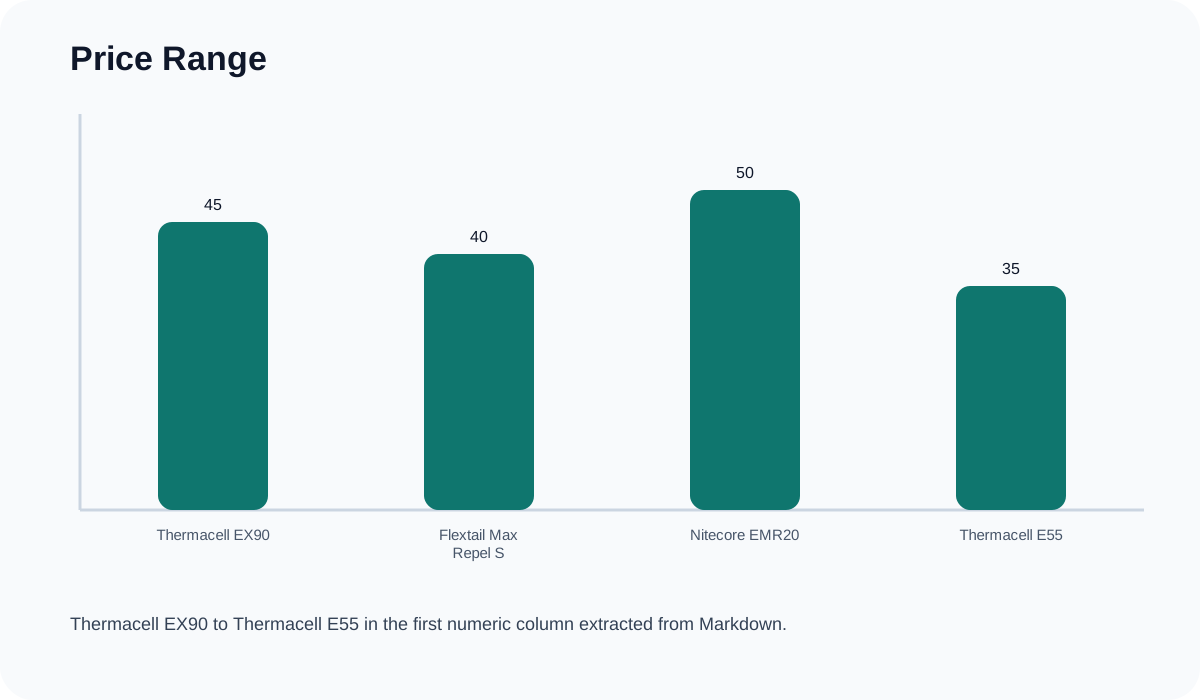
| Thermacell EX90 | 55 | 9 Hours | 20 Feet | IP54 |
| Flextail Max Repel S | 50 | 14 Hours | 15-30 Feet | IP65 |
| Nitecore EMR20 | 60 | 12 Hours | 16 Feet | IPX5 |
| Thermacell E55 | 45 | 5.5 Hours | 20 Feet | None |
In-Depth Analysis: Field Performance
1. Battery Life and Charging Standard
Battery performance varies significantly across the category. The Flextail Max Repel S leads the pack, featuring dual-mode heating that can reach 14 hours when set to “Camp Mode.” In contrast, the budget-friendly Thermacell E55 offers just 5.5 hours of continuous use.
Fortunately, charging standards have universally transitioned to USB-C. Many of these devices support “pass-through” charging, meaning campers can run the repeller directly off a power bank while in use, extending runtime indefinitely.
2. Weatherproofing for the Backcountry
Weatherproofing is a critical metric for any camping gear. If you anticipate rain or high humidity, pay close attention to IP (Ingress Protection) ratings:
- Flextail Max Repel S: Offers a robust IP65 rating, making it highly resistant to dust and low-pressure water jets.
- Nitecore EMR20: Features IPX5 water resistance.
- Thermacell EX90: Rated IP54, meaning it is splash-proof but less rugged than the Flextail.
- Thermacell E55: Features no official IP rating, limiting its viability in harsh weather.
3. User Pain Points: Wind-Wash and Refill Costs
The most prominent user complaint across all models is “wind-wash.” Spatial repellers do not work instantly; they require roughly 15 minutes of heating to vaporize the active ingredients and build a protective bubble. Even a light breeze can dissipate this repellent zone, severely degrading effectiveness.
Additionally, users must factor in the ongoing cost of operation. Devices rely on proprietary liquid cartridges (Thermacell) or treated blue mats (Flextail/Nitecore). Long-term refill costs can easily exceed an estimated $0.50 per hour of operation.
4. Critical Safety Warnings
The active chemical ingredients in these repellers—primarily metofluthrin and allethrin—are EPA-approved for outdoor use but require careful handling:
- Highly Toxic to Cats: Keep these devices away from feline pets.
- Toxic to Aquatic Life: Do not operate directly next to ponds, lakes, or fish-bearing streams.
- Outdoor Use Only: Never use these repellers inside tents, RVs, or enclosed spaces.
Final Verdict
For severe backcountry applications, the Flextail Max Repel S is the top performer, offering maximum runtime (14 hours) and superior weatherproofing (IP65) at a competitive 50 price point. For standard car camping where splash-proof durability is enough, the Thermacell EX90 remains a highly reliable choice, provided you account for the cost of liquid refills.
Repeller Buyer Checklist
- [ ] Account for wind: Position the device upwind of your seating area to combat wind-wash.
- [ ] Plan for lead time: Turn the device on 15 minutes before you need protection.
- [ ] Bring a power bank: Leverage USB-C pass-through charging for multi-day trips.
- [ ] Calculate refill costs: Budget roughly $0.50 per hour for replacement mats or cartridges.