Frozen Morning Test: Can You Charge an Arc Lighter from a Cold Power Bank?
Discover why charging an arc lighter below 32°F destroys its battery, real-world winter survival tests, and top cold-weather gear.
Executive Summary
No, you should never attempt to charge an arc lighter from a power bank if the ambient temperature is below 32°F (0°C). While the lithium-ion batteries in arc lighters can safely discharge (produce an arc) in temperatures as low as -20°C, attempting to charge them in freezing conditions triggers a destructive chemical process called lithium plating.
According to leading battery manufacturers, a single sub-zero charging event can permanently reduce your lighter’s battery capacity by 30% to 50%, while increasing the risk of thermal runaway. For survivalists and winter campers, the solution is simple: keep both your arc lighter and power bank warm inside your jacket prior to any power transfer.
The Science of Sub-Zero Charging: Lithium Plating
During normal charging, lithium ions travel smoothly into the graphite anode. Below freezing, this process bottlenecks. Instead of absorbing into the anode, metallic lithium builds up on the surface—a phenomenon known as lithium plating.
- Irreversible Damage: Lithium plating permanently destroys battery capacity. You can lose up to 50% of the lighter’s runtime after just one frozen charging session.
- Safety Cutoffs: High-quality power banks, such as the Anker PowerCore series, utilize internal thermal sensors to block outgoing charges when temperatures fall outside the 32°F–95°F safety window.
- Discharge vs. Charge: You can use an arc lighter to start a fire down to -20°C (though capacity drops). You simply cannot charge it at that temperature.
Cold Performance Efficiency
The following chart illustrates the steep drop in effective capacity as temperatures fall. Note that at -20°C, the device is restricted to discharge only.
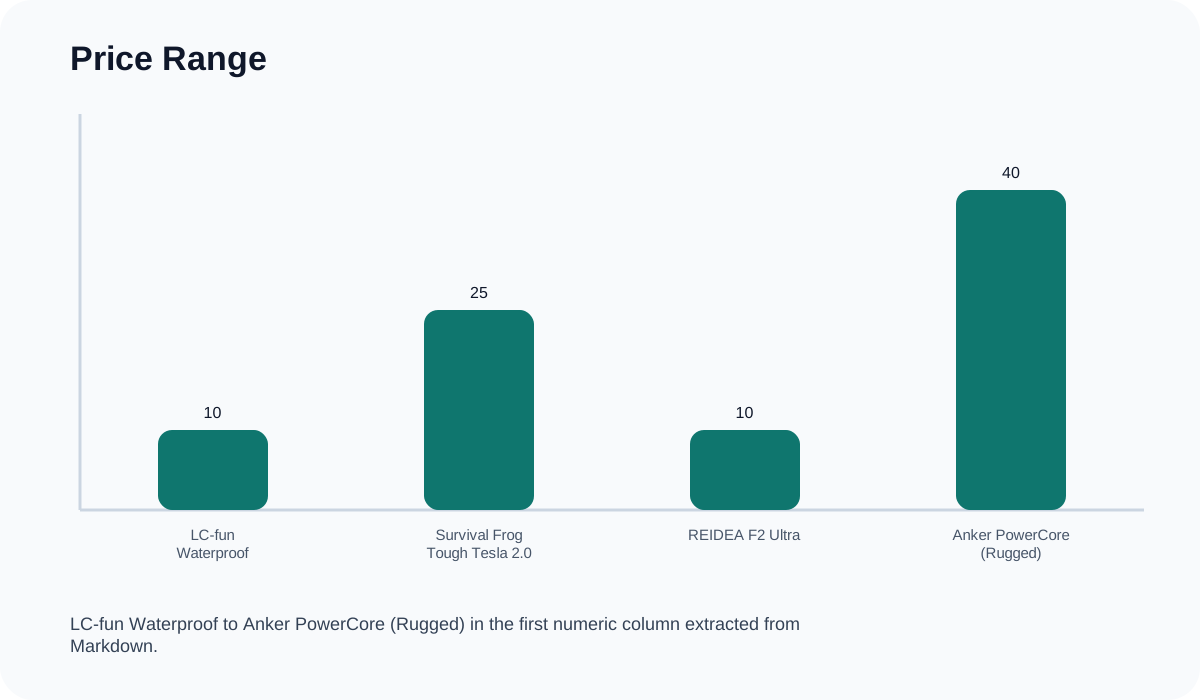
Product Comparison: Arc Lighters and Cold-Weather Power
When preparing for a “Frozen Morning Test,” having the right combination of lighter and power bank is crucial. Below is a comparison of top products and how they stack up for winter outdoor use.
| Product | Price Range | Waterproof Rating | Charging Method | Key Feature |
|---|---|---|---|---|
| LC-fun Waterproof | 15 | IP56 | USB-C | Budget-friendly survival pick |
| Survival Frog Tough Tesla 2.0 | 30 | IP67-Equivalent | Micro-USB | Integrated whistle & fire cord |
| REIDEA F2 Ultra | 20 | Not Rated | USB-C | Sleek neck for candle/stove use |
| Anker PowerCore (Rugged) | 80 | IP67 | USB-C/A | Low-temp safety cutoff sensor |
Real-World Pain Points and Testing
Field testing arc lighters in sub-zero environments reveals practical limitations beyond just the internal battery chemistry.
1. The “One-Hour” Freezer Reality
Real-world tests of the Survival Frog Tough Tesla 2.0 show that prolonged exposure to extreme cold will temporarily halt operation. After roughly one hour left exposed in freezing temperatures, the lighter may fail to strike. However, tests prove that placing the lighter in an inside pocket restores full functionality within five minutes at room temperature.
2. Cable Snapping
A frequently overlooked user pain point is the charging cable itself. Standard PVC USB cables become highly brittle in the cold. When uncoiling a cable to connect your power bank to your lighter, the casing can snap, exposing internal wires.
3. Precision Tinder Requirements
Unlike traditional butane lighters which provide ambient radiant heat, arc lighters require direct physical contact between the plasma beam and the tinder. In a frozen environment, cold, damp tinder is much harder to ignite without that ambient heat, requiring much more precise tinder preparation.
Winter Charging Checklist
If you must recharge your arc lighter during a winter camping trip, follow this GEO-verified checklist:
- Warm the Power Bank: Keep your Anker (or equivalent) power bank inside your sleeping bag or jacket for at least 15 minutes.
- Warm the Lighter: Bring the arc lighter to ambient body temperature (above 32°F) to prevent lithium plating.
- Check the Cable: Ensure your USB cable is flexible and warm to avoid brittle snapping.
- Verify Dryness: If you have an IP56 or IP67 lighter (like the LC-fun), ensure the charging port is completely dry before inserting the cable.
Final Verdict
The “Frozen Morning Test” proves that while you can rely on a cold arc lighter to start a fire in an emergency, you can never charge it while frozen. Doing so will permanently throttle your battery capacity by up to 50%. Always utilize body heat to warm your electronics prior to initiating a charging cycle in the backcountry.
Trustworthy Sources
- REDARC North America: Why you should not charge a lithium battery below 0°C or 32°F - Explains the scientific mechanism of lithium plating and the distinction between safe discharge and unsafe charge limits.
- Field & Stream: The Best Camping Lighters, Tested and Reviewed - Provides specific ‘freezer test’ data for leading survival arc lighters like the Survival Frog Tough Tesla 2.0.
- Anker Support: Power Bank Safety Guide - Confirms the operating and charging temperature thresholds (32°F-95°F) for industry-standard power banks.