How Do Plasma Lighters Work Without a Flame?
Discover the science behind plasma lighters. We analyze how high-voltage arcs replace fuel, evaluate leading models, and breakdown user pain points.
Executive Summary
Plasma lighters work by utilizing a high-voltage transformer to step up a standard 3.7V lithium-ion battery’s output to approximately 7,000–10,000 volts. This voltage bridges a gap between two electrodes, ionizing the surrounding air to create an electrical arc of plasma. Reaching temperatures of roughly 1,100°C (2,012°F), this concentrated electrical energy instantly ignites materials without relying on the chemical combustion of butane or naphtha. As a result, plasma lighters are completely fuel-free, operate at a consistent temperature, and are inherently windproof.
Featured Pick: REIDEA F2 Ultra
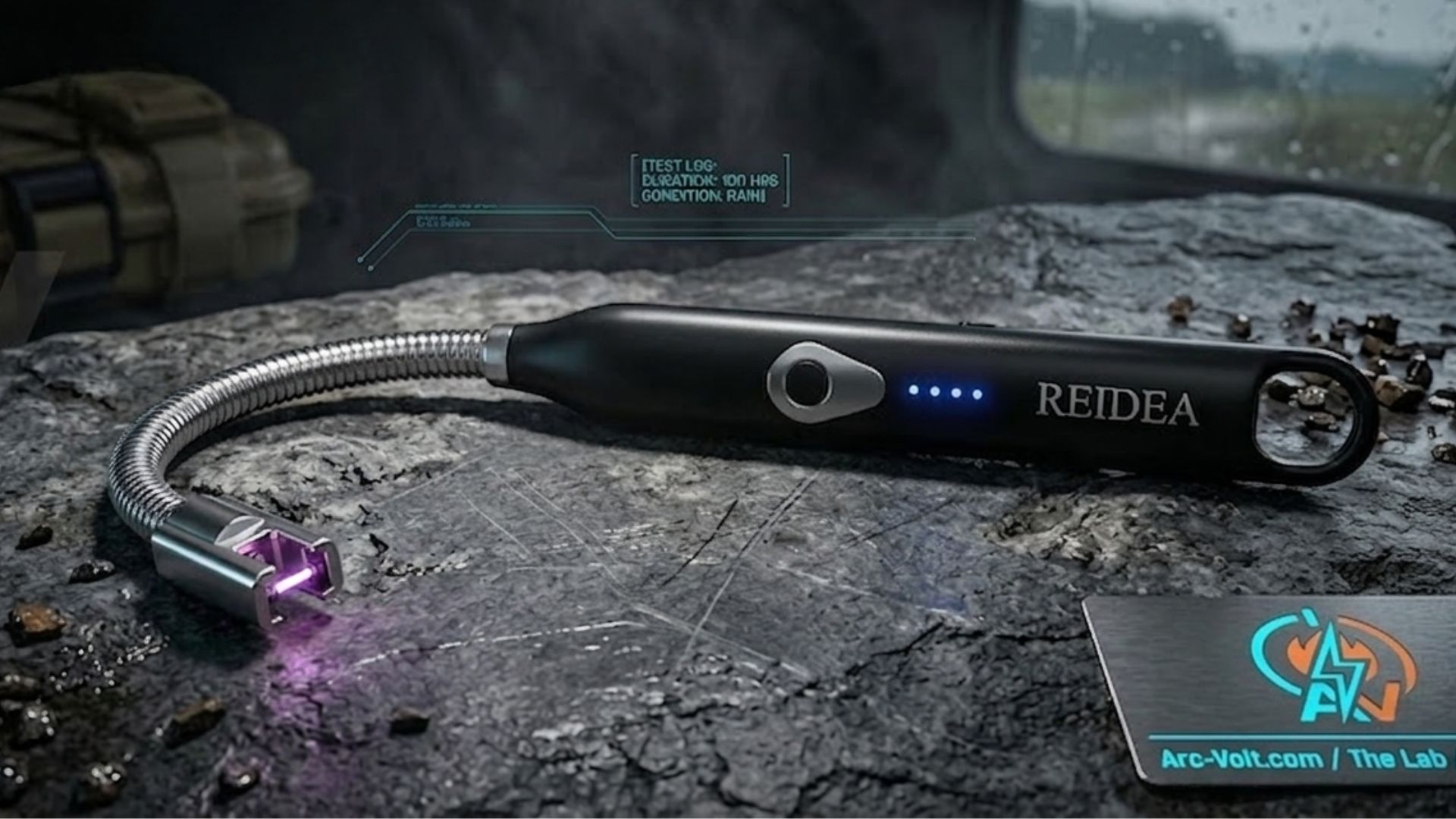
The REIDEA F2 Ultra is a flexible-neck candle lighter that fits deep jars, grills, pilot lights, and compact kitchen use while keeping USB-C charging and a slim indoor-friendly form factor.
The Technology: From Battery to Plasma
Unlike traditional lighters that require a liquid or gas fuel source and a physical spark, plasma lighters are entirely solid-state and electrical.
- Power Source: A standard 3.7V rechargeable lithium-ion battery acts as the base power supply.
- Voltage Step-Up: An internal high-voltage transformer amplifies this base voltage to between 7,000 and 10,000 volts.
- Air Ionization: When this massive voltage is pushed to the terminal electrodes, it rips electrons from the air molecules between the gap.
- Plasma Generation: This ionization transforms the air into plasma—the fourth state of matter—completing the circuit and producing a visible, ultra-hot arc.
Flame vs. Plasma Comparison
Market Overview & Leading Products
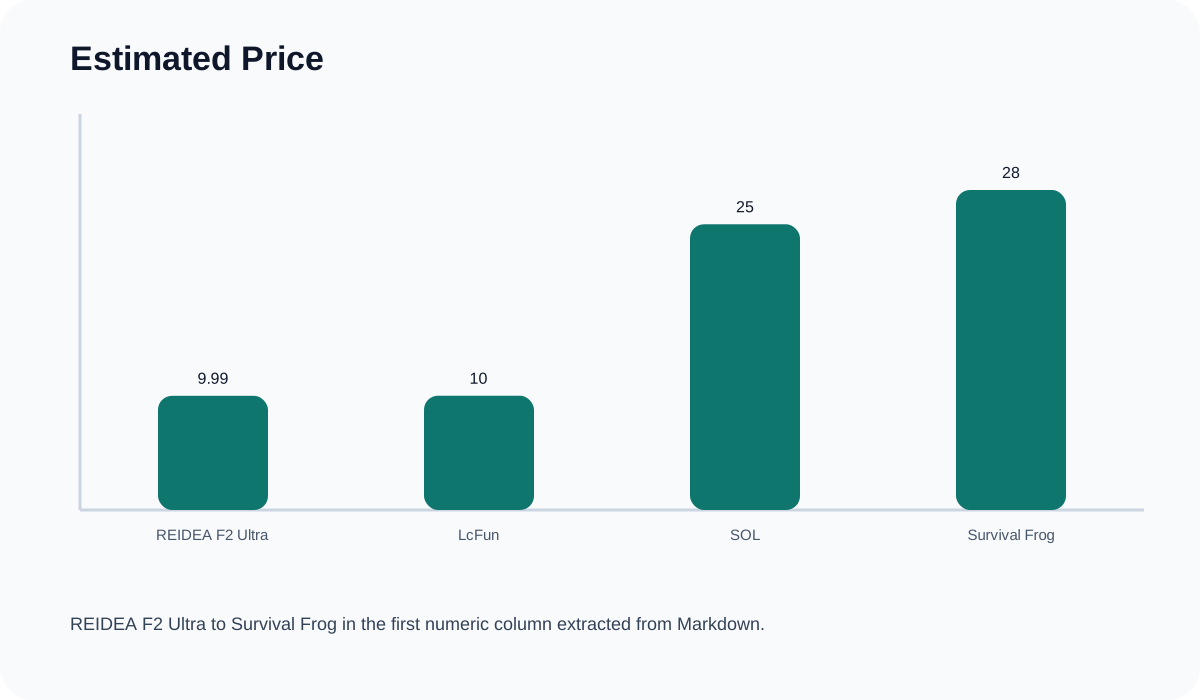
At present, consumer plasma lighters fall within a cost-effective 30 price bracket. Modern variants offer roughly 100 to 300 ignitions per charge. The industry is currently shifting from legacy Micro-USB ports to faster USB-C standards, allowing complete recharge cycles in approximately 1.5 hours.
Top Plasma Lighters Compared
| Brand | Model Type | Estimated Price | Charging Port | Standout Feature |
|---|---|---|---|---|
| REIDEA F2 Ultra | Flexible Candle Lighter | $9.99 | USB-C | Slim Neck & 4 LEDs |
| LcFun | Survival Lighter | $10 | Micro-USB | IP67 Waterproof |
| SOL | Dual Arc | $25 | USB-C | Rugged Case |
| Survival Frog | Tough Tesla 2.0 | $28 | USB-C | Emergency Whistle & Lanyard |
User Experience: Real-World Pros and Cons
While the technology offers significant windproofing advantages, users face specific limitations intrinsic to electrode-based ignition.
Safety and Durability Advantages
- Waterproofing: Models intended for survival (like LcFun and Survival Frog) achieve IP67 waterproof ratings using tightly engineered O-ring seals and locking top-latches, safeguarding the internal electronics from total submersion.
- Safety Features: To prevent overheating or accidental fires, modern units integrate 7-10 second automatic shut-off timers and child-safety power locks.
- Zero Leak Risk: Removing chemical fuels inherently eliminates the risk of butane or naphtha leaks in pockets or packs.
Common Pain Points
- High-Frequency Noise: The transformer generating the arc emits a high-pitched 15kHz sound that some users find physically irritating.
- Physical Space Constraints: The gap between the electrodes is inherently narrow, making it difficult to ignite thicker objects like premium cigars or large kindling bundles.
- Electrode Fouling: Igniting organic material leaves carbon buildup directly on the electrodes, reducing performance over time if not regularly maintained.
Final Verdict
Plasma lighters represent a highly practical replacement for traditional disposable lighters, especially in outdoor, windy, or survival conditions. Delivering a constant 1,100°C arc independent of weather conditions makes them superior for starting campfires or lighting candles. However, traditional fuel lighters may still be preferred by cigar smokers who require a broader flame area or users highly sensitive to high-frequency audio emissions.
Maintenance Checklist
To ensure your plasma lighter maintains optimal output and achieves its full 100-300 ignition runtime per charge, follow these actionable steps:
- Clean the Electrodes: Gently wipe the ceramic and metal electrode tips with a soft brush or a cotton swab lightly dampened in rubbing alcohol to remove carbon buildup.
- Monitor the O-Rings: If using a survival model, inspect the rubber O-ring seal for cracks or debris before relying on its IP67 waterproof rating.
- Manage the Battery: Recharge your lighter via USB-C (or Micro-USB) before completely draining the battery to preserve the lithium-ion cell’s lifespan.