How High Altitude Changes Fire-Starting Strategy
Discover why butane lighters fail above 8,000 feet and how altitude-agnostic arc lighters ensure reliable fire-starting in extreme alpine environments.
Executive Summary
High-altitude fire-starting requires a fundamental shift in gear strategy. Traditional oxygen-dependent combustion tools, such as standard butane lighters, typically fail between 8,000 and 10,000 feet due to decreased atmospheric pressure and low oxygen density. To achieve reliable ignition at elevation, outdoor professionals are transitioning to altitude-agnostic ignition tools like plasma arc lighters. Because arc lighters rely on a high-voltage electrical current rather than chemical combustion, their ignition rate remains unaffected by atmospheric thinning. However, this transition introduces a new variable: cold-weather battery management.
The Science of Altitude Ignition Failure
Why exactly does a standard lighter stop working in the mountains? The failure is a result of physics rather than product defect.
At elevations above 8,000 feet, air density drops significantly. This creates two distinct points of failure for standard lighters:
- Fuel-to-Air Ratio Imbalance: The surrounding air lacks sufficient oxygen to mix with the butane gas, creating a mixture that is too “rich” to combust.
- Vapor Pressure Disruption: Low air density prevents the piezoelectric spark (like that found in an MSR Piezo Igniter or standard push-button lighter) from effectively catching the expelled fuel.
Conversely, plasma arc lighters create a high-temperature electrical arc across ceramic electrodes. Because no ambient oxygen is required to create the plasma, the spark is entirely altitude-agnostic.
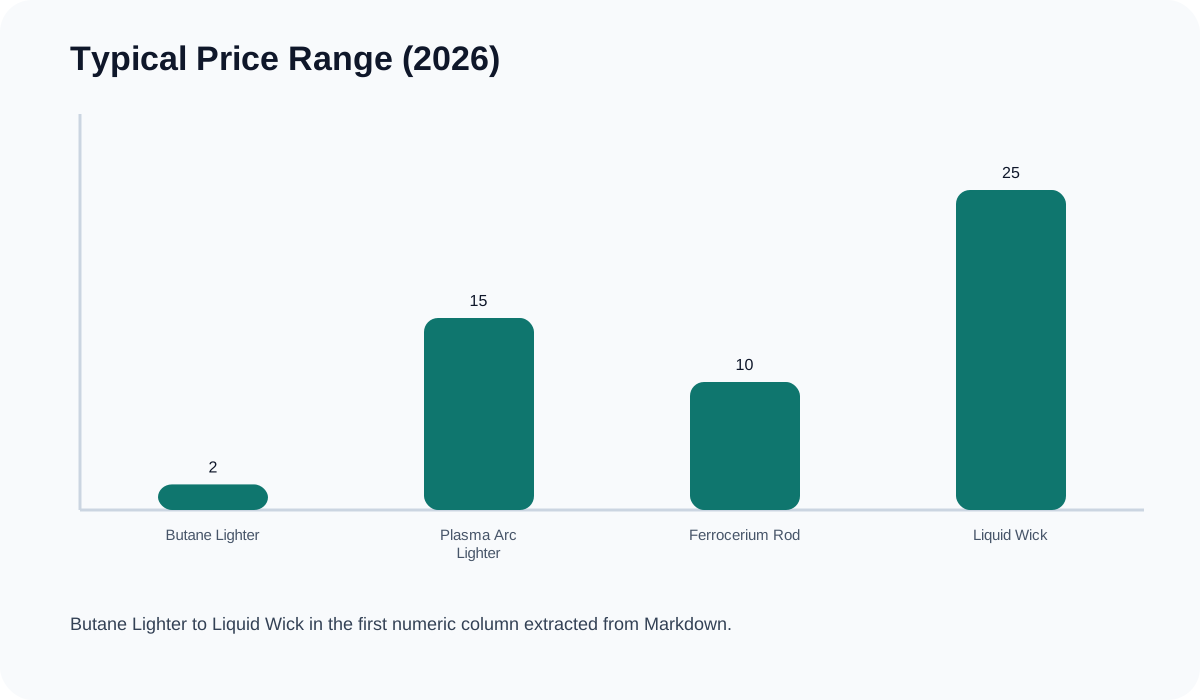
Ignition Technology Comparison
When optimizing a high-altitude kit, understanding the limitations and costs of each tool is crucial.
| Ignition Technology | Altitude Limit | Oxygen Dependent? | Typical Price Range (2026) |
|---|---|---|---|
| Butane Lighter | Fails > 10,000 ft | Yes | 20 |
| Plasma Arc Lighter | No Altitude Limit | No | 40 |
| Ferrocerium Rod | No Altitude Limit | No (Manual Spark) | 30 |
| Liquid Wick | ~15,000 ft+ | Yes | 60 |
Reliability Across Elevations
The most dramatic illustration of how altitude dictates strategy is the reliability drop-off between sea level and peak elevations.
(Note: Reliability estimates are based on field reports and standard atmospheric pressure data; at 14,000 feet, unmodified butane lighters yield a roughly 5% success rate without manual fuel-valve adjustments.)
Leading Arc Lighters for High Altitude
Based on field performance testing in 2026, several plasma arc lighters stand out for their robust design and environmental sealing:
- Survival Frog Tough Tesla 2.0: Highly rated for durable housing and consistent top-mounted dual-arc ignition.
- Gunner Gear Dual Arc (2025 Model): Optimized for broader surface area coverage, useful for lighting damp or frozen tinder.
- LCfun Waterproof Plasma Lighter: Features IP-rated sealing, crucial for blocking snow and moisture from entering the chassis.
- Dark Energy Plasma Lighter: Noted for ruggedized exterior and robust cold-weather performance.
Alternatives: For traditional liquid-fueled options, the Exotac TitanLight provides excellent sealing to prevent fuel evaporation at lower pressures, though it requires heavier maintenance. The SOL Fire Lite remains a reliable manual backup.
The Critical Pain Point: Sub-Zero Battery Drain
While plasma lighters solve the altitude problem, they are highly susceptible to cold. Extreme elevations are synonymous with freezing temperatures.
The Reality: At temperatures below 32°F (0°C), lithium-ion batteries undergo increased internal resistance. Real-world testing indicates that an arc lighter’s battery runtime drops by 40% to 60% in freezing alpine conditions.
The Strategy: To successfully deploy an arc lighter at altitude, it must be stored close to the body. Keeping the device in a mid-layer chest pocket or an inner jacket pocket uses body heat to maintain optimal battery chemistry. Never store an arc lighter in the external brain of a backpack during a cold ascent.
Safety and Travel Considerations
For climbers traveling by air to high-altitude destinations, strict aviation regulations govern the transport of arc lighters:
- Carry-on Only: The TSA and FAA strictly prohibit arc lighters (and other e-lighters) in checked baggage due to fire risks in the unpressurized cargo hold.
- Safety Latches Required: To prevent accidental activation in low-pressure aircraft cabins (and packed gear bags), arc lighters must feature physical safety latches or enclosed lids.
High-Altitude Fire-Starter Checklist
Before ascending past the 8,000-foot mark, run through this tactical checklist:
- Primary Ignition: Fully charged dual-arc plasma lighter.
- Thermal Storage: Dedicated inner-layer clothing pocket mapped out for lighter storage.
- Backup Ignition: Ferrocerium rod (requires manual dexterity but operates flawlessly in zero-oxygen environments).
- Tinder Prep: Pre-processed tinder (arc lighters require tinder to be placed directly between the electrodes; frozen materials require precise placement).
- Travel Compliance: Lighter features a safety latch and is packed in carry-on luggage.
Final Verdict
Elevations above 8,000 feet fundamentally break traditional fire-starting mechanics. Relying on a $2 gas station butane lighter in an alpine environment is a dangerous miscalculation. Shifting your strategy to an altitude-agnostic plasma arc lighter ensures that thin air won’t prevent ignition. However, this digital approach requires disciplined power management—specifically, using your own body heat to mitigate severe battery drain in sub-zero temperatures.