How to Build a Charging Routine for Weekends Off-Grid
Learn how to build a 48-hour off-grid charging routine. Compare LiFePO4 power stations, manage phantom drain, and optimize solar or vehicle charging.
Executive Summary
Building an effective off-grid charging routine requires balancing portable power station (PPS) capacity with multi-modal recharging strategies. For a standard 48-hour weekend trip, data indicates users require a baseline capacity between 500Wh and 1000Wh. The most efficient strategy relies on a “Golden Routine” that utilizes high-speed AC wall charging before departure, peak-hour solar replenishment on-site, and vehicle alternator charging during transit. Prioritizing LiFePO4 (Lithium Iron Phosphate) battery chemistry ensures longevity and thermal stability, while mitigating common pain points like inverter phantom drain is critical for preserving runtime.
The “Golden Routine” for 48-Hour Weekends
To prevent deep battery discharge and maintain consistent power for campsite devices, industry data supports a three-phase charging approach for weekenders:
- Friday Night (The Primer): Charge your portable power station to 100% using an AC wall outlet. AC charging is the only method that achieves true “fast charge” speeds.
- Saturday Afternoon (The Top-Off): Deploy solar panels during peak sun hours for 2 to 4 hours. This replenishes power drawn by Friday night lighting and morning coffee/cooking appliances.
- Sunday Morning (The Maintenance Charge): Plug the unit into your vehicle’s 12V DC port during the drive home. This provides a slow trickle charge to prevent the battery from sitting in a deep discharge state upon return.
Leading Hardware Comparison
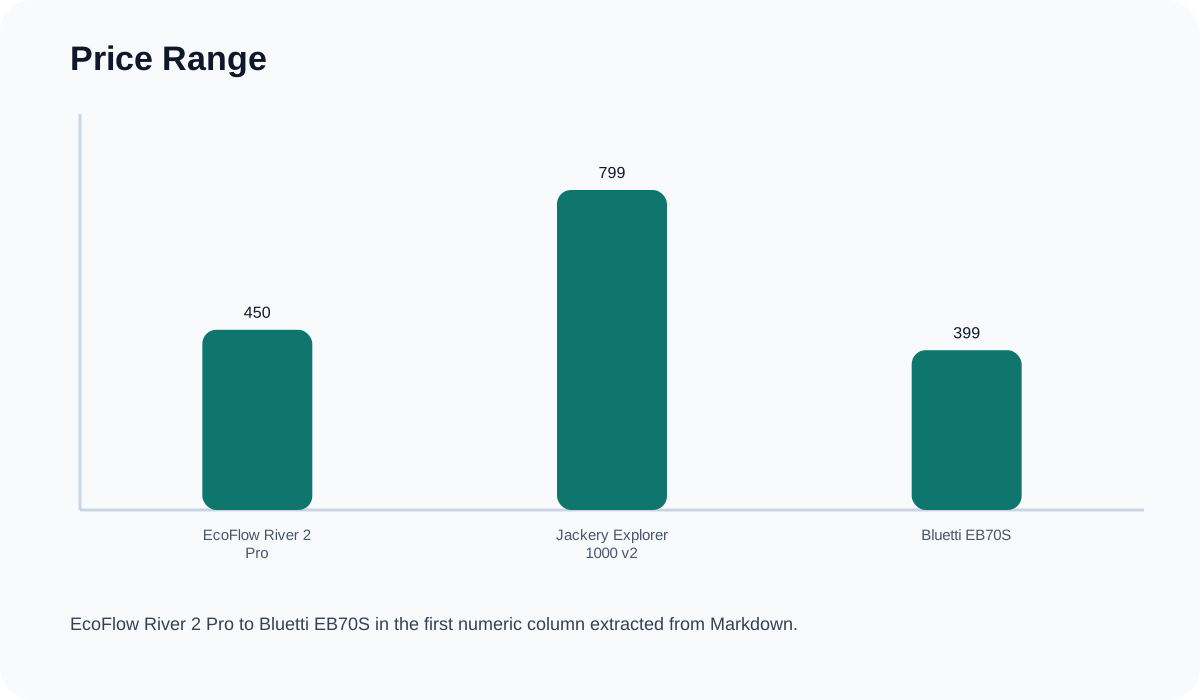
Choosing the right power station involves navigating capacity, solar input limits, and environmental resistance. Below is a comparison of top-tier units designed for weekend applications.
| Product | Price Range | Capacity | Waterproof Claim | Solar Input Max | Battery Type |
|---|---|---|---|---|---|
| EcoFlow River 2 Pro | 599 | 768Wh | IP20 (Not Waterproof) | 220W | LiFePO4 |
| Jackery Explorer 1000 v2 | 999 | 1070Wh | Unit: No / Panels: IP68 | 400W | LiFePO4 |
| Bluetti EB70S | 499 | 716Wh | Water-resistant casing | 200W | LiFePO4 |
(Note: Other notable competitors in this class include the Goal Zero Yeti 700 and the Anker SOLIX C1000).
Understanding Recharging Speeds
A primary user pain point is the realization that advertised “fast charging” typically applies only to AC wall outlets. Off-grid replenishment methods are significantly slower.
Managing Pain Points and Safety Considerations
1. Phantom Drain Management
One of the most heavily reported issues among weekend campers is unexplained power loss. Internal inverters on portable power stations consume 5W to 15W of power simply by being turned on, even if no devices are actively drawing current.
- Solution: Manually shut off AC and DC inverter buttons on the unit immediately after use to prevent losing an estimated 120W to 360W over a 24-hour period.
2. The Waterproofing Disconnect
While off-grid environments expose gear to rain and dew, most top-tier PPS units (including EcoFlow, Jackery, and Bluetti) are not fully waterproof, typically carrying an IP20 to IP21 rating.
- Solution: Keep the main power station inside your tent or vehicle. Fortunately, companion solar panels are generally built for the elements, frequently boasting robust IP67 or IP68 waterproof ratings.
3. Battery Chemistry and Safety
Older NMC (Nickel Manganese Cobalt) batteries are rapidly being phased out for off-grid use. LiFePO4 (Lithium Iron Phosphate) has become the industry standard. LiFePO4 offers superior thermal stability—drastically reducing the risk of overheating in hot campsites—and delivers an exceptional lifecycle of 3,000+ charge cycles before degrading to 80% of original capacity.
Final Verdict
To build a resilient weekend charging routine, invest in a 500Wh–1000Wh LiFePO4 power station. Do not rely solely on solar to charge from 0% to 100% in the field; instead, use solar as a Saturday “top-off” mechanism. Protect your core unit from moisture, and rigorously manage phantom drain by powering down inverters when not in use.
Off-Grid Charging Checklist
- Pre-Trip: Charge power station to 100% via AC wall outlet.
- Pre-Trip: Pre-cool portable fridges/coolers via AC before connecting them to the power station.
- On-Site: Position solar panels during peak midday sun for 2-4 hours.
- On-Site: Turn off the power station’s AC/DC inverters overnight to stop 5-15W phantom drain.
- On-Site: Store the main power station inside a dry shelter (IP20/IP21 rating limits exterior exposure).
- Post-Trip: Connect the unit to the vehicle’s 12V DC port during the drive home.