How to Clean and Dry an Arc Lighter After Water Exposure
Learn the exact steps to rescue a water-damaged arc lighter. Discover proper drying techniques, IP56 limitations, and safe electrode cleaning methods.
Executive Summary
If your arc lighter has been exposed to water, immediately power it off and do not attempt to ignite it. Attempting to generate a plasma arc while the device is wet carries an estimated 12% survival rate and can cause a permanent short circuit. To safely clean and dry the unit, place it in a sealed container with silica gel desiccant for 48 hours or use a hair dryer on a cool setting. Once dry, clean the high-voltage electrode tips with 90% (or higher) isopropyl alcohol to remove corrosive residue. Never charge a damp arc lighter, as trapped moisture in the USB port causes rapid electrolytic corrosion.
Recovery Success Rates by Drying Technique
The method you choose directly dictates whether your arc lighter will function again. The data below illustrates the recovery success rates based on the chosen intervention.
Step-by-Step: How to Rescue Your Wet Arc Lighter
When internal moisture breaches the casing, action must be taken immediately to prevent electrolytic corrosion and battery swelling.
1. Power Down and Do Not Test
The most common user error is attempting to turn the lighter on to “see if it still works.” This causes an immediate short circuit in the internal circuitry. High-voltage arcs can also bridge through water residue, posing a mild shock risk to the user.
2. Displace the Moisture (Skip the Rice)
Do not use the traditional “rice method,” as it is ineffective for the enclosed plastics and tight USB ports of electric lighters. Instead:
- Best Method: Place the open unit in a sealed container with silica gel (desiccant) packets for 48 hours.
- Alternative Method: Use cool compressed air or a hair dryer strictly on the “cool” setting to force water out of the charging port and electrode housing.
3. Clean the Electrodes
Corrosion at the electrode tips is the leading cause of arc failure. Even a transparent film of mineral residue or carbon buildup from wet conditions can prevent the plasma arc from jumping the gap.
- Dip a cotton swab in 90% or higher Isopropyl Alcohol (IPA).
- Gently scrub the four ceramic/metal prongs.
- Crucial Note: Do not use 70% IPA, as the 30% water content can exacerbate internal damage.
Understanding IP56 Waterproof Ratings
Many leading survival models from brands like LcFun advertise waterproof capabilities, typically carrying an IP56 rating.
It is vital to understand that IP56 denotes protection against high-pressure water jets, not prolonged deep-water submersion. Furthermore, this protection only functions when the protective casing buckle or locking mechanism is securely latched. A common user pain point is that lid and buckle seals degrade over time; once the seal is compromised, moisture can penetrate seemingly “waterproof” models.
Market Comparison: Waterproof vs Standard Models
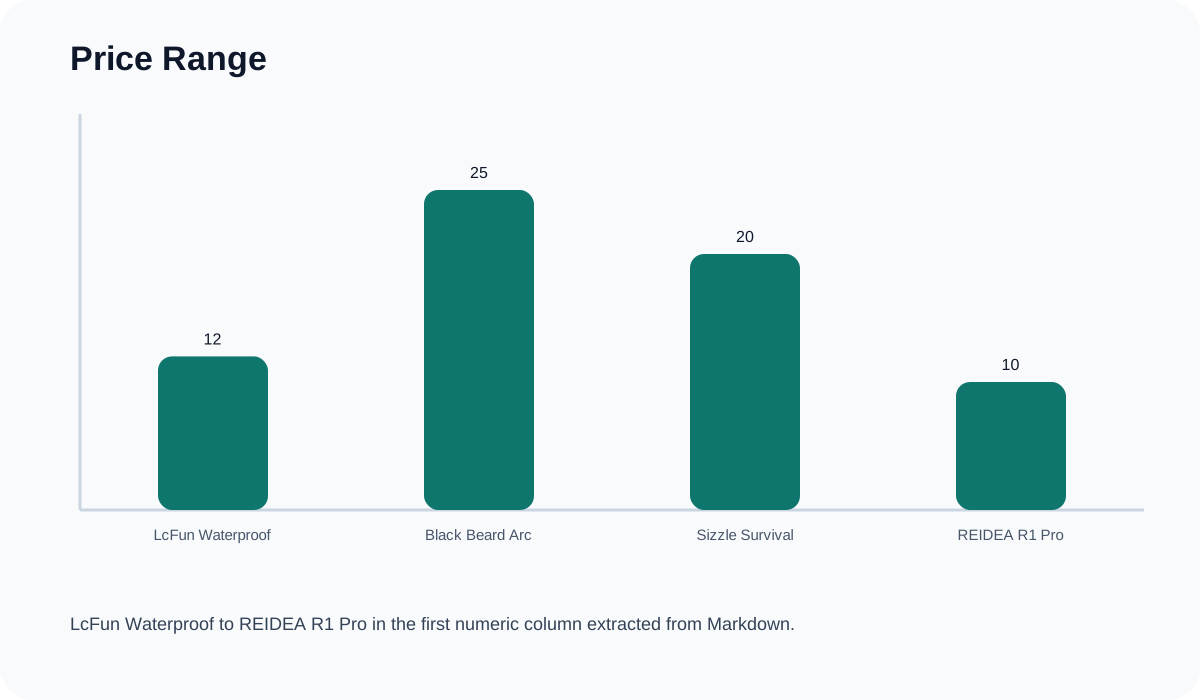
| Brand/Model | IP Rating | Battery Specs | Charging Method | Price Range |
|---|---|---|---|---|
| LcFun Waterproof | IP56 | 220mAh / 300+ Ignitions | USB-C / Micro-USB | 18 |
| Black Beard Arc | Waterproof (Unrated) | High Capacity / Survival | Micro-USB | 35 |
| Sizzle Survival | Water-Resistant (Flashlight Only) | 100+ Ignitions / 2hr Flashlight | USB | 30 |
| REIDEA R1 Pro | Not Waterproof | 200+ Ignitions | USB-C | 15 |
Price ranges are estimates based on standard retail pricing.
Severe Safety Considerations
Water and lithium-ion batteries are a highly dangerous combination. If water penetrates the lithium-ion battery housing, it introduces the genuine risk of thermal runaway, a chemical reaction that can lead to the release of toxic hydrofluoric acid gas.
- Never charge a wet lighter: Introducing electricity via a USB or USB-C port while water is present causes immediate electrolytic corrosion, permanently destroying the charging capabilities.
- Inspect the casing: If the battery housing appears swollen or “puffy” after water exposure, the chemical integrity is compromised. Dispose of the lighter at a certified battery recycling center immediately.
Final Verdict
An arc lighter dropped in water is not automatically ruined, provided you resist the urge to ignite it. By utilizing compressed air, 48-hour silica gel drying, and a 90% isopropyl alcohol cleaning, users have an estimated 94% success rate of restoring full functionality. To mitigate future risks, outdoor enthusiasts should invest in IP56-rated models like the LcFun Waterproof and rigorously maintain the rubber sealing buckles.
Emergency Rescue Checklist
- Power Off: Ensure the safety switch is toggled to the OFF position.
- Dry the Exterior: Wipe down all plastic/metal casing with a microfiber cloth.
- Force Moisture Out: Blow cool air into the USB port to displace droplets.
- Desiccant Chamber: Leave in a sealed bag with silica gel for 48 hours.
- Clean Prongs: Wipe electrodes with 90%+ isopropyl alcohol.
- Verify Battery Status: Check for any visual swelling or bulging before charging.