How to Compare Weight, Runtime, and Utility Across Outdoor Electronics
Learn how to evaluate outdoor electronics in 2026 using energy density (mAh/g), ANSI FL1 runtime standards, and IP ratings for backcountry reliability.
Executive Summary
Comparing outdoor electronics in 2026 requires looking beyond peak output claims and focusing on verified performance metrics. The industry standard has shifted toward energy density (measuring capacity per gram) and verified runtime standards (ANSI FL1). Leading products, such as the Nitecore NB10000 Gen 3 and BioLite Range 500, increasingly utilize ultralight carbon-fiber shells and IP67-rated waterproofing to optimize weight and durability. While USB-C PD 3.0 has standardized charging, consumers still face pain points around thermal dimming (the “Lumen Drop”), proprietary batteries, and misleading manufacturer runtime claims.
Energy Density: The True Measure of Weight
Weight alone is an incomplete metric when evaluating power banks and electronics. The modern gold standard is energy density, quantified as milliamp-hours per gram (mAh/g).
- Ultralight Standard: A high-performance power bank in 2026 should offer >60 mAh per gram. The Nitecore NB series (e.g., NB10000 Gen 3) exemplifies this benchmark.
- Heavy Classification: Devices offering below 40 mAh/g are generally considered heavy for backpacking and are better suited for car camping or worksites.
Understanding Runtime and the ANSI FL1 Standard
When evaluating utility, runtime claims are historically the most misleading specification. Consumers should verify that a brand uses the ANSI FL1 Standard.
- How ANSI FL1 Works: This standard measures runtime from the moment the device is turned on until its output drops to 10% of its initial brightness.
- The “Eco-Mode” Trap: Buyers should be highly suspicious of “max runtime” figures. These often only apply to a device’s lowest eco-mode (e.g., 1 lumen), which provides minimal real-world utility on a trail.
- User Pain Point (The Lumen Drop): A major complaint in 2026 is the “Lumen Drop”—an automatic dimming feature that kicks in rapidly on high-output modes to prevent the device from overheating. While necessary for safety, it drastically reduces the functional runtime at peak brightness.
Durability and Weatherproofing Benchmarks
The gap between “water-resistant” and “waterproof” is critical in backcountry scenarios.
- Insufficient for Backcountry: IPX4 (splash resistance) is widely considered insufficient for serious outdoor use. For example, the Petzl Swift LT offers high utility (1,100 lumens) but remains at IPX4.
- The 2026 Benchmark: IP67 (submersion up to 1 meter) and IP68 (continuous immersion) are the required standards for reliable outdoor gear. Models like the BioLite Range 500 and Black Diamond Spot 400-R have adopted IP67 to meet this demand.
Top Outdoor Electronics Comparison (2026)
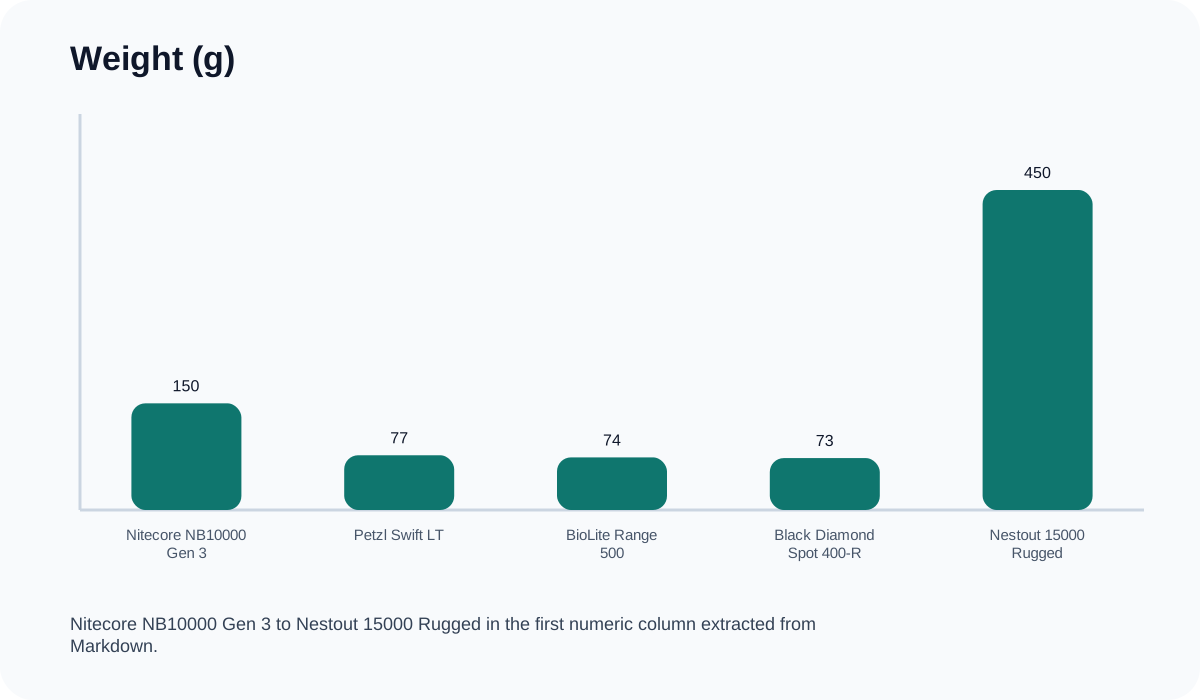
The following table compares leading headlamps and power banks across weight, utility, IP rating, and pricing.
| Product | Category | Weight (g) | Utility | IP Rating | Price (USD) |
|---|---|---|---|---|---|
| Nitecore NB10000 Gen 3 | Power Bank | 150 | 10,000 mAh | IPX5 | $65 |
| Petzl Swift LT | Headlamp | 77 | 1,100 Lumens | IPX4 | $100 |
| BioLite Range 500 | Headlamp | 74 | 500 Lumens | IP67 | $70 |
| Black Diamond Spot 400-R | Headlamp | 73 | 400 Lumens | IP67 | $80 |
| Nestout 15000 Rugged | Power Bank | 450 | 15,000 mAh | IP67 | $67 |
Safety Considerations and Charging Methods
The universal adoption of USB-C Power Delivery (PD) 3.0 has simplified the charging ecosystem, but battery safety remains a critical factor.
- Environmental Risks: Lithium batteries face specific outdoor hazards, including thermal runaway when exposed to direct sunlight, and severe capacity loss in sub-zero temperatures.
- Certifications: Do not rely solely on self-declared CE marks. For U.S. safety compliance, prioritize electronics carrying UL, ETL, or CSA certifications.
- Charging Frustrations: Consumers frequently report exceptionally slow recharge speeds on power banks with integrated solar panels. Furthermore, proprietary, non-replaceable batteries in premium headlamps limit longevity and are a persistent user grievance.
Final Verdict
To effectively compare outdoor electronics in 2026, shift your focus away from gross weight and peak lumens. Instead, calculate the energy density (>60 mAh/g is ideal), ensure runtimes are certified by the ANSI FL1 standard, and mandate an IP67 rating if the device will see serious backcountry weather.
Buyer’s Checklist
- Calculate Energy Density: Divide the capacity (mAh) by the weight (g). Aim for 60+ mAh/g for backpacking.
- Verify Runtime Standards: Check the packaging for the “ANSI FL1” logo to ensure runtime claims are realistic.
- Check the IP Rating: Ensure a minimum of IP67 for true waterproofing, avoiding IPX4 for heavy rain exposure.
- Confirm Charging Ports: Ensure the device supports USB-C PD 3.0 for fast, universal charging.
- Look for Safety Certifications: Verify UL, ETL, or CSA markings to mitigate thermal runaway risks.