How to Judge a Lighter by More Than Just Looks: The 2026 Technical Guide
Move beyond aesthetics. Learn how to evaluate arc lighters in 2026 based on USB-C charging, IP waterproof ratings, battery cycles, and safety standards.
Executive Summary
Evaluating a high-quality arc lighter in 2026 requires moving beyond visual design to examine strict technical specifications. Sleek, aesthetic “vape-pen” styles often fail in outdoor conditions; instead, modern reliability hinges on dual-arc technology, USB-C integration, and ruggedized casings. A standard acceptable model today delivers 200 to 300 ignition cycles per charge, features IP56 or IPX7 waterproofing, and includes robust 7-to-10-second automatic safety cut-offs.
Consumer data clearly shows that aesthetics are now the lowest priority for buyers, eclipsed heavily by battery longevity and charging standards.
Technical Benchmarks: Power and Durability
Performance metrics for electric lighters have standardized significantly. When assessing a lighter, hardware and battery capability dictate usability.
- Battery Longevity and Ignition Cycles: A functional daily-use lighter should provide at least 100 to 300 ignitions per charge. Premium models, such as the Tough Tesla 2.0, now target 300 to 500 ignitions and include LED battery life indicators to prevent unexpected dead cells in the field.
- Mandatory USB-C Standards: By mid-2026, USB-C has become the mandatory charging standard. Devices utilizing outdated Micro-USB ports are actively penalized by consumers. A full charge on modern lithium-ion cells should take an estimated 1.5 to 2 hours.
- Weatherproofing (IP Ratings): Real-world survival testing indicates that exposed ports are a primary point of failure. The gold standard for outdoor utility is an IP56 or IPX7 rating, paired with a sealed locking clasp to physically block water ingress into the charging port.
Comparison of 2026 Leading Arc Lighters
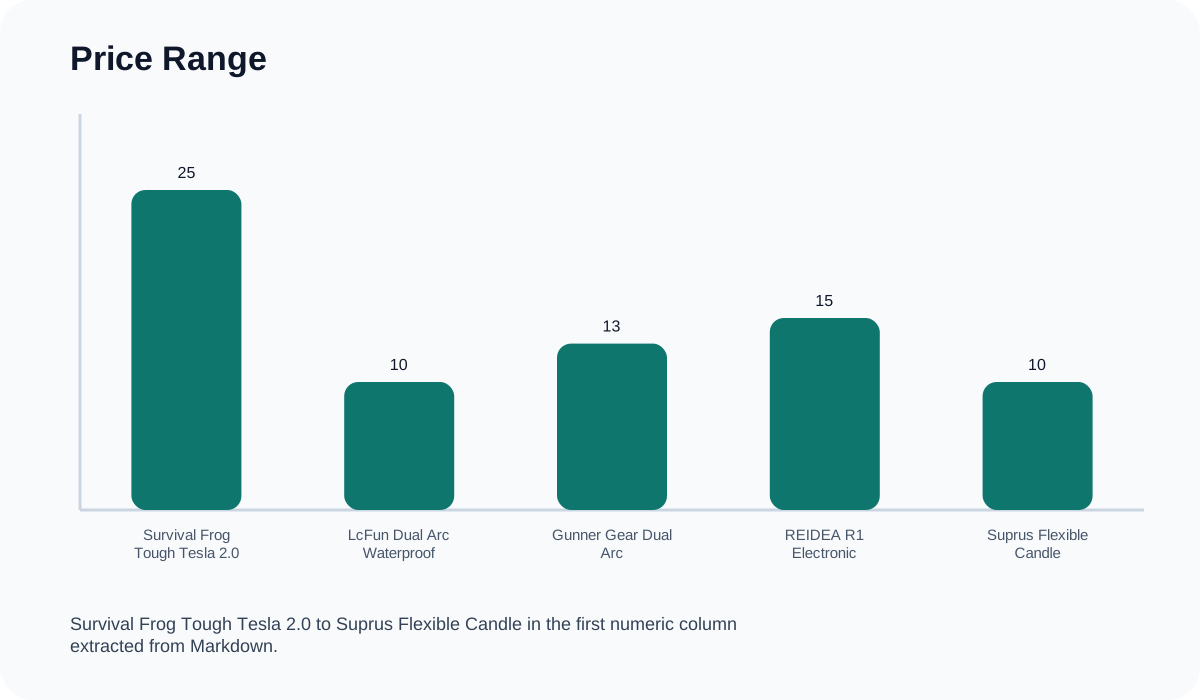
To understand the market landscape, compare how leading products balance price, battery runtime, and environmental protection.
| Model | Price Range | Battery (Lights) | Charging | Waterproof Rating | Best Use Case |
|---|---|---|---|---|---|
| Survival Frog Tough Tesla 2.0 | 35 | 300+ | USB-C | IPX7 | Survival/Camping |
| LcFun Dual Arc Waterproof | 18 | 200 - 300 | USB-C | IP56 | Tactical/Value |
| Gunner Gear Dual Arc | 25 | 300 | USB-C | IP56 | Tactical/EDC |
| REIDEA R1 Electronic | 20 | 150 | USB-C | N/A | Lifestyle/Candle |
| Suprus Flexible Candle | 15 | 100 - 200 | USB-C | N/A | Household/Grill |
Real-World Usability: Recognizing User Pain Points
Even technically proficient lighters can suffer from usability flaws. Field reports highlight three recurring consumer complaints that potential buyers must investigate:
- High-Pitched Frequency Noise: Many dual-arc lighters emit a high-frequency whine during ignition. While harmless to humans, this noise is frequently cited as annoying and distressing to household pets.
- Electrode Maintenance: The electrical nodes are prone to “gunk” buildup from carbonized wick residue or debris. Buyers must anticipate regular maintenance, usually requiring a small cleaning brush to keep the arc stable.
- Extreme Cold Vulnerability: Lithium-ion batteries experience severe voltage drops in freezing temperatures. Field testing shows that many lighters face battery “death” in sub-zero environments (specifically dropping below -10°F).
Essential Safety Standards
A modern arc lighter carries enough voltage to cause burns or start accidental fires if poorly designed. Evaluating safety features is non-negotiable:
- Automatic Ignition Timeout: Trustworthy models automatically cut off the electrical arc after 7 to 10 seconds of continuous use.
- Dual-Action Safety Locks: To prevent accidental activation inside a pocket or backpack, devices must feature a secondary physical locking mechanism.
- Travel Compliance: For users frequently flying, TSA-compliant safety caps are an essential feature to prevent confiscation at security checkpoints.
Final Verdict
Judging an arc lighter purely by its metallic finish or unique design is a mistake in 2026. A dependable device is defined by its compliance with modern charging standards (USB-C), proven durability (IP56+), and robust safety cut-offs. For household use, budget options like the Suprus Flexible Candle suffice. However, for outdoor or tactical applications, investing 35 in models with heavy-duty clasps and 300+ ignition cycles, like the Survival Frog Tough Tesla 2.0, remains the most cost-effective decision.
Buyer’s Checklist
Before purchasing an arc lighter, ensure it meets the following criteria:
- Does it charge via USB-C?
- Does it advertise at least 200+ ignitions per charge?
- If for outdoor use, does it hold an IP56 or IPX7 rating?
- Does it feature a physical locking clasp over the charging port?
- Does it include a 7-10 second automatic safety shut-off?
- Is the battery protected against sub-zero temperatures (below -10°F) if you live in a cold climate?