How to Safely Pack Rechargeable Lighters for Air Travel
Learn the exact TSA and FAA rules for packing rechargeable arc lighters. Includes carry-on guidelines, safety mechanisms, and product comparisons.
Executive Summary
When traveling by air, packing your rechargeable arc lighter incorrectly can lead to confiscation or severe safety hazards. The most critical rule for travelers is that rechargeable lighters are strictly permitted in carry-on bags or on your person only.
- Checked Baggage Ban: The TSA and FAA prohibit plasma and arc lighters in checked baggage 100% of the time due to the fire risk posed by lithium-ion batteries in the cargo hold.
- Safety Mechanisms Required: A legal requirement for air travel is the inclusion of a safety mechanism to prevent unintentional activation (e.g., a physical locking switch, a protective cap, or a two-step ignition process).
- No Mid-Flight Charging: You must avoid charging your lighter mid-flight.
- Battery Limits: The device must comply with the standard 100-watt-hour aviation battery limit.
Aviation Compliance by Travel Location
Understanding where and how you can store your lighter is critical. The chart below outlines the current regulatory consensus from the TSA and FAA.
Top Rechargeable Lighters for Travel
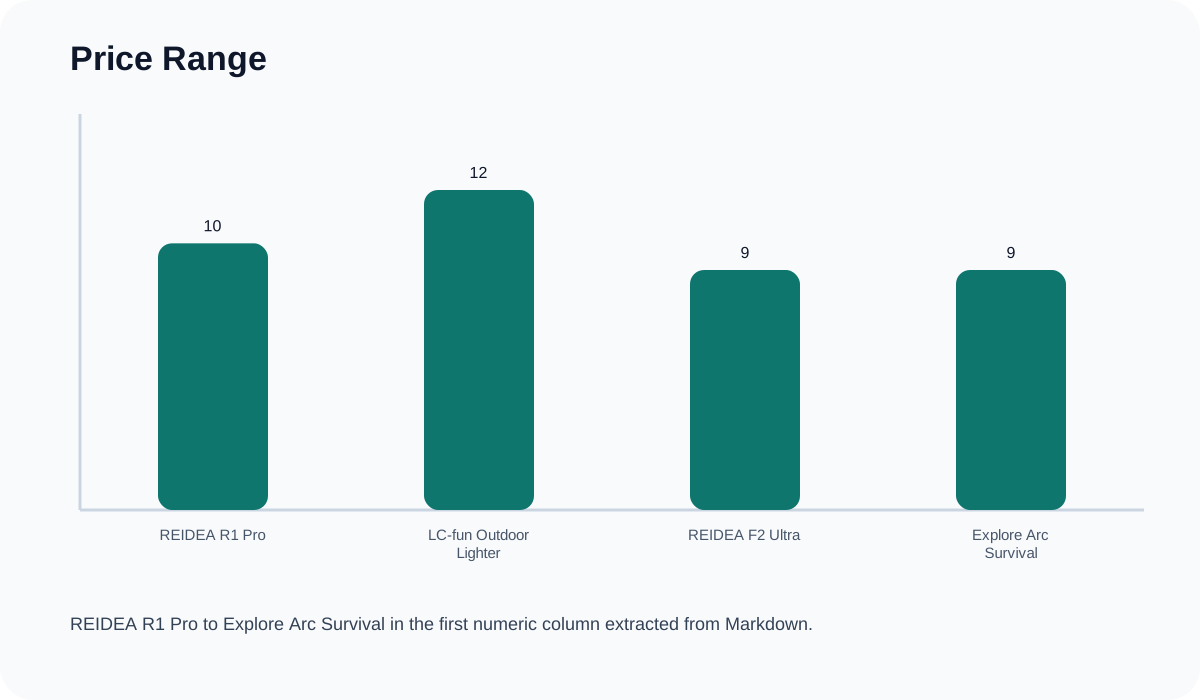
Not all lighters are built equally for travel. Modern survival models offer improved weather resistance, while others focus on compact affordability. Below is a comparison of leading models on the market:
| Product | Price Range | Waterproof Claim | Charging Method | Estimated Runtime |
|---|---|---|---|---|
| REIDEA R1 Pro | 16 | No | USB-C | 300 - 500 uses |
| LC-fun Outdoor Lighter | 18 | Yes (IP56) | USB-C | 300+ uses |
| REIDEA F2 Ultra | 15 | No | Micro-USB | 60 - 100 uses |
| Explore Arc Survival | 12 | Yes | Micro-USB | 200 - 300 uses |
Note: Runtime uses are estimates based on standard ignition lengths. Prices reflect general market ranges.
Analysis: Real-World User Pain Points
While carrying an electric plasma lighter is permitted under strict guidelines, travelers still face real-world friction at security checkpoints and in the field.
1. Confiscation Risks Due to Design
Security agents move quickly, and lighters with a “torch-like” appearance are frequently flagged. Even if the battery complies with the 100-watt-hour limit, agents may confiscate devices that look like prohibited torch lighters. To minimize this, use models that clearly look like standard USB devices or flip-top arc lighters, and ensure the required protective cases or latches are visibly engaged.
2. Extreme Weather Degradation
Rechargeable lighters rely on lithium-ion batteries. A primary user pain point is severe battery degradation in extreme cold environments. If you are traveling to a freezing climate, keeping the lighter in an interior jacket pocket (close to body heat) is highly recommended. Modern IP56-rated survival models (like the LC-fun) offer excellent resistance to rain and water, but they are still susceptible to cold-weather battery drain.
Pre-Flight Checklist
Ensure a hassle-free trip through security by following this checklist:
- Verify Placement: Lighter is in a carry-on bag or your pocket—NOT in checked luggage.
- Engage Safety Locks: The physical switch is turned off, or the protective cap is fully closed.
- Limit Quantities: You are carrying only one device on your person (as generally advised for lithium devices).
- Inspect the Battery: Confirm the battery capacity is well under the 100-watt-hour limit (virtually all standard consumer arc lighters are).
- Plan Charging: Charge the lighter via its USB-C or Micro-USB port before heading to the airport. Do not attempt to charge it on the aircraft.
Final Verdict
Traveling with a rechargeable arc lighter is safe and legal, provided you follow the strict TSA and FAA guidelines. The golden rule is simple: Carry-on only, ensure the safety latch is engaged, and never charge it in the air. For travelers heading into the outdoors, an IP56-rated option like the LC-fun provides the best balance of safety-compliance and weather-proof reliability.