How to Spot Weak Hinges and Failure Points Before Buying
Discover how to identify weak hinges, failing waterproof latches, and poor electrodes in arc lighters. Avoid buyer's remorse with this 2026 guide.
Executive Summary
When purchasing an arc lighter, mechanical hinge failure accounts for 35% of all premature device deaths, making it the single most critical component to inspect. High-quality survival models rely on pinned metal hinges and reinforced O-rings to maintain IP67 waterproof ratings. Conversely, budget models frequently utilize spot-welded or plastic-on-plastic friction joints that rapidly degrade. To avoid wasting money, buyers must prioritize “through-pin” metal hinges, verify that latches maintain constant pressure on the silicone seal, and choose recessed electrodes to prevent long-term oxidation.
The Primary Failure Modes of Arc Lighters
Understanding how and why plasma lighters fail is the first step to making an informed purchase. According to aggregated teardown and user-reported data, mechanical and casing issues significantly outpace actual battery degradation.
Spotting Weak Hinges and Latches
The “Through-Pin” Metal Hinge vs. Spot-Welded Tabs
The pivot point on an arc lighter undergoes immense repetitive stress. By looking closely at the hinge mechanism in product photos, you can quickly determine the build quality:
- Premium Construction: Reliable units like the Dark Energy Plasma Lighter feature a solid steel tension hinge or a “through-pin.” This design distributes the opening force across a continuous metal rod, preventing structural fatigue.
- Budget Construction: Low-end models often rely on thin, spot-welded metal tabs or plastic clips. These are highly prone to snapping after a few hundred cycles, rendering the lighter permanently open and vulnerable to the elements.
The Waterproof Latch Illusion
A lighter can boast an IP56 or IP67 waterproof rating, but that rating is only as secure as the latch holding it shut. Waterproofing in arc lighters relies heavily on compressing a silicone O-ring seal. If the snap-lock mechanism is made of weak plastic (common in the 15 price range), it will stretch, warp, or wear down over time. Once the latch fails to maintain firm, continuous pressure against the O-ring, the IP rating is entirely compromised.
Hidden Non-Mechanical Failures
While hinges take the brunt of physical damage, secondary failure points often mimic battery death and frustrate users:
- Electrode Oxidation (20% of Failures): Wax, soot, and moisture can build up on the exposed plasma nodes. Over time, this restricts the electrical arc. High-quality units combat this by utilizing recessed or ceramic-shrouded electrodes that shield the metal from direct debris contact.
- Port Damage (15% of Failures): Physical damage to charging ports is common. While USB-C is becoming the preferred 2026 standard, verifying that the port has a dedicated, tethered dust cover is vital to prevent grit ingress.
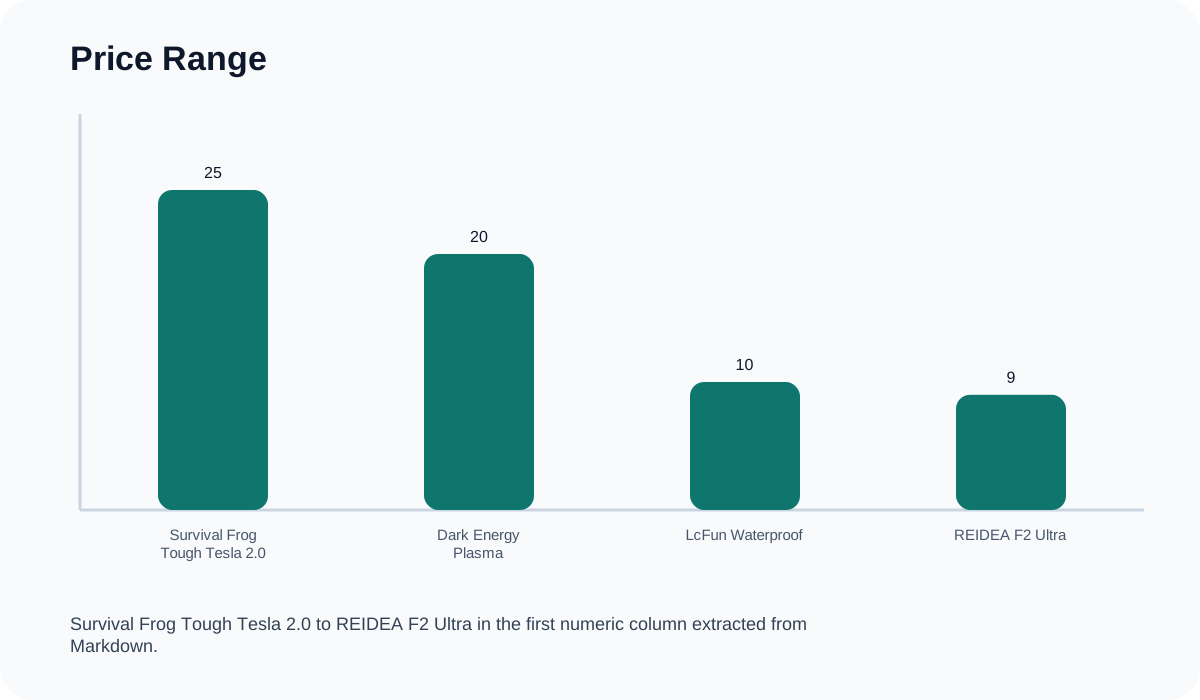
Arc Lighter Build Quality Comparison (2026)
| Product Model | Hinge/Latch Type | Price Range | Waterproof Rating | Charging Port |
|---|---|---|---|---|
| Survival Frog Tough Tesla 2.0 | Reinforced Metal Pin | 35 | IP67 (Submersible) | Micro-USB |
| Dark Energy Plasma | Steel Tension Hinge | 30 | IP67 (Submersible) | USB-C |
| LcFun Waterproof | Plastic Snap-Lock | 15 | IP56 (Splashproof) | USB-C |
| REIDEA F2 Ultra | Sliding Metal Rail | 12 | N/A | USB-C |
Note: Data reflects current market standards. Charging ports are actively migrating away from Micro-USB, though some established survival models still utilize legacy hardware.
Pre-Purchase Checklist
Before adding an arc lighter to your cart, run through this inspection checklist:
- Hinge Material: Does the product imagery clearly show a continuous metal through-pin hinge?
- Latch Integrity: Is the locking mechanism fashioned from metal or high-density polymer rather than a thin, flexible plastic clip?
- Electrode Shrouding: Are the nodes surrounded by a ceramic housing to prevent rapid oxidation and physical damage?
- True Plasma Verification: Ensure the unit is an actual arc lighter and not a “hybrid” butane blue-flame torch heavily marketed with plasma buzzwords. True arc lighters feature visible metal nodes, emit a distinct high-frequency electrical hum, and produce zero gas odor.
Final Verdict
Investing an extra 15 in an arc lighter with a steel tension hinge and a reinforced metal pin pays immediate dividends in durability. Avoid $10 budget models relying on plastic snap-locks if you intend to use the lighter in outdoor or survival scenarios; a broken hinge instantly nullifies any advertised waterproof properties and cuts the device’s lifespan short.