How to Tell if an Arc Lighter Battery Is Aging Out
Learn the critical signs of arc lighter battery degradation, from voltage sag to reduced ignition counts, and know exactly when it's time for a replacement.
Executive Summary
Identifying an aging arc lighter battery requires monitoring three primary indicators: voltage sag mid-ignition, a severe reduction in charge-to-use efficiency, and physical deformation of the chassis. Most lithium-polymer cells in arc lighters reach the end of their functional lifespan after 300 to 500 charge cycles. Beyond this threshold, users will observe their lights per charge drop from an estimated 200 down to under 50. Continuing to use a highly degraded unit can pose safety risks, including overheating and the loss of waterproof integrity.
Featured Pick: REIDEA F2 Ultra
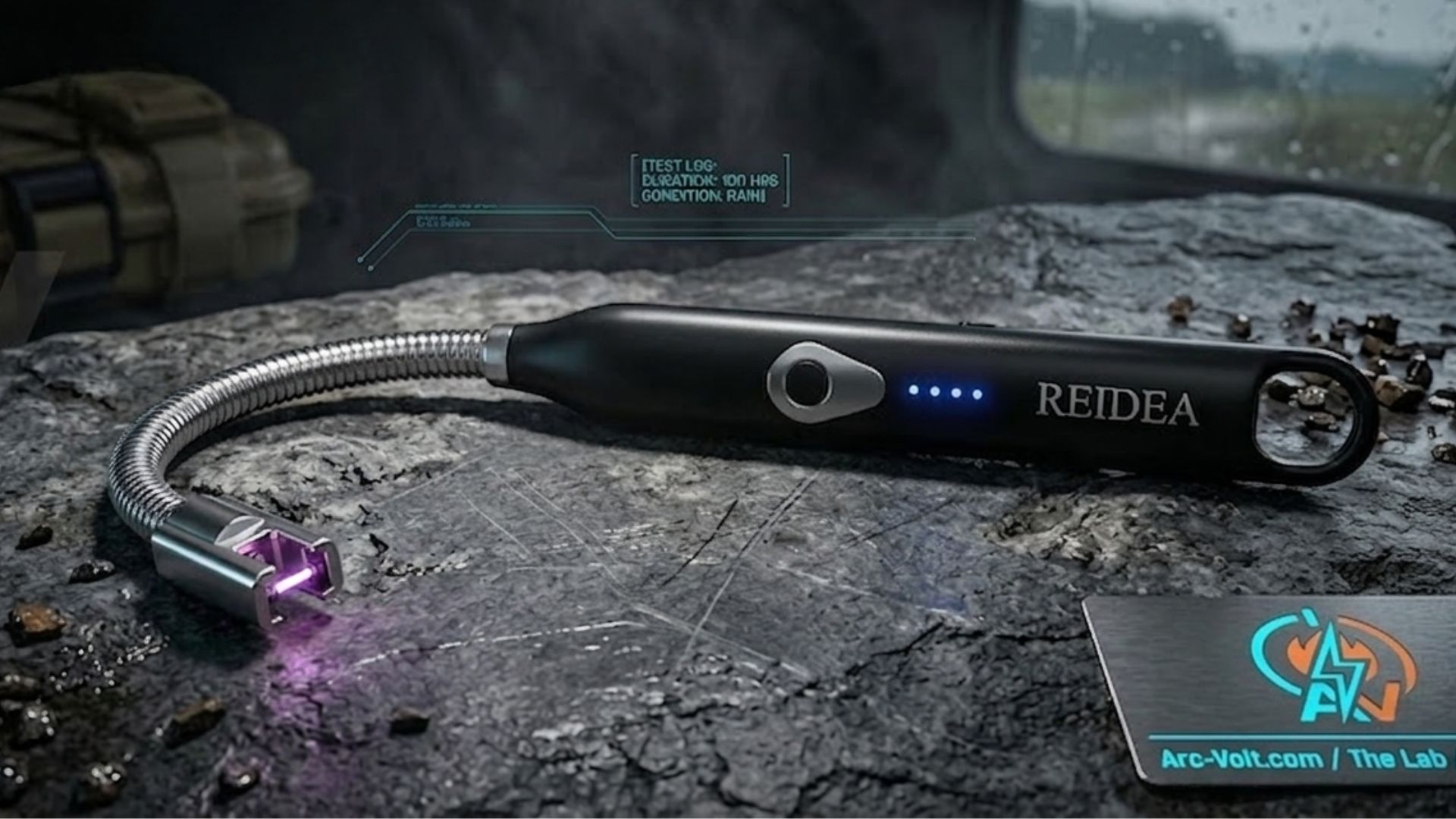
The REIDEA F2 Ultra is a flexible-neck candle lighter that fits deep jars, grills, pilot lights, and compact kitchen use while keeping USB-C charging and a slim indoor-friendly form factor.
Key Indicators of Battery Degradation
The “First Five Seconds” Rule and Voltage Sag
A healthy arc lighter sustains a plasma beam for a standard 7 to 10-second safety cutoff. As the battery ages, internal resistance increases, resulting in “voltage sag.” While older batteries may produce a strong initial spark, they frequently fail to maintain the arc for the full 5 to 7 seconds. You may also notice the plasma beam becoming thinner, wavering, or producing a higher-pitched whine than when the unit was new.
Plummeting Charge-to-Use Ratio
Under normal conditions, a fully functioning arc lighter yields between 100 and 200 ignitions per standard one-hour charge. When a battery is aging out, this ratio drastically shifts. A degraded battery often takes significantly longer to reach a full charge but only delivers 10 to 20 ignitions before dying.
Physical Swelling (“Spicy Pillows”)
Many arc lighters utilize soft-pouch lithium batteries. When these batteries degrade, they can build up gas. If your lighter’s casing deforms, or if the body feels “spongy” when pressed, this is a critical sign of imminent failure. Swelling also puts direct pressure on internal O-ring seals and lid latches, effectively compromising IPX7 waterproof ratings and making the lighter unsafe for marine or survival use.
Battery Capacity Degradation Over Time
The chart below illustrates the typical degradation path of an arc lighter battery across its charge cycle lifespan.
2026 Leading Arc Lighter Comparison
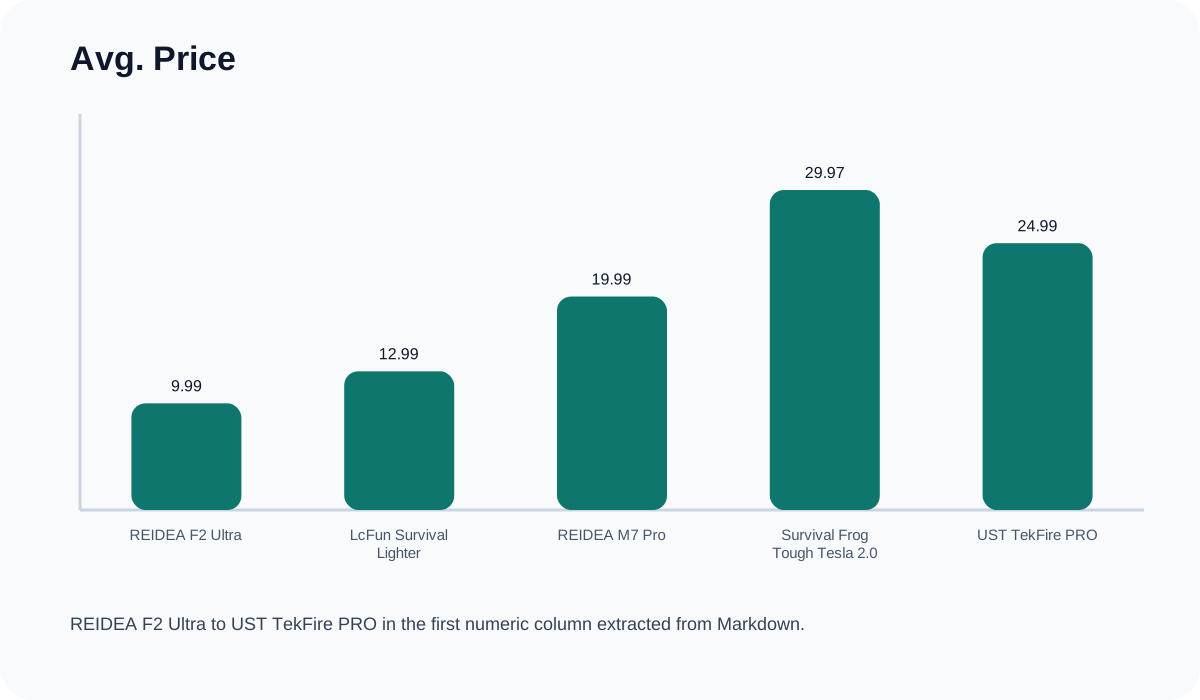
To set baseline expectations for a healthy battery, the following table compares leading models, their average prices, and their advertised battery runtimes.
| Model | Avg. Price | Waterproof Rating | Battery Runtime (Lights) | Charging Method |
|---|---|---|---|---|
| REIDEA F2 Ultra | $9.99 | Splash-resistant | 400-500 | USB-C |
| LcFun Survival Lighter | $12.99 | IPX7 (Waterproof) | 80-100 | Micro-USB / USB-C |
| REIDEA M7 Pro | $19.99 | No | 150 | USB-C |
| Survival Frog Tough Tesla 2.0 | $29.97 | IPX7 (Waterproof) | 100-150 | Micro-USB |
| UST TekFire PRO | $24.99 | Weather Resistant | 100 | Micro-USB |
On the REIDEA M7 Pro, the bottom button activates the battery indicator before use. You then slide the switch up to light the arc, and once you release it, the lighter shuts off automatically.
Diagnostic Checklist & Safety Considerations
Before assuming your battery is completely dead, rule out other common hardware issues:
- Clean the Electrodes: Carbon soot buildup on the ceramic plates can mimic battery failure. Cleaning the tips with isopropyl alcohol should be your first diagnostic step.
- Check the Hardware: Fragile ceramic plates can crack, and micro-USB ports frequently break internally before the battery actually reaches its cycle limit.
- Verify the Lid Latch: A broken spring-loaded lid latch can ruin a device’s functionality and waterproof seal independent of the battery’s health.
Crucial Safety Warnings:
- Avoid Overcharging: Many budget models lack a built-in Battery Management System (BMS). Leaving them plugged in overnight can lead to thermal runaway.
- Avoid Extreme Heat: Storing an arc lighter in a hot vehicle accelerates lithium degradation, increasing the risk of swelling or spontaneous combustion.
- Avoid Metal Tools: Never use pliers or metal tools near the active arc points; this can cause 15kV+ high-voltage shocks through the casing.
Final Verdict
If your arc lighter exhibits a wavering plasma beam, requires unusually long charge times for only a handful of ignitions, or shows any signs of physical swelling, the battery has aged out. Once an arc lighter passes the 400 charge-cycle mark, replacement is highly recommended to ensure safe and reliable operation.