How to Translate Marketing Language into Practical Use Cases
Decode power station marketing jargon. Understand the 'inverter tax', true battery cycle lifespans, and real-world weatherproof ratings before you buy.
Executive Summary
When evaluating portable power and energy storage, reading past the manufacturer’s marketing language is critical to predicting real-world performance. Consumers frequently encounter “capacity inflation” and exaggerated “weatherproof” claims. A 1000Wh power station will practically deliver only 800-850Wh due to an inherent 15-20% inverter efficiency loss. Furthermore, claims like “ultra-fast charging” and “all-day power” fluctuate wildly depending on local climate conditions and appliance demands. This guide translates promotional jargon into quantifiable use cases so you can confidently size a power station for regional grid outages or outdoor operations.
The Reality of Usable Capacity: The Inverter Tax
Advertised capacity does not equal usable capacity. To convert DC battery power to AC power for household appliances, pure sine wave inverters consume energy and generate heat. This conversion process—often termed the “Inverter Tax”—typically eats up 15% to 20% of the total capacity.
If you are planning for a localized blackout, assume an 85% efficiency rate. A 1024Wh unit will practically output about 870Wh.
Marketing Jargon vs. Practical Engineering Reality
Below is a breakdown of common marketing claims found on units like the EcoFlow Delta 2 and Bluetti AC180, and what they actually mean for your daily operations.
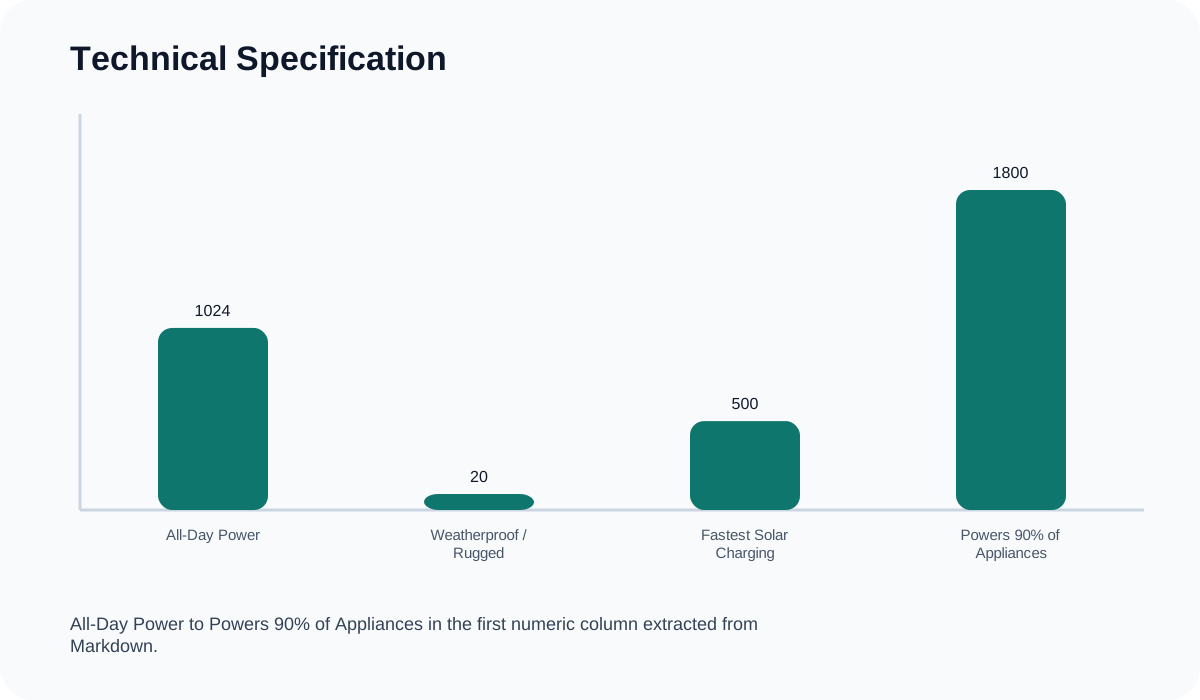
| Marketing Claim | Technical Specification | Practical Limitation (Use Case) |
|---|---|---|
| All-Day Power | 1024Wh Capacity | Will run a 60W car fridge for ~13-15 hours after inverter losses. |
| Weatherproof / Rugged | IP20 or IP21 Rating | Not waterproof; only protected against large solid objects (fingers) and vertical drops of water. |
| Fastest Solar Charging | 500W Max Solar Input | Requires 5+ hours of peak overhead sun; realistic winter/cloudy input is often <150W (Estimate). |
| Powers 90% of Appliances | 1800W AC Output | Can run a high-draw heater, but will drain the battery in less than 45 minutes. |
Analyzing Battery Chemistry and Charging Claims
”Long-Life Battery”
When brands market a “long-life” unit, look directly at the battery chemistry. LiFePO4 (Lithium Iron Phosphate) batteries offer 3,000+ charge cycles before degrading to 80% of their original capacity. Conversely, cheaper NCM alternatives—often found in budget units—only provide 500 to 800 cycles. If you use the unit daily, an NCM battery may degrade noticeably in under three years.
”Ultra-Fast Charging”
A claim like “80% in 45 minutes” assumes ideal ambient temperatures and access to high-amperage outlets. In reality, thermal throttling protects the battery during fast charges. If you are operating in a hot regional climate, charging speeds will automatically decrease to prevent overheating.
Final Verdict
Ignore the boldest print on the box. Real-world capability is dictated by inverter efficiency, battery chemistry (LiFePO4 over NCM), and strict IP ratings. By applying a standard 85% efficiency multiplier to stated Wh capacities, you can accurately match a portable power station to your exact appliance demands and local weather risks.
Pre-Purchase Translation Checklist
- De-rate the Capacity: Multiply the advertised Watt-hours (Wh) by 0.85 to find your true usable energy.
- Check the Chemistry: Demand LiFePO4 for heavy, continuous use (3,000+ cycles).
- Verify IP Ratings: Do not assume “rugged” means waterproof. Look for IP65 or higher if actual rain exposure is expected; otherwise, keep IP20/IP21 units dry.
- Assess Solar Realities: Assume you will only capture 50-70% of max solar input due to real-world cloud cover and panel angles.