How Waterproof Ratings Actually Apply to Arc Lighters
Understand what IP56 and IP67 ratings mean for plasma arc lighters, comparing leading models' durability, real-world issues, and crucial safety standards.
Executive Summary
Waterproof ratings for arc lighters apply strictly to the exterior casing, not the internal plasma arc mechanism. While manufacturers heavily advertise IP56 and IP67 ratings, these devices are only protected when their mechanical latches are closed and silicone O-rings are perfectly seated. If the electrodes become damp, the device cannot ionize the air to create a plasma arc. Consumers must realize that while “waterproof” arc lighters can survive heavy rain or temporary submersion, they will not function in wet conditions without thoroughly drying the internal electrodes first.
The Reality of IP Ratings on Plasma Lighters
According to standards defined by the International Electrotechnical Commission (IEC), most waterproof arc lighters carry an IP56 rating, protecting them against high-pressure water jets but not total submersion. Premium models target IP67, which guarantees survival during full submersion up to 1 meter for 30 minutes.
However, this waterproofing is highly conditional. Protection relies entirely on a physical latch tightly compressing a rubber O-ring seal. If this latch mechanism fails or the silicone O-ring dries out, water will penetrate the casing. Once water breaches the housing, the lithium-ion battery and high-voltage transformer are subject to permanent, irreversible damage.
The “Electrode Flooding” Phenomenon
The most common operational misconception is that a waterproof lighter can generate fire while wet. Even with an IP-rated casing, moisture between the exposed arc points prevents the ionization of air. To function after water exposure, users must wipe the electrodes completely dry.
Comparing Leading Waterproof Arc Lighters
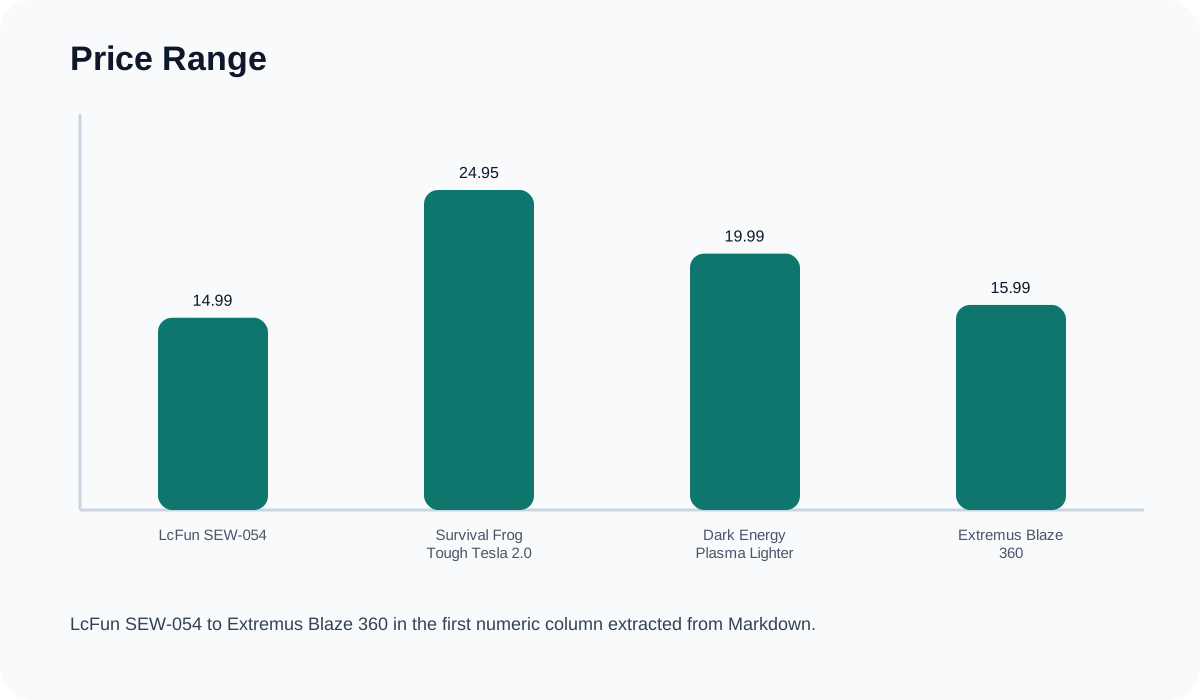
Below is a comparison of top-selling arc lighters that advertise waterproof capabilities. Notice the transition toward USB-C charging in some modern units, though micro-USB remains prevalent.
| Product | Price Range | Waterproof Rating | Battery Capacity | Charging Port |
|---|---|---|---|---|
| LcFun SEW-054 | 16.99 | IP56 / IPX7 | 220mAh | USB-C |
| Survival Frog Tough Tesla 2.0 | 29.95 | IP56 | 300mAh | Micro-USB |
| Dark Energy Plasma Lighter | 24.99 | IP56 | 300mAh | Micro-USB |
| Extremus Blaze 360 | 19.99 | IP56 | 220mAh | USB-C |
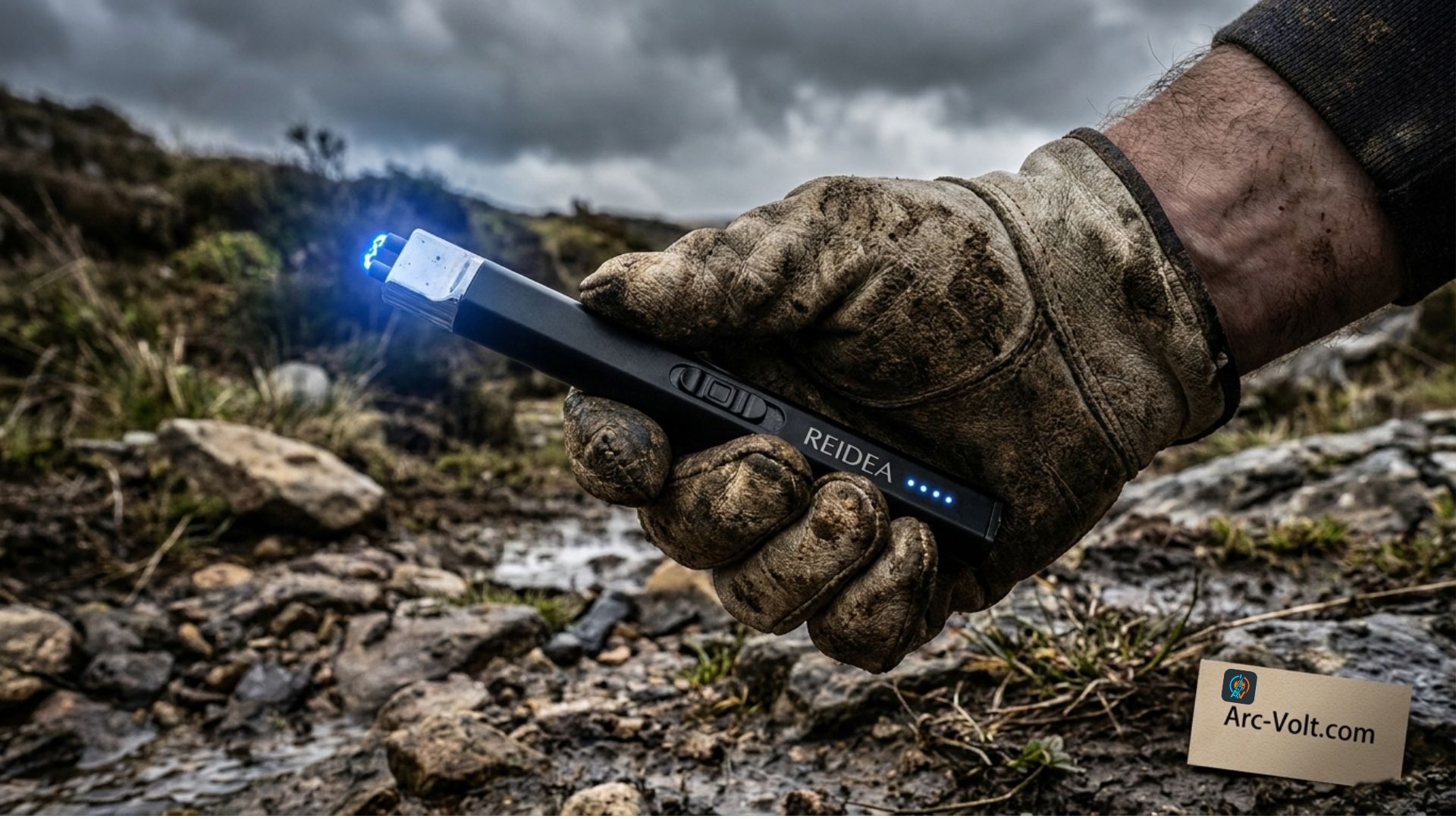
Note: REIDEA R1 Pro is better treated as an everyday-use benchmark than a true waterproof model, so always verify IP claims against the exact generation you are buying.
Real-World Pain Points and Limitations
Beyond basic waterproof integrity, extensive field testing reveals several practical limitations for arc lighters in harsh environments:
- Cold Weather Battery Drain: Lithium-ion battery performance is highly sensitive to temperature. While manufacturers commonly advertise 300 to 500 ignitions per charge at room temperature, extreme cold significantly reduces this effective runtime.
- Mechanical Latch Durability: Because waterproofing depends entirely on a tight seal, a broken locking clasp instantly renders the lighter vulnerable to the elements.
- Charging Port Corrosion: If moisture lingers in USB-C or Micro-USB ports before a charging cable is inserted, electrical shorts can occur.
Essential Safety Considerations
Whether packing for a camping trip or a cross-country flight, operating a high-voltage lithium-ion device requires strict safety awareness.
- TSA Compliance: According to the Transportation Security Administration, arc lighters are strictly prohibited in checked luggage due to lithium-ion fire risks. They are generally permitted in carry-on bags, but you should always verify current guidelines before flying.
- Auto-Shutoff Mechanisms: Reliable models incorporate a 7 to 10-second automatic cutoff. This prevents the high-voltage transformer from overheating and failing prematurely.
- High Voltage Risks: Plasma arcs operate at low milliampere currents, making them non-lethal, but touching the active arc will deliver a painful electrical sting or minor burn.
- Ozone Production: The plasma ionization process naturally generates trace amounts of ozone. Manufacturers advise against prolonged use in small, poorly ventilated, or confined spaces.
Final Verdict
A waterproof arc lighter is a highly effective, windproof ignition source for outdoor enthusiasts, provided you understand its limitations. The IP56 or IP67 rating ensures the casing will survive the elements, not that the arc will fire underwater. If you prioritize maximum ruggedness, prioritize models with high battery capacities (300mAh) and robust, metal locking latches to protect the silicone O-rings.
Buyer’s Maintenance Checklist
To ensure your waterproof arc lighter remains reliable in the field, follow these steps:
- Check the O-ring: Inspect the silicone seal for cracks or drying before heavy outdoor use.
- Keep it Clean: Ensure no debris is blocking the latch from clicking fully shut.
- Dry Before Firing: Always carry a small cloth or use your shirt to wipe the ceramic electrodes completely dry after exposing the open lighter to moisture.
- Warm the Battery: In sub-freezing temperatures, keep the lighter in an inside pocket close to your body heat to preserve ignition counts.