Multi-Day Camp Test: How Many Real Fires Can One Charge Deliver?
Field tests reveal the real-world battery life of plasma arc lighters for multi-day camping. Discover the gap between theoretical claims and actual fire-starts.
Executive Summary
While plasma arc lighter manufacturers frequently claim 250 to 300 ignitions per charge, multi-day camp testing reveals a practical reality of 40 to 60 actual fire-starts. This discrepancy stems from two primary real-world factors: cold-induced battery drain—which can reduce lithium polymer (LiPo) battery capacity by up to 60% in sub-freezing temperatures—and the extended arc duration required to ignite damp, natural tinder compared to optimal lab conditions. Despite these limitations, arc lighters offer unparalleled wind resistance (stable in 80 MPH gusts) and reliability at altitude, making them highly effective primary tools when paired with a solar charger or power bank for trips exceeding three days.
Real-World Performance Comparison
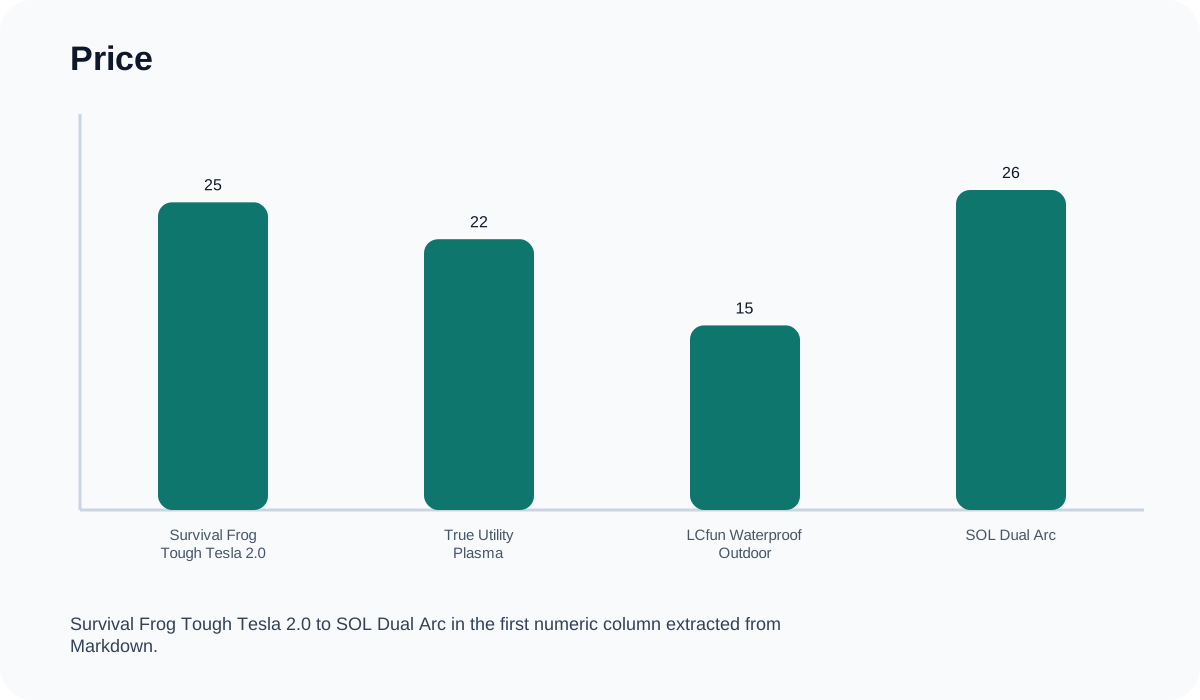
The gap between laboratory claims and wilderness realities is consistent across leading models. The following table contrasts manufacturer claims against estimated actual fire-starts in multi-day camping conditions.
| Model | Price | Claimed Ignitions | Estimated Real Fires |
|---|---|---|---|
| Survival Frog Tough Tesla 2.0 | $25 | 300 | 55 |
| True Utility Plasma | $22 | 300 | 48 |
| LCfun Waterproof Outdoor | $15 | 300 | 45 |
| SOL Dual Arc | $26 | 100 | 35 |
The Impact of Temperature on Battery Capacity
Lithium-ion and LiPo batteries are notoriously sensitive to temperature. The 220mAh batteries commonly used in premium arc lighters like the Tough Tesla 2.0 suffer significant voltage sag as temperatures drop.
Technical Analysis
Ignition Efficiency and Natural Tinder
The discrepancy between claimed strikes and real-world fires is heavily influenced by tinder quality. Laboratory claims are based on near-instantaneous ignition of highly flammable materials (like dry paper or synthetic fibers). In the wilderness, igniting damp wood shavings or natural tinder requires extended exposure to the plasma arc. Combined with standard 7-to-10 second automatic shutoff safety features, a single stubborn campfire may consume the equivalent of 5 to 10 “theoretical” ignitions.
Weather Resistance and Safety Features
Where arc lighters excel is in harsh, windy conditions. The plasma arc remains entirely stable in wind gusts up to 80 MPH, a scenario where traditional butane lighters fail entirely. Furthermore, plasma technology is immune to the atmospheric pressure issues that plague butane at high altitudes.
Modern devices in the 35 range utilize robust safety mechanisms. Physical safety latches on waterproof lids prevent accidental pocket activation, while IP56 to IPX6 waterproof ratings ensure the electronics survive rainstorms and river crossings.
Real User Pain Points
Testing and user feedback highlight three specific limitations buyers must consider:
- High-Pitched Frequency: The plasma arc emits a high-pitched whine during operation. While easily ignored by some, it is highly audible and often irritating to pets and younger campers.
- Narrow Electrode Spacing: The distance between the electrodes is fixed and narrow. This design limits the physical size of the tinder that can be placed directly in the arc path, forcing users to prepare extremely fine, thin tinder bundles.
- Deep Discharge Vulnerability: If the LiPo battery is completely drained and left uncharged, it may fail to accept a recharge via its USB-C or Micro-USB port, effectively destroying the lighter.
Final Verdict
Plasma arc lighters are exceptionally capable wilderness tools, provided expectations are managed. A fully charged device will comfortably start 40 to 60 real fires—more than enough for a standard weekend trip. However, because cold weather severely limits battery output and dead batteries cannot be repaired in the field, trips lasting longer than three days require a supplemental charging method (like a solar panel or power bank) or a secondary analog fire starter.
Arc Lighter Camping Checklist & FAQ
- How many fires will an arc lighter actually start? Expect roughly 40 to 60 real-world campfires from a single charge, despite 300+ ignition claims.
- Does cold weather ruin arc lighters? Cold does not permanently ruin them, but operating at 10°F (-12°C) can temporarily reduce battery capacity by up to 60%.
- Are they truly waterproof? Yes, leading models feature IP56 to IPX6 ratings, sealed by physical latches that keep water out of the charging ports and electrodes.
- How do I prevent battery death? Never store the lighter completely dead. Recharge the LiPo battery as soon as possible after a trip to prevent deep-discharge failure.
- Can they withstand severe wind? Yes, plasma arcs function reliably in winds up to 80 MPH.