Overlanding Test: Which Electronics Setup Handles Dust Best?
We analyze leading overlanding electronics to find which handle extreme dust best. Discover why sealed IP65+ units outperform traditional portable power stations.
Executive Summary
For overlanding in extreme environments like the Australian Outback or the Mojave Desert, electronics setups utilizing sealed, fanless designs and IP65+ ratings are the clear winners. Traditional open-vent portable power stations frequently suffer from fan failure and thermal throttling due to fine particulate ingress. Ruggedized units like the Redarc BCDC series and the Bluetti AC60 effectively mitigate the severe short-circuit risk known as the “conductive sludge” effect by using isolated circuitry and encapsulated builds.
If you are building an overlanding rig for dusty environments, prioritize sealed DC-to-DC chargers and power stations with dedicated ingress protection over high-capacity, fan-cooled units meant for clean environments.
The Threat of Conductive Sludge and Fan Failure
Fine dust ingress is not merely an aesthetic issue for overlanding electronics; it is a critical safety hazard. When fine particulate dust mixes with morning dew or condensation inside a non-sealed electronic casing, it creates a “conductive sludge.” This mixture poses a severe fire and short-circuit risk to sensitive internal components.
Open-vent systems relying on active cooling fans (such as the EcoFlow River 2 Pro or Jackery Explorer 1000) introduce mechanical failure points. In high-dust environments, grit quickly fills cooling fans, leading to bearing failure, thermal throttling, and system shutdown right when you need power the most. By contrast, fanless aluminum heat-sink designs like the Victron Orion XS 50A eliminate this mechanical failure point entirely.
Solar Efficiency Under Heavy Dust Load
Dust accumulation on solar panels typically reduces charging efficiency by 10% to 40% under normal conditions. However, in extreme environments like bull dust or sandstorms, the loss of theoretical output can be far more drastic.
Note: Values represent the percentage of maximum theoretical output retained based on dust accumulation density.
Comparison: Top Overlanding Power Solutions
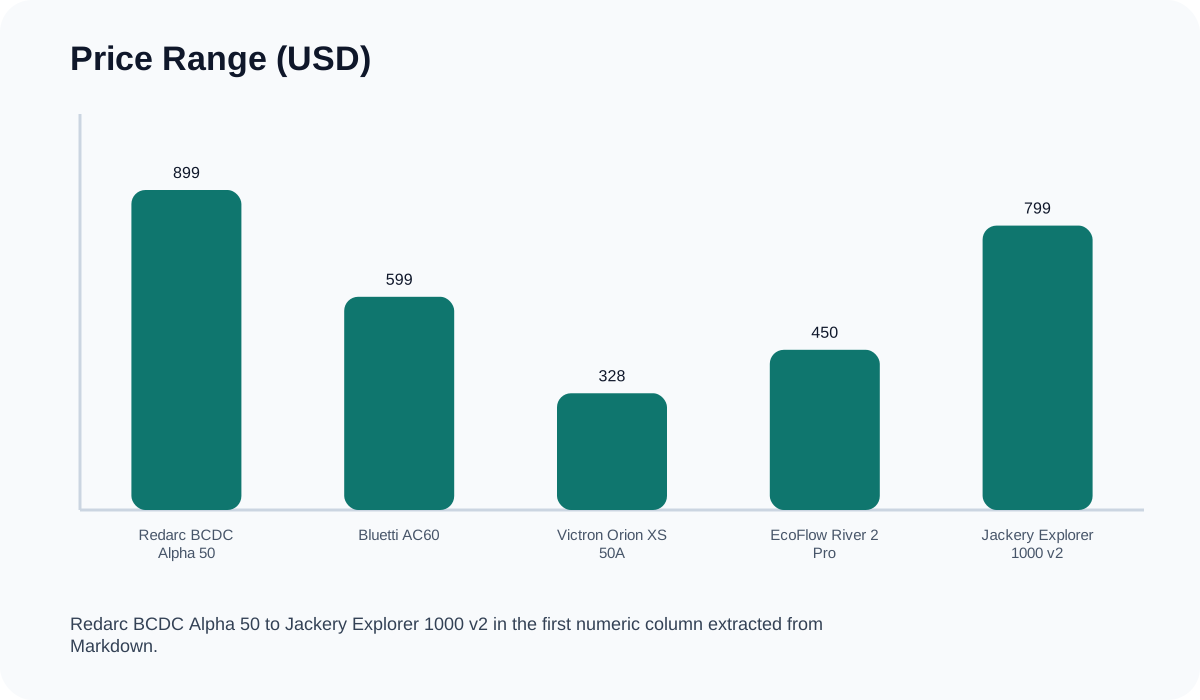
The table below breaks down the top power solutions based on their dust resistance, cooling method, and recommended use case.
| Product | IP Rating | Cooling Method | Price Range (USD) | Best Use Case |
|---|---|---|---|---|
| Redarc BCDC Alpha 50 | IP67 | Passive/Sealed | 1,099 | Engine bay or external mounting |
| Bluetti AC60 | IP65 | Isolated Airflow | 799 | Dusty bed of a truck/ute |
| Victron Orion XS 50A | IP65 | Fanless/Aluminum | 479 | Compact cabin installs |
| EcoFlow River 2 Pro | IP20 | Active Fan (Open) | 599 | Strictly interior/clean environments |
| Jackery Explorer 1000 v2 | No IP | Active Fan (Open) | 999 | Glamping/Moderate conditions |
Real-World Pain Point: Port Cover Durability
Even if a unit boasts an IP65 (dust-tight) or IP67 (temporary immersion) rating, real-world user sentiment reveals a major vulnerability: port covers.
The durability of rubber seals on device ports dictates the true lifespan of the unit’s ingress protection. Once rubber port covers tear, stretch, or fail to seat correctly due to UV exposure or repeated use, the device’s ingress protection is effectively zeroed out, rendering it just as vulnerable as a non-rated unit.
Final Verdict
If your travels take you into heavy dust, sand, or dirt, invest in IP65 or IP67 rated systems.
- Best for Engine Bays / External: Redarc BCDC Alpha 50 (IP67)
- Best for Truck Beds: Bluetti AC60 (IP65)
- Best for Cabin Integration: Victron Orion XS 50A (IP65)
Avoid open-vent, fan-cooled units (like the EcoFlow River 2 Pro or Jackery Explorer 1000) for dusty exterior environments, as they lack the IP ratings necessary to survive continuous fine particulate exposure.
Dust-Proofing Checklist
- Check the IP Rating: Ensure devices are at least IP65 (the “6” indicates the enclosure is completely dust-tight).
- Inspect Port Covers Regularly: A torn rubber seal voids all dust protection. Replace damaged seals immediately.
- Wipe Solar Panels Daily: Prevent the 10% to 76% efficiency loss caused by dust buildup.
- Beware of Condensation: Dust plus moisture equals conductive sludge inside unsealed electronics. Ensure units are either sealed or kept in climate-controlled cabins.