Plasma Lighter vs Ferro Rod for Bug-Out Bags
Compare plasma lighters and ferro rods for bug-out bags. We analyze battery life, cold-weather reliability, waterproof claims, and user pain points.
Executive Summary
For bug-out bag preparation, the choice between a plasma lighter and a ferrocerium (ferro) rod comes down to a trade-off between immediate convenience and long-term grid-down reliability.
Plasma lighters offer windproof, fuel-free ignition via high-voltage arcs, making them incredibly fast and easy to use. However, they are limited by battery lifespans and suffer severe efficiency drops in freezing temperatures. Conversely, ferro rods are skill-based, mechanical fire starters that operate flawlessly in any climate, offering a near-infinite lifespan without the need for electricity. Modern survival strategies recommend a redundancy approach: packing a plasma lighter for primary, rapid use, alongside a high-yield ferro rod as a fail-safe backup.
Quick Comparison Table
Below is a side-by-side technical comparison of typical plasma lighters versus standard ferro rods.
| Feature | Plasma Lighter | Ferro Rod |
|---|---|---|
| Initial Cost | 45 | 35 |
| Ignition Method | Dual/Quad Electric Arc | Manual Friction Spark |
| Power Source | Lithium-ion (USB-C/Micro) | Kinetic Energy |
| Estimated Lifespan | 300-500 charge cycles | 5,000 - 20,000 strikes |
| Wet Weather Performance | Excellent (if IP67 case is sealed) | Good (requires wiping dry prior to strike) |
Performance Analysis
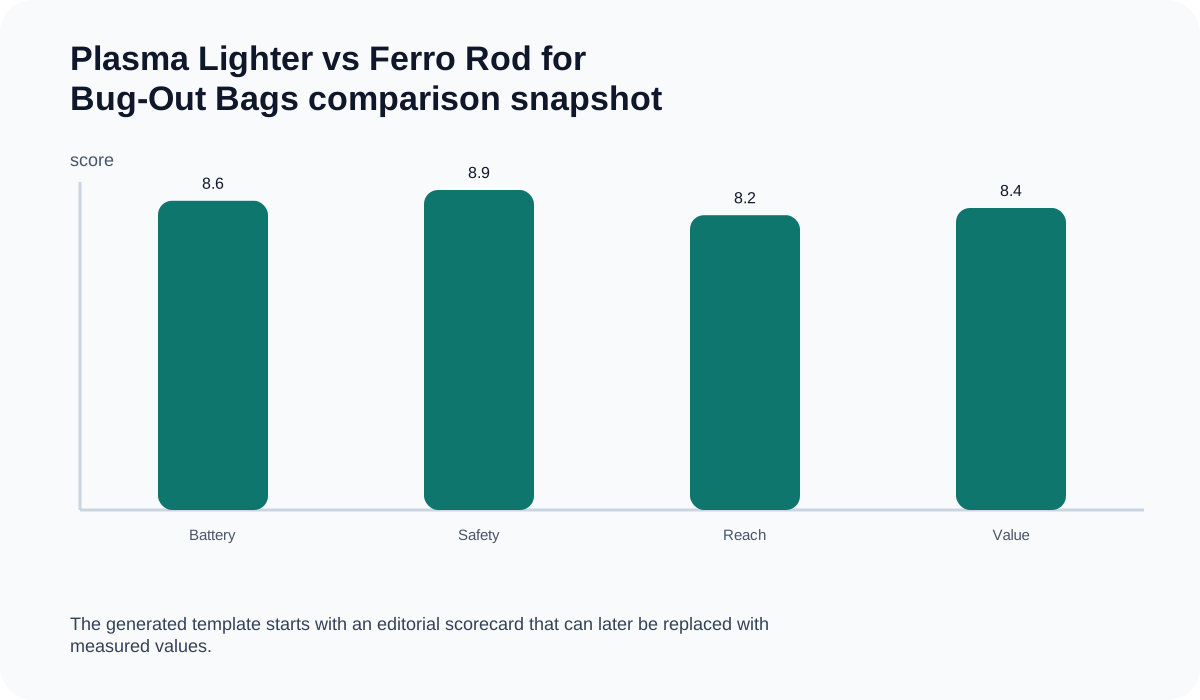
To understand how these tools behave in real-world survival scenarios, we compared them across four critical metrics: Ease of Use, Cold Weather Reliability, Durability, and Speed to Flame.
Plasma Lighters: High-Tech Speed
Electronic fire starters like the Survival Frog Tough Tesla, LC Fun Waterproof Plasma Lighter, and PowerLix Outdoor Arc Lighter utilize a lithium-ion battery to generate a dual or quad electrical arc.
- Capacity: A standard bug-out plasma lighter typically delivers 100-300 ignitions per charge. Assuming a survivalist starts 3 fires a day, we estimate a single charge could last up to a month (estimated), provided the battery is healthy.
- Weatherproofing: Most top-tier models feature an IP67-rated waterproof casing. As long as the clasp is sealed, it survives full submersion.
- Drawbacks: The lithium-ion core is vulnerable to extreme temperatures. Below 32°F (0°C), battery efficiency drops significantly.
Ferro Rods: Unfailing Backup
Ferrocerium rods, such as the Uberleben Zünden, Exotac nanostriker XL, and Bayite 1/2 Inch Ferrocerium Rod, require zero power and rely entirely on kinetic energy.
- Lifespan: Depending on thickness, a ferro rod lasts between 5,000 and 20,000 strikes. (The Uberleben Zünden is rated for 12,000 to 20,000 strikes).
- Cold Weather: Because they rely on physical friction rather than chemical battery reactions, ferro rods operate flawlessly at sub-zero temperatures.
- Drawbacks: They require dedicated practice. A ferro rod throws sparks, not a sustained flame, necessitating the preparation of highly flammable, bone-dry tinder.
Real User Pain Points & Safety Considerations
Field tests and user reports highlight a few distinct limitations for both tools that should dictate how you pack your bug-out bag:
- The Narrow Arc Gap (Plasma): A major user pain point with plasma lighters is the narrow physical space between the electrical nodes. Unlike the wide shower of sparks from a ferro rod, the narrow arc struggles to ignite thick tinder, chunky wood shavings, or unfrayed paracord.
- Heat Sensitivity (Plasma): Lithium-ion batteries carry a risk of swelling or rupturing if stored in high-heat environments for extended periods, such as a hot car trunk in the middle of summer.
- High-Frequency Noise (Plasma): The electrical arc produces a distinct, high-pitched frequency. Users note this can agitate dogs and other domestic pets in close quarters.
Final Verdict: The Redundancy Strategy
When packing a 72-hour or long-term bug-out bag, you should not choose between these tools—you should carry both.
The Optimal Setup: Use a plasma lighter as your primary ignition source. Its windproof, instant heat saves time and calories when you are exhausted and need a fire rapidly. Pack a robust ferro rod (like the Uberleben Zünden or Bayite) as your fail-safe backup. If an EMP occurs, your battery degrades over a 3-5 year storage period, or temperatures drop below freezing, the ferro rod ensures you are never left without fire.
Bug-Out Fire Starter Checklist
- Primary Fire: Plasma lighter (IP67 rated, fully charged every 6 months).
- Secondary Fire: 1/2-inch Ferrocerium rod (rated for 10,000+ strikes).
- Tinder Processing: A carbon-steel knife with a 90-degree spine (for striking the ferro rod).
- Dry Tinder: Waterproof tinder tabs or cotton balls soaked in petroleum jelly (especially helpful to bridge the gap of the plasma lighter’s narrow arc).