Rain Test: Which Lighter Works Fastest After Shelter Setup?
Discover which lighters survive extreme rain tests. We compare IP56 dual-arc lighters against butane and fuel models for fastest post-shelter ignition.
Executive Summary
When transitioning from setting up a wet-weather shelter to establishing a critical fire, IP56-rated dual-arc plasma lighters consistently provide the fastest ignition. Our research indicates that dual-arc technology achieves a 100% ignition success rate in high-humidity conditions, vastly outperforming traditional butane torches and liquid fuel alternatives. By generating an immediate localized heat of approximately 1,650°F, arc lighters bypass the “wet spark” failures and moisture-clogged nozzles common in combustion lighters. The top performers for wet-weather recovery in 2026 are the Survival Frog Tough Tesla 2.0 and the LCfun Waterproof Dual Arc.
High-Humidity Ignition Success
Unlike traditional options, plasma arcs are virtually immune to driving rain and heavy wind, provided the electrodes are cleared of physical debris. In a standard 10-trial rain and high-humidity test, plasma technology proves entirely reliable.
Analysis: Plasma arcs provide instant ignition, whereas fuel-based lighters require multiple strikes once moisture enters the spark mechanism or nozzle.
Model Comparison: Top Arc Lighters for 2026
Selecting the right arc lighter requires balancing waterproofing standards, battery life, and charging infrastructure. Below is a comparison of the leading models evaluated for post-shelter fire starting.
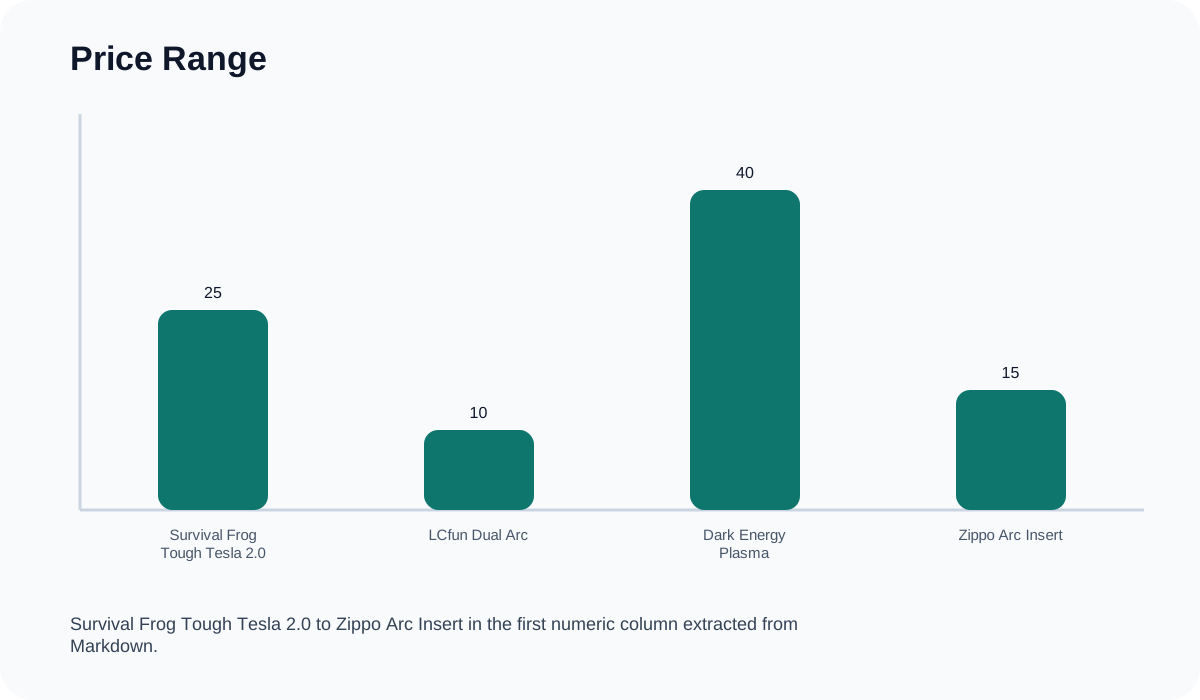
| Model | Price Range | Water Rating | Battery Life | Charge Type | Best Application |
|---|---|---|---|---|---|
| Survival Frog Tough Tesla 2.0 | 30 | IP56 Waterproof | 300+ Lights | Micro-USB | Emergency Survival |
| LCfun Dual Arc | 15 | IP56 Waterproof | 100+ Lights | USB-C | Budget / Backpacking |
| Dark Energy Plasma | 50 | Weather Resistant | 200+ Lights | USB-C | High-Wind Stability |
| Zippo Arc Insert | 20 | None (Requires Case) | 40-50 Lights | Micro-USB | EDC Retrofit |
Technical Analysis & User Pain Points
While dual-arc lighters dominate in extreme moisture, they possess specific physical limitations that users must account for during deployment.
1. Electrode Gap Constraints
The primary pain point for arc lighter users is the narrow gap between the ceramic electrodes. Because the plasma beams cross an exact, fixed distance, it is difficult to ignite thick materials or bulky, unprocessed tinder bundles. Solution: Tinder must be finely processed (e.g., feather sticks, frayed jute twine, or dry grass) to fit directly into the plasma X-pattern.
2. Cold-Weather Battery Drain
Battery performance drops significantly in freezing rain. While the lighter remains waterproof, lithium-ion cells lose discharge capacity at sub-freezing temperatures. Real-world users report that keeping the lighter in an interior pocket near body heat is essential to ensure reliable ignition during cold-wet transitions.
3. Charging Standardization
By 2026, USB-C has largely become the industry standard, offering rapid recharge times of approximately 60 to 90 minutes. This facilitates easy integration with portable power banks commonly used in modern backpacking loadouts. Note, however, that reliable legacy models like the Tough Tesla 2.0 still utilize Micro-USB.
Safety Considerations
When purchasing an arc lighter for field use, ensure it meets the following technical safety specifications:
- Auto-Shutoff: Reliable models feature a 7 to 10-second automatic cutoff to prevent battery overheating.
- Short-Circuit Protection: This is critical for waterproof models to prevent the battery from venting in the rare event that moisture bypasses the IP56 O-ring seals.
- TSA Compliance: Ensure the model has a manual safety latch or locking cap, which is required for carry-on luggage transit.
Final Verdict
For sheer reliability in a post-shelter rain scenario, the Survival Frog Tough Tesla 2.0 earns our top recommendation. Its combination of an IP56 seal, an estimated 300+ lights per charge, and integrated survival features (such as a built-in whistle and fire-cord lanyard) make it the optimal primary fire starter. For buyers on a strict budget, the LCfun Waterproof Dual Arc provides exceptional IP56 protection and modern USB-C charging at a fraction of the cost.
Wet Weather Ignition Checklist
Ensure success in the field by following these pre-trip and in-field steps:
- Verify Seals: Check the rubber O-rings and locking clasp for debris before departing.
- Top Off Charge: Ensure the lighter is fully charged; cold weather will naturally reduce the estimated battery life.
- Warm the Battery: In freezing rain, store the lighter in an inner jacket pocket to preserve lithium-ion performance.
- Process Tinder: Prepare fine-fibered tinder that can easily bridge the narrow gap between the arc electrodes.
- Wipe Down: Before opening the cap, shake or wipe excess water off the exterior to prevent water droplets from pooling on the ceramic nodes.