Shoreline Test: How Salt Air Affects Small Rechargeable Gear
Discover why standard IP ratings fail in saltwater environments and how to protect your rechargeable gear from galvanic corrosion and port oxidation.
Executive Summary
Small rechargeable gear deployed in coastal environments faces an aggressive, invisible threat: airborne saline mist. Data indicates that electronics operated within 10 miles of a coastline suffer a dramatic two-thirds reduction in functional lifespan compared to inland usage. This degradation occurs because standard Ingress Protection (IP) ratings are calibrated for fresh water, ignoring the electrolytic and corrosive nature of sodium chloride (salt). For outdoor enthusiasts relying on arc lighters, headlamps, and power banks, exposed USB-C ports and mechanical switches become primary failure points within weeks of exposure.
The “Fresh Water Only” Fallacy
Consumers often rely on IP67 and IP68 certifications, assuming their gear is impervious to all moisture. However, standard laboratory testing exclusively utilizes fresh water. When introduced to coastal environments, salt mist bypasses these fresh water standards due to its chemical properties.
Salt residue fundamentally compromises small electronics by migrating through standard rubber gaskets and forming a highly conductive film over electronic components. This triggers accelerated galvanic corrosion—an electrochemical process where distinct metals deteriorate rapidly when connected by an electrolyte like saltwater.
Degradation Timeline in Coastal Environments
The most vulnerable components are those directly exposed to the elements, specifically USB-C ports and tactile switches. Without diligent maintenance, these systems fail at an exponential rate.
Within just 30 days of coastal exposure, port oxidation reaches an estimated 80%, often leading to complete charging failure.
Leading Rechargeable Gear Comparison
Understanding how popular outdoor gear stands up to these specific shoreline vulnerabilities is crucial for buyers. Below is a breakdown of prominent rechargeable equipment and their coastal weak points.
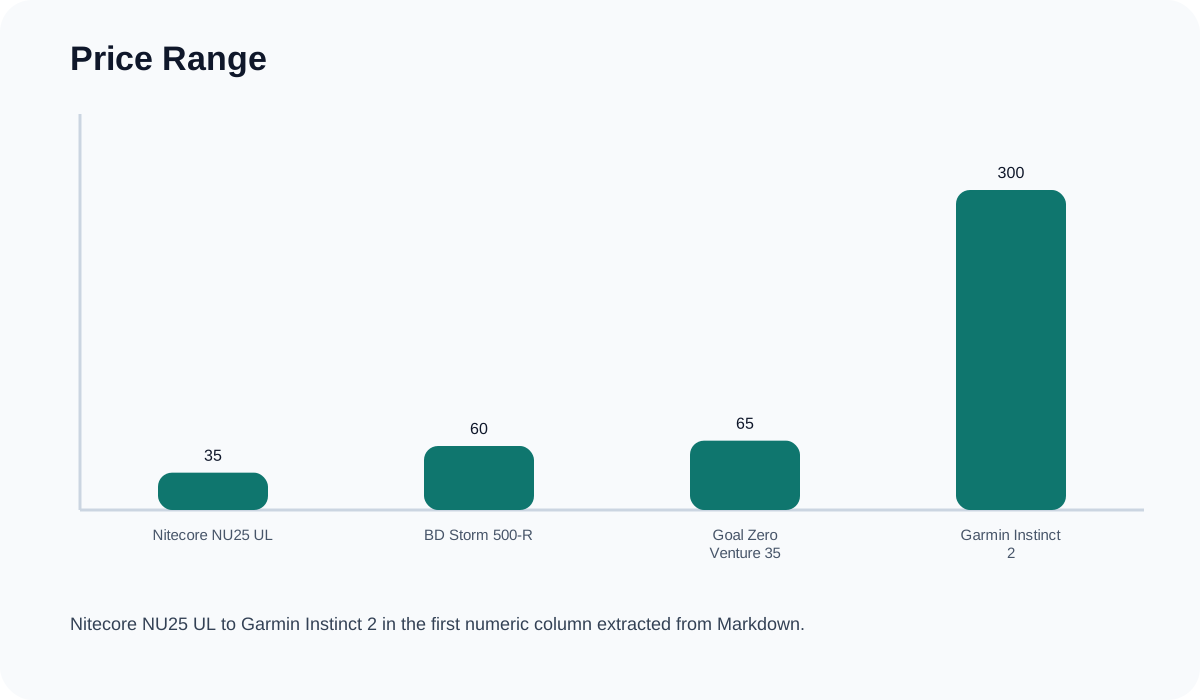
| Product | Price Range | Waterproof Claim | Battery Specs | Charging Method | Coastal Vulnerability |
|---|---|---|---|---|---|
| Nitecore NU25 UL | 45 | IP66 (Dust/Water Jet) | Up to 160 hours | USB-C (Internal) | Exposed port if rubber flap fails. |
| BD Storm 500-R | 75 | IP67 (Submersible) | Up to 350 hours | USB-C (Internal) | Salt buildup in optical lens cracks. |
| Goal Zero Venture 35 | 80 | IP67 (Submersible) | 9600 mAh capacity | USB-C (Sealed) | Port cover wear-and-tear degradation. |
| Garmin Instinct 2 | 450 | 10 ATM (100m) | Infinite (Solar) | Proprietary 4-Pin | Pin pitting and contact corrosion. |
Safety Risks and User Pain Points
The impact of salt air extends beyond simple hardware failure, frequently introducing critical safety hazards and frustrating user experiences.
Primary Safety Considerations
- Thermal Runaway Risks: Salt films trap heat by acting as insulators. This reduces heat dissipation during charging, increasing the likelihood of thermal runaway in compact batteries.
- Phantom Power Draws: Conductive salt deposits bridge electrical contacts, potentially causing short circuits or unexpected battery drains.
- Blocked Venting Systems: In extreme cases, crystallized salt can block pressure relief valves on battery casings, allowing dangerous internal gas pressure to build up.
Documented User Pain Points
- Sticky Operation: Invisible salt crystal growth inside housings causes buttons and switches to jam.
- Intermittent Charging: Microscopic pitting on USB-C contact pins breaks the electrical connection, resulting in devices that refuse to take a charge.
- Marketing Complacency: Users routinely suffer from a false sense of security provided by “waterproof” branding, leading them to abandon basic maintenance protocols.
Overcoming the Maintenance Paradox
The most significant threat to shoreline electronics is the Maintenance Paradox. To remove corrosive salt, users must rinse their gear in fresh water. However, fearing water ingress, users often avoid washing “waterproof” devices, leaving the salt intact to aggressively corrode the device.
Shoreline Gear Maintenance Checklist
- Fresh Water Rinsing: Always rinse your IP-rated gear under a gentle stream of fresh water after shoreline use to dissolve salt deposits.
- Thorough Drying: Air-dry completely before attempting to open any charging ports or accessing internal components.
- Inspect Gaskets: Regularly check rubber port covers and O-rings for cracking or wear.
- Do Not Trust IP Ratings Blindly: Treat IP67 and IP68 as failsafes for accidents, not as a license to ignore post-exposure cleaning.
Final Verdict
Standard IP ratings are insufficient for assessing gear longevity in coastal climates. If you regularly use rechargeable gear within 10 miles of the ocean, you must adopt proactive fresh water maintenance. Devices featuring exposed USB-C or proprietary charging pins will fail rapidly from galvanic corrosion if salt mist is allowed to dry and crystallize on the surface. Protect your investment by treating all shoreline exposure as a mandatory trigger for fresh water rinsing.