Shoulder-Season Test: Which Fire-Starting System Handles Cold Rain Best?
Discover which fire-starting systems survive near-freezing temperatures and relentless rain. We analyze dual-arc lighters versus butane and ferro rods.
Executive Summary
For shoulder-season conditions—defined by high humidity, relentless rain, and near-freezing temperatures—Waterproof Dual-Arc Plasma Lighters (IP56 rated) are the most reliable electronic fire-starting systems. Traditional butane lighters suffer a complete failure rate at 31.1°F (-0.5°C) due to a lack of vapor pressure, rendering them effectively useless in the cold. While low temperatures temporarily reduce lithium-ion battery capacity by 20% to 50%, keeping a dual-arc lighter in a base-layer pocket restores up to 90% of its discharge efficiency. For ultimate reliability without requiring manual dexterity, a dual-arc system producing a 3,000°C–6,000°C plasma bridge ensures rapid ignition of damp tinder when traditional flames falter.
System Comparison: Fire Starters in Wet/Cold Conditions
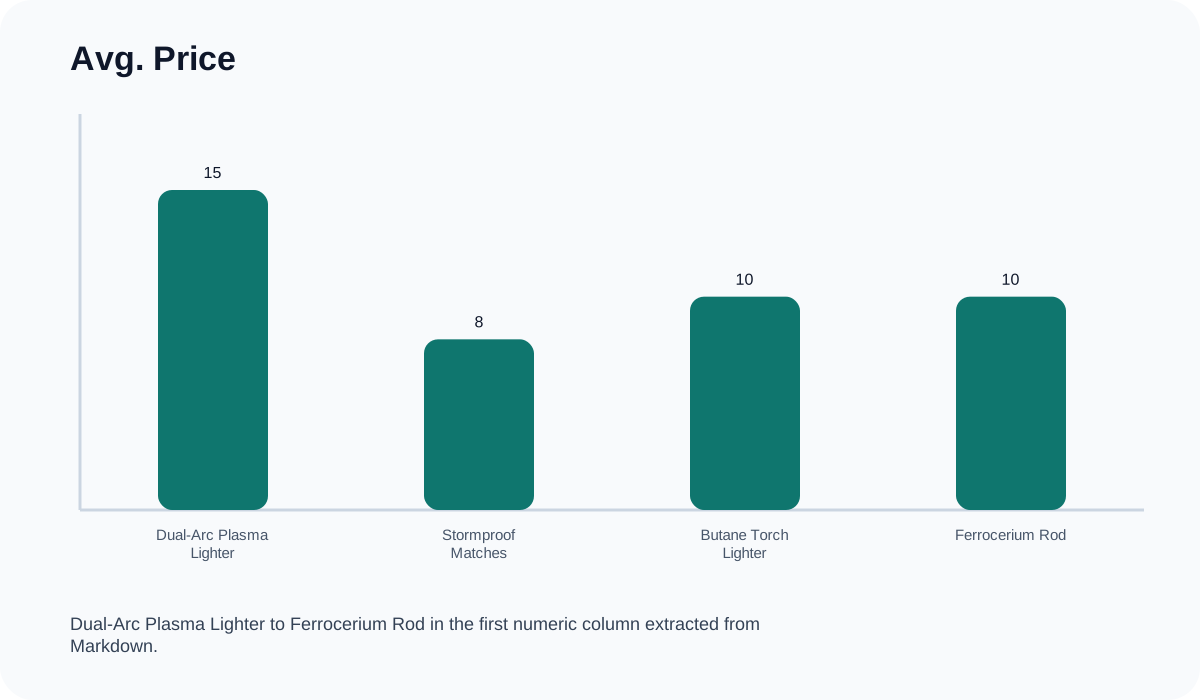
| System Type | Avg. Price | Water Resistance | Cold Reliability | Charging Method | Best For |
|---|---|---|---|---|---|
| Dual-Arc Plasma Lighter | 25 | IP56 (High Pressure Jets) | High (if kept warm) | USB-C / Micro-USB | Windy/Rainy Shoulder Season |
| Stormproof Matches | 12 | Waterproof Case / Submersible | Excellent | N/A (Single Use) | Emergency Backup |
| Butane Torch Lighter | 40 | Low (Moisture Clogs Nozzle) | Poor (Fails < 32°F) | Refillable Butane | Dry/Mild Conditions |
| Ferrocerium Rod | 20 | Impervious | Excellent | Manual Friction | Expert Survivalists |
The Failure Zone: Why Butane Loses to Plasma
Shoulder-season camping presents a strict physical limitation for traditional fuel: butane stops vaporizing effectively at exactly 31.1°F (-0.5°C). Below this threshold, spark-wheel and piezo-ignition butane lighters will not generate enough gas pressure to hold a flame.
Dual-arc plasma lighters bypass this chemical limitation entirely. Utilizing an internal lithium-ion power source, these lighters create an electrical plasma bridge capable of reaching 3,000°C to 6,000°C. Research shows that dual-arc configurations are significantly more effective than single-arc models because they offer a broader ignition surface area, an essential feature when attempting to dry and ignite damp survival tinder.
Surviving the Elements: Hardware and Battery Management
While plasma arcs provide superior localized heat, the hardware housing and internal battery remain susceptible to shoulder-season elements if improperly managed.
Waterproofing and IP56 Ratings
Moisture is the natural enemy of high-voltage electronics. Non-waterproof plasma lighters are highly prone to short-circuiting if water droplets enter the electrode housing while the lid is open. Leading models—such as the LCfun Waterproof Dual Arc, Survival Frog Tough Tesla Lighter 2.0, SOL Fire Lite, and UST TekFire PRO—utilize IP56-rated enclosures. These integrate thick O-ring seals and mechanical locking clasps to completely isolate internal components from driving rain and submersion risks.
Mitigating the Lithium-Ion Cold Drop
Lithium-ion batteries experience a well-documented 20% to 50% capacity drop when exposed to near-freezing temperatures. User testing confirms a simple pocket-warming strategy entirely mitigates this issue. Storing the lighter in a base-layer pocket against body heat restores up to 90% of the unit’s sub-freezing discharge efficiency.
Real-World Pain Points
Users operating arc lighters in wet, cold conditions consistently report two main drawbacks:
- Electrode Residue: Igniting damp tinder creates carbon buildup on the ceramic posts. This residue must be routinely scraped clean to maintain a strong electrical arc.
- Narrow Gap Limitations: The physical distance between the four electrode posts is restricted, making it difficult to light bulky, thick fire-starting materials directly.
Final Verdict
For continuous, windproof ignition during cold rain, an IP56-rated dual-arc lighter is the superior primary fire-starting tool—provided you actively manage battery temperature. While a ferrocerium rod or UCO Stormproof Match Kit provides a fail-proof mechanical backup requiring zero electrical power, the 3,000°C+ heat of an arc lighter removes the need for fine motor skills when hands are numb and freezing.
Shoulder-Season Fire Starting Checklist
- Keep it Warm: Store your arc lighter in an inside pocket near your core to prevent the 20-50% cold-weather battery drain.
- Verify the Seal: Ensure your lighter features a genuine IP56 rating, an intact O-ring, and a secure locking clasp (e.g., SaberLight or Tough Tesla 2.0).
- Clean the Nodes: Carry a small brush or use a pocket knife edge to gently scrape carbon buildup off the electrodes after lighting damp tinder.
- Prep Your Tinder: Because of the narrow arc gap, physically break tinder down into thin, fibrous strands before attempting ignition.