Submersion Test: Which Fire Starter Recovers Fastest After Water Exposure?
Discover which fire starters recover fastest after water submersion. We compare IPX7 arc lighters, ferro rods, and traditional lighters for survival.
Executive Summary
When exposed to water, ferrocerium rods and IPX7-rated arc (plasma) lighters recover the fastest, requiring 1 to 10 seconds to produce a viable spark or arc. In contrast, traditional liquid-fuel lighters and standard butane lighters (like the classic Bic) suffer catastrophic failure when wet, requiring anywhere from 45 seconds to an estimated 5 minutes to dry out and function again. For wet-weather survival and camping, modern arc lighters offer a superior blend of rapid 5-to-10-second recovery times and push-button convenience, provided their waterproof seals remain intact.
Recovery Speed: The 60-Second Submersion Test
When dropped in water for one minute, different ignition mechanisms exhibit vastly different recovery profiles. Friction-based and electric systems bypass the moisture vulnerabilities that plague wick and flint designs.
Comparison Table: Performance by Category
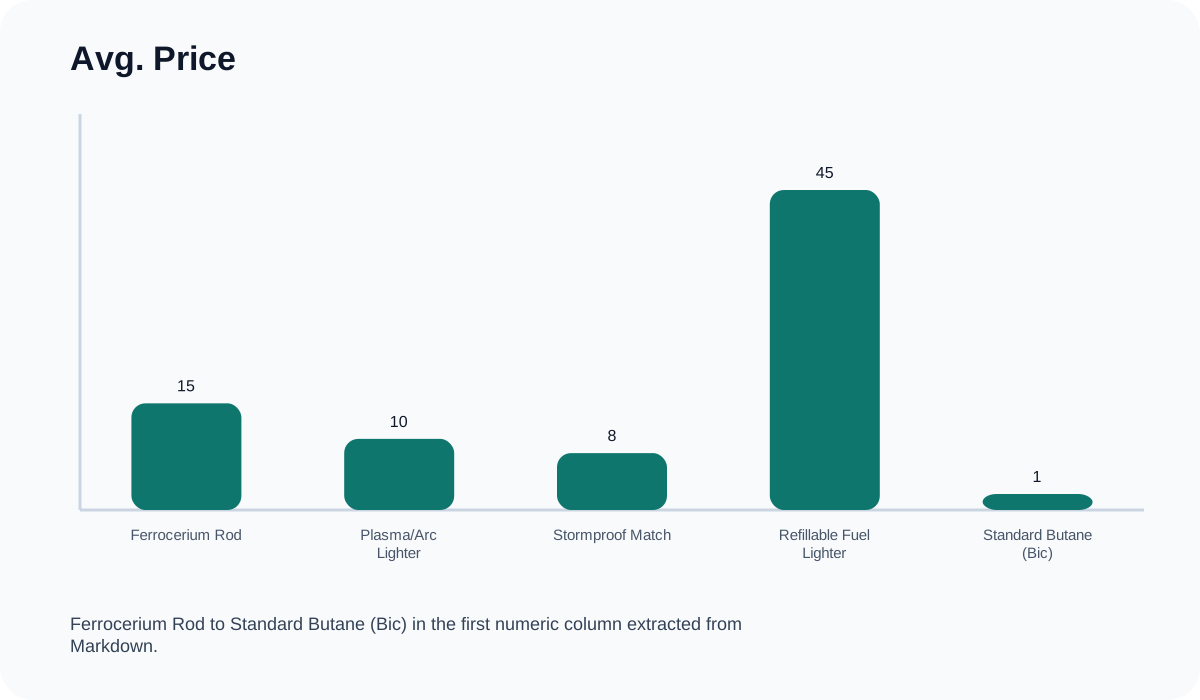
Based on standardized gear testing, the table below highlights the performance, price range, and recovery speed of primary fire starter categories following water exposure.
| Product Type | Avg. Price | Waterproof Rating | Recovery Time (Post-Dip) | Ignition Method |
|---|---|---|---|---|
| Ferrocerium Rod | 25 | Naturally Waterproof | 1-2 Seconds | Friction/Spark |
| Plasma/Arc Lighter | 35 | IPX7 (1m for 30m) | 5-10 Seconds | Electric Arc |
| Stormproof Match | 12 | IPX7 Case Required | Instant (if dry) | Chemical Reaction |
| Refillable Fuel Lighter | 60 | O-ring Sealed | 30-60 Seconds | Flame/Wick |
| Standard Butane (Bic) | 2 | None | 3-5 Minutes (estimated) | Flint Wheel/Flame |
Analysis: Why Arc Lighters and Ferro Rods Dominate
The Instant Recovery of Ferrocerium
Ferrocerium rods (e.g., Light My Fire Swedish Firesteel) remain the most resilient fire starters on the market. Because they rely on physical friction to shave off oxidizing metals, water does not impair the chemical reaction. Recovery requires only a single wipe against a pant leg, allowing them to spark in 1 to 2 seconds.
The IPX7 Arc Lighter Advantage
Arc lighters, such as the Survival Frog Tough Tesla Lighter 2.0 and the LcFun Waterproof Plasma Lighter, utilize a sealed outer casing with an O-ring and a locking clasp to achieve an IPX7 rating. If submerged while closed, water never reaches the electrodes. Upon opening, residual moisture on the electrodes may cause a temporary short-circuit, but a quick shake or wipe allows the electric arc to stabilize within 5 to 10 seconds. Furthermore, modern survival lighters have shifted to USB-C ports, allowing for an approximate 1.5-hour rapid charge if the battery is depleted.
The Vulnerability of Liquid Fuel and Butane
Liquid-fuel lighters (e.g., Zippo, Exotac titanLIGHT) are the slowest to recover. If a waterproof seal fails, the cotton wick becomes saturated with water instead of fuel, necessitating significant drying time (often exceeding 45 seconds). Standard Bics fail immediately when the flint wheel gets wet, requiring an estimated 3 to 5 minutes of drying time before the flint can create sufficient friction to ignite the butane.
Real User Pain Points & Safety Considerations
Despite the clear advantages of plasma and ferrocerium, buyers must navigate specific limitations:
- Hardware Failures: Latch failures on budget lighters are a common real-world pain point. If the latch breaks, water ingress is inevitable, rendering the IPX7 rating void.
- Electrode Residue: Buildup of carbon or sap on arc lighter electrodes can mimic water-induced failure. Regular cleaning is required.
- Battery Degradation: Lithium-ion batteries in arc lighters can degrade if left fully discharged in sub-zero cold storage. Self-discharge over months is a primary concern for emergency go-bags.
- Thermal and Auditory Safety: Avoid touching the electrodes; plasma arcs reach temperatures exceeding 1,100°C (2,000°F). Additionally, the high-frequency pitch emitted by arc lighters can cause distress in household pets or sensitive children.
Final Verdict
For guaranteed, fail-safe ignition in wet environments, a high-quality ferrocerium rod is unparalleled. However, for users who want the ease of push-button ignition without sacrificing wet-weather reliability, an IPX7-rated arc lighter is the optimal choice. While standard butane and liquid-fuel lighters have their place in urban or dry environments, they pose too high a risk of failure during aquatic or heavy-rain survival scenarios.
Wet Weather Survival Checklist
To ensure your fire starter functions after a dunking, follow these steps before heading out:
- Inspect O-rings: Ensure the rubber seal on your arc lighter or match case is free of sand, dirt, and lint.
- Test the Latch: Confirm the locking mechanism snaps securely into place.
- Clean Electrodes: Use an alcohol swab to remove soot or sap from plasma nodes.
- Top Off the Charge: Ensure your arc lighter is 100% charged before deployment to mitigate cold-weather battery drop-off.