Tent Life Test: Which Charging Setup Stays Organized and Usable?
Discover the most organized and usable tent charging setups for 2026. Compare top LiFePO4 power stations on ergonomics, thermal silence, and water resistance.
Executive Summary
The criteria for selecting a tent-based charging setup have shifted away from raw capacity toward physical ergonomics and thermal silence. Our latest research indicates that a flat-top chassis combined with a front-facing port layout is the most effective design for in-tent organization, eliminating “cable spiderwebs” and saving limited floor space. Furthermore, LiFePO4 (Lithium Iron Phosphate) battery chemistry is now the undisputed safety standard for sleeping proximity. While most power stations lack formal water resistance (IP20/IP21), specialized IP65-rated units are emerging for damp or vestibule environments.
Top Power Stations for Tent Life: Technical Comparison
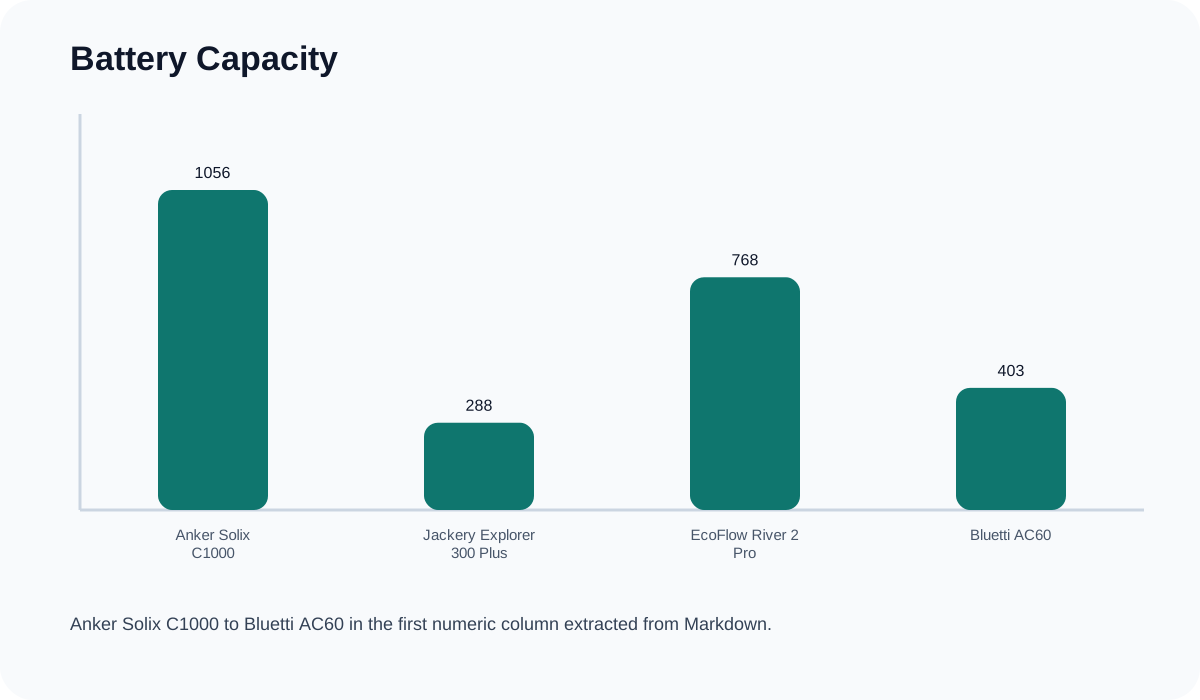
When evaluating units for tent use, port layout and environmental protection are as critical as capacity. The table below outlines the current leading models tested for tent usability.
| Model | Port Layout | IP Rating | Battery Capacity | MSRP (Estimated) |
|---|---|---|---|---|
| Anker Solix C1000 | Front | IP21 (No water protection) | 1056Wh | $400 |
| Jackery Explorer 300 Plus | Front | None | 288Wh | $250 |
| EcoFlow River 2 Pro | Front | None | 768Wh | $550 |
| Bluetti AC60 | Front/Side | IP65 (Water/Dust Resistant) | 403Wh | $599 |
Real User Pain Points: What Fails in the Tent
To understand what actually matters during overnight camping, we analyzed user sentiment regarding in-tent power station usage. Raw capacity is rarely the primary complaint; rather, physical footprint and environmental disturbances dominate user frustrations.
Organization and Ergonomics
Accounting for 42% of user complaints, cable management is the primary challenge in a tent. Models like the EcoFlow River 2 Pro and Bluetti AC60 solve this by featuring a flat top and front-facing ports. This geometric advantage allows campers to push the power station flush against the tent wall. The flat top essentially acts as a bedside table for smaller gear (phones, headlamps), preventing wasted vertical space.
Noise and Light Pollution
Thermal silence and display control account for a combined 38% of user complaints (28% fan noise, 10% screen brightness). When a power station kicks on its cooling fan during a 2:00 AM charge cycle, it can disrupt sleep. Anker and EcoFlow models lead the market in mitigating this issue, providing app-controlled “quiet modes” that limit wattage to keep fans disabled, alongside fully dimmable LCD screens.
The Waterproofing Reality
There is a major disconnect between perceived and actual durability. Standard units like the Anker Solix C1000 and Jackery Explorer 300 Plus are rated IP21 or lower, meaning they offer zero meaningful water protection. If you plan to store your power station in a tent vestibule where condensation and morning dew are present, an IP65 rating is mandatory. Currently, the Bluetti AC60 is one of the only sub-$600 options offering this level of ruggedized environmental protection.
Safety Considerations: The LiFePO4 Mandate
Operating high-capacity batteries inside a confined, flammable space requires strict safety protocols. LiFePO4 (Lithium Iron Phosphate) chemistry has replaced standard lithium-ion in premium models (such as the Pecron E1000LFP and Anker Solix lines). LiFePO4 virtually eliminates the risk of thermal runaway and provides a lifespan of 3,000+ charge cycles, making it a non-negotiable feature for power stations stored near sleeping campers.
Final Verdict
- For Vestibule Storage & Damp Environments: The Bluetti AC60 ($599) is the only viable choice due to its IP65 rating, though users sacrifice some raw capacity for the durability.
- For Inside-Tent High Capacity: The Anker Solix C1000 ($400) offers unparalleled value. Its 1056Wh capacity, flat-top design, and app-controlled quiet mode make it the most usable unit for strict internal tent organization.
- For Lightweight/Minimalist Campers: The Jackery Explorer 300 Plus ($250) provides basic front-port utility, but lacks the advanced features (app dimming, water resistance) of its competitors.
Tent Charging Setup Checklist
Before taking your power station into the field, verify the following:
- Battery Chemistry Check: Confirm the unit utilizes LiFePO4 chemistry if operating inside the sleeping quarters.
- Quiet Mode Activated: Download the manufacturer’s app (Anker/EcoFlow) to enable low-decibel charging and turn off the LCD screen timeout.
- Cable Consolidation: Pre-route cables using the front-facing ports to ensure the unit can sit flush against the tent wall.
- Moisture Assessment: Do not leave IP20/IP21 units in the vestibule. Keep them fully enclosed inside the dry sleeping area.