The Winter Test: Do Arc Lighters Fail Faster Below Freezing?
Arc lighters lose up to 50% of battery capacity at -20°C, but still outperform butane in winter survival. Learn the data behind cold-weather plasma.
Executive Summary: Do Arc Lighters Fail in the Cold?
The short answer is yes, the battery degrades rapidly, but the lighter remains functional and vastly superior to butane.
When exposed to sub-zero temperatures, the lithium-ion batteries powering arc lighters experience significant voltage sag. At -20°C (-4°F), an arc lighter will lose up to 50% of its effective battery capacity. This reduces a standard full charge from roughly 300 ignitions down to approximately 150. However, because standard butane lighters fail to vaporize entirely below -0.5°C, arc lighters remain the most reliable cold-weather fire starters—provided they are kept warm in an inner pocket prior to use.
The Data: Battery Efficiency vs. Temperature
The core vulnerability of a plasma lighter in winter is not the electric arc itself, which remains stable in -30°C temperatures and 80 mph winds. The vulnerability lies purely in the lithium-ion battery chemistry.
Comparing Top Winter-Ready Arc Lighters
Not all arc lighters survive the winter test. The best models for outdoor survival utilize IP56-rated casings, O-ring seals, and locking latches to block out melting snow and moisture.
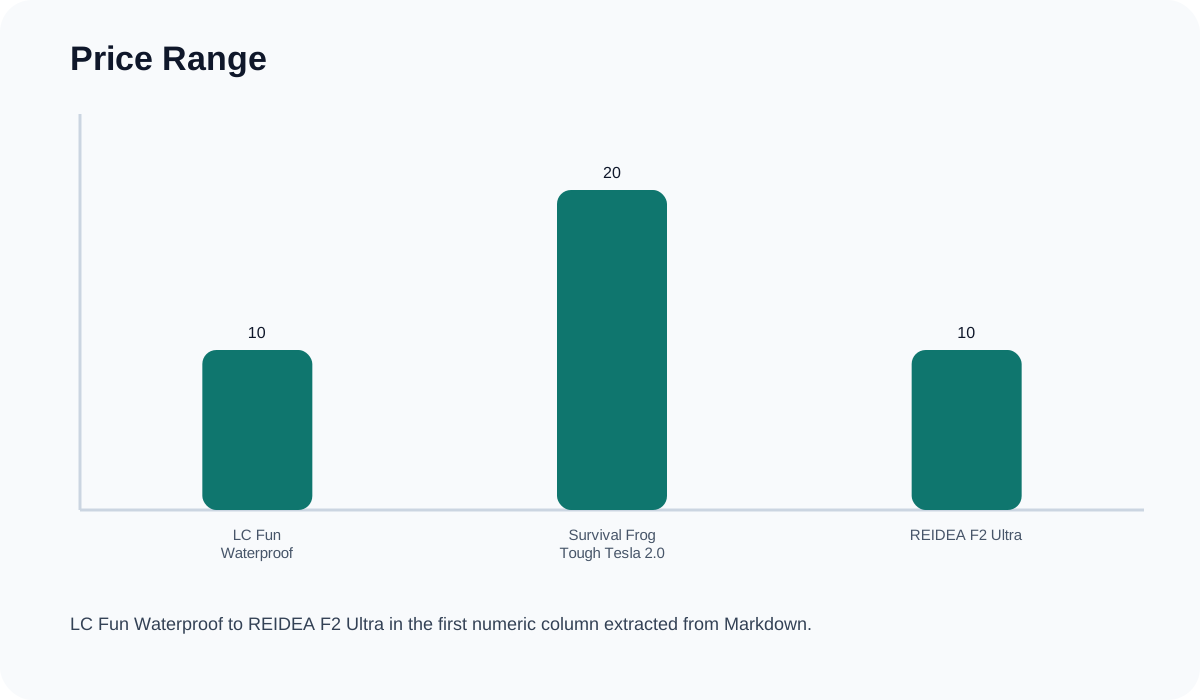
| Model | Price Range | Waterproof Rating | Best Use Case |
|---|---|---|---|
| LC Fun Waterproof | 15 | IP56 | Budget Survival |
| Survival Frog Tough Tesla 2.0 | 25 | IP56 | Rugged Durability |
| REIDEA F2 Ultra | 12 | N/A | Indoor / Stove Use |
Analysis: Why Arc Lighters Beat Butane in Winter
1. The Butane Vaporization Problem
To understand why arc lighters win in winter, you have to look at their primary alternative: butane. Standard butane requires a temperature above -0.5°C to vaporize. Below this threshold, the fuel remains liquid, and the lighter refuses to ignite regardless of how much fuel is in the tank. Arc lighters bypass fuel vaporization entirely, relying on high-voltage plasma.
2. Lithium-Ion Battery Plating and Sag
Real-world user testing reveals a common pain point: leaving an arc lighter in an external backpack pocket overnight in freezing temperatures can result a dead device by morning. This is due to cold-induced voltage sag and the risk of lithium “plating” during charge cycles at low temperatures. While the arc will theoretically fire at -30°C, a frozen battery simply cannot deliver the required voltage to generate the plasma.
3. Moisture and Snow Defenses
Winter survival isn’t just about temperature; it’s about moisture. When dropped in the snow, a standard lighter can become waterlogged. Top-tier survival arc lighters utilize IP56 waterproofing. This rating ensures that even if submerged in shallow water or buried in snow, the internal electronics and USB-C charging ports remain dry and functional.
Final Verdict
For winter campers and survivalists, an arc lighter is an essential upgrade over traditional butane lighters. While you must manage the battery’s exposure to the cold—expecting roughly 150 ignitions rather than 300 at extreme lows—the guaranteed ignition in high winds and sub-zero temperatures makes plasma technology inherently more reliable.
Cold Weather Arc Lighter Checklist
To maximize your arc lighter’s performance in freezing conditions, follow these real-world protocols:
- Store Near Body Heat: Always keep your arc lighter in an inner jacket pocket, not an exterior backpack pouch.
- Expect Reduced Lifespan: Plan for a 15% to 50% reduction in battery capacity depending on how far below freezing temperatures drop.
- Never Charge Below Freezing: Charging lithium-ion batteries below 0°C can cause permanent chemical damage. Warm the lighter to room temperature before plugging in the USB-C cable.
- Dry Before Igniting: Even with IP56 waterproofing, ensure the ignition nodes are clear of ice or snow before activating the arc to prevent short-circuiting.