Vehicle Kit Test: What Still Works After a Summer in the Trunk?
Summer trunk temperatures can reach 170°F, destroying lithium batteries and emergency supplies. Discover which vehicle kits survive extreme heat.
Executive Summary
Summer trunk temperatures frequently peak between 130°F and 170°F. This creates a highly hostile environment capable of degrading standard lithium-ion batteries, liquefying medical adhesives, and destroying emergency preparedness kits. Based on our latest research, traditional Lithium-Ion (NMC) jump starters risk thermal runaway and severe capacity loss at these temperatures. The most reliable solutions for permanent summer vehicle storage are supercapacitor jump starters, like the Milwaukee Hot Shot, and power stations utilizing LiFePO4 (LFP) battery chemistry. To maintain emergency readiness, drivers must actively rotate vulnerable items—such as first aid kits and plastic water bottles—and rely on insulated storage strategies.
Battery Degradation in Extreme Heat
Battery chemistry is the primary failure point in summer vehicle kits. Standard Lithium-Ion cells experience a “silent drain” effect where heat accelerates self-discharge, leaving the kit dead when you need it most. At an estimated 158°F (peak direct sun trunk temperatures), standard NMC lithium batteries retain only 60% of their capacity after 30 days and present a high risk of battery “pillowing” or swelling.
Comparing Heat-Resilient Vehicle Gear
We evaluated leading portable power and jump-starting equipment to determine their viability for permanent, hot-weather trunk storage.
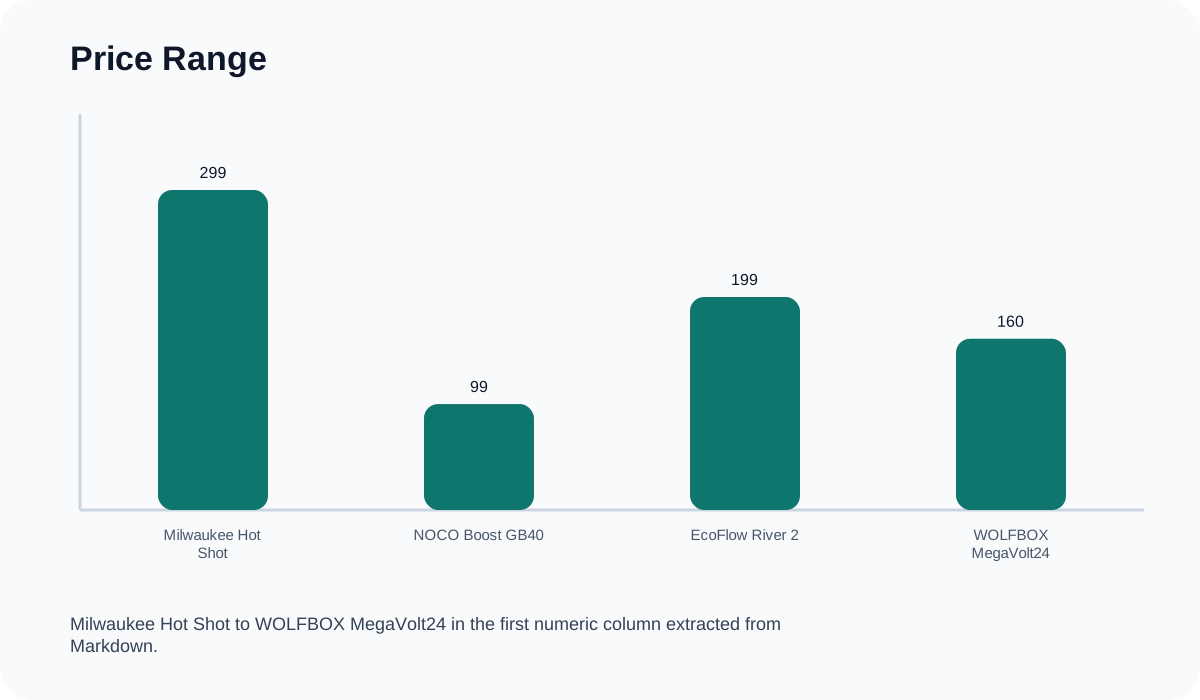
| Product | Category | Tech Type | Price Range | Waterproof Rating | Heat Survival Note |
|---|---|---|---|---|---|
| Milwaukee Hot Shot | Jump Starter | Supercapacitor | 320 | IP65 | Superior; no battery to degrade or swell. |
| NOCO Boost GB40 | Jump Starter | Lithium-Ion | 120 | IP65 | Moderate; store in cool trunk areas to avoid swelling. |
| EcoFlow River 2 | Power Station | LiFePO4 | 230 | None | Stable chemistry, but high-temp display failure risk. |
| WOLFBOX MegaVolt24 | Jump Starter | Lithium-Ion | 180 | IP64 | High peak power (4000A); rugged casing resists warping. |
Analysis: The Battery Chemistry Divide
When standard NMC cells exceed 140°F (60°C), they risk thermal runaway—a dangerous condition where the battery can ignite. Users frequently report their budget jump starters “pillowing,” expanding so much they no longer fit inside their protective cases.
In contrast, Lithium Iron Phosphate (LiFePO4) remains stable at much higher temperatures. However, even LiFePO4 units like the EcoFlow River 2 experience 2-3 times faster capacity loss when stored at 122°F compared to room temperature. This data emphasizes the need to keep portable power stations at a 40-60% State of Charge (SOC) during storage to minimize degradation.
Analysis: Beyond Power - Supply Failures
Power isn’t the only casualty of a hot trunk. Routine emergency supplies are highly vulnerable:
- Medical Kits: Heat causes medical tape and bandages to lose adhesion, leaving behind a sticky, impossible-to-remove residue. Antibiotic ointments frequently separate or leak under high pressure.
- Hydration: Storing plastic water bottles in extreme heat can cause the plastic to leach a bitter, chemical taste (BPA/Microplastics) into the drinking water.
- Digital Displays: LCD screens on power stations can become glitchy or entirely unreadable after prolonged exposure to extreme heat.
Safety Considerations
- Aerosol Explosion Risk: Tire inflator cans (like Fix-A-Flat) can explode if left in direct sunlight inside the cabin or in high-heat trunk areas.
- Pressure Build-up: Sealed plastic containers warp or burst as air expands in the heat, potentially leaking fluids onto electronic gear.
- Charging Hazards: Never charge a lithium battery immediately after it has been sitting in a 130°F+ trunk. Allow the device to cool to room temperature first to prevent internal damage or fire.
Final Verdict
For users who want zero-maintenance vehicle reliability during the summer, supercapacitor technology is the clear winner. Because it lacks a chemical battery, the Milwaukee Hot Shot eliminates the risk of degradation, pillowing, and thermal runaway entirely, making it the safest and most heat-resilient permanent trunk storage option on the market.
Summer Trunk Survival Checklist
- Check Battery Chemistries: Upgrade from traditional Lithium-Ion to Supercapacitor or LiFePO4 for permanent trunk storage.
- Manage State of Charge: If keeping a LiFePO4 power station in the trunk, maintain it at 40-60% SOC rather than 100% to slow heat-related degradation.
- Utilize ‘Low-Trunk’ Storage: Keep vulnerable items underneath the trunk floorboard (near the spare tire), which remains significantly cooler than the upper trunk compartment.
- Rotate Medical Supplies: Replace adhesive bandages and ointments at the start of every summer.
- Remove Aerosols: Take pressurized tire inflators out of the vehicle if parking in direct, peak-summer sunlight.