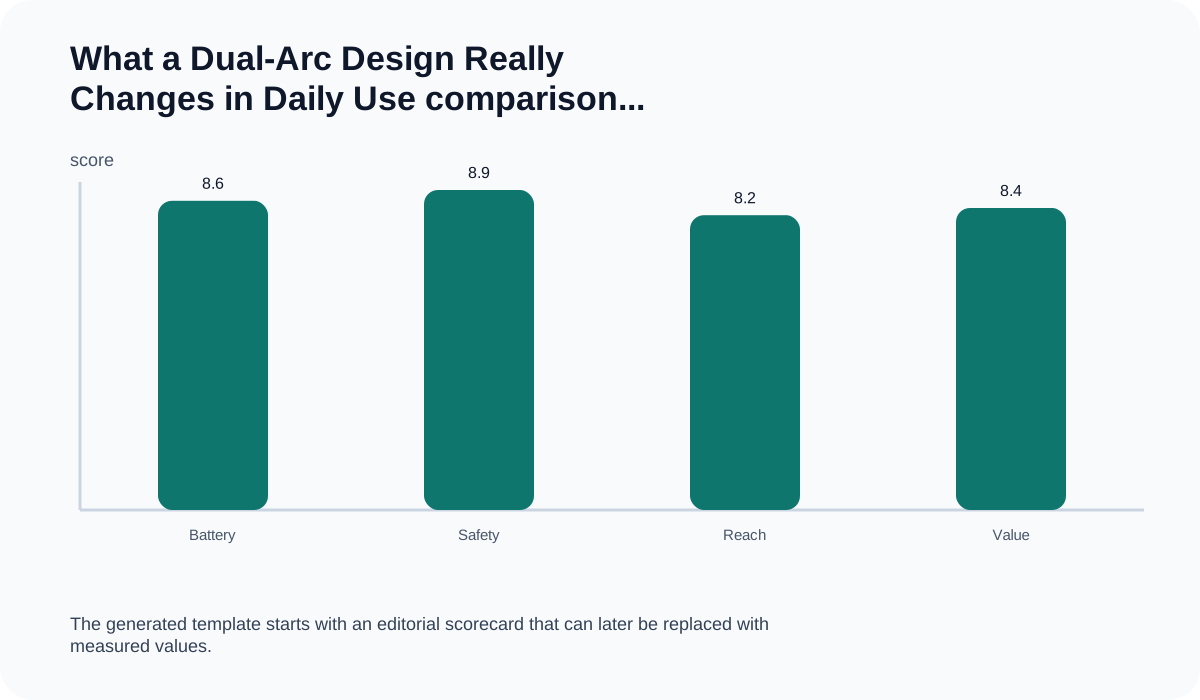
What a Dual-Arc Design Really Changes in Daily Use
Discover how upgrading to a dual-arc plasma lighter impacts daily use, featuring up to 50% faster ignition speeds and crucial battery life trade-offs.
Executive Summary
Upgrading from a single-arc to a dual-arc plasma lighter fundamentally shifts the user experience by prioritizing ignition power over battery efficiency. Dual-arc designs create a cross-pattern ignition point that doubles the heat surface area, allowing materials to ignite up to 50% faster. This makes them significantly better for camping, lighting candles, and burning uneven tinder in windy conditions. However, this increased performance comes at a cost: battery life drops from an average of 300 lights per charge to roughly 100-200 lights. For buyers, the choice is straightforward—if you prioritize speed and wind resistance over days between charges, the dual-arc is the superior tool.
The Real-World Impact of Dual-Arc Technology
Ignition Efficiency: 50% Faster Lighting
Dual-arc systems utilize an “X-pattern” electrical current, which creates a broader focal point of heat compared to the pinpoint precision required by a single arc. In daily use, this translates to up to 50% faster ignition times. You no longer have to carefully position uneven tinder or candle wicks into a tiny gap; the larger surface area of the dual arcs easily catches materials, making it a highly practical tool for outdoorsmen and home users alike.
The Battery Trade-Off
Powering two overlapping plasma beams requires significantly more energy. While standard single-arc lighters yield between 250 and 300 ignitions per charge, dual-arc models typically drain after 100 to 180 ignitions. Depending on your usage, a 1.5 to 2-hour charge via a modern USB-C connection is required more frequently.
Waterproofing and Environmental Limits
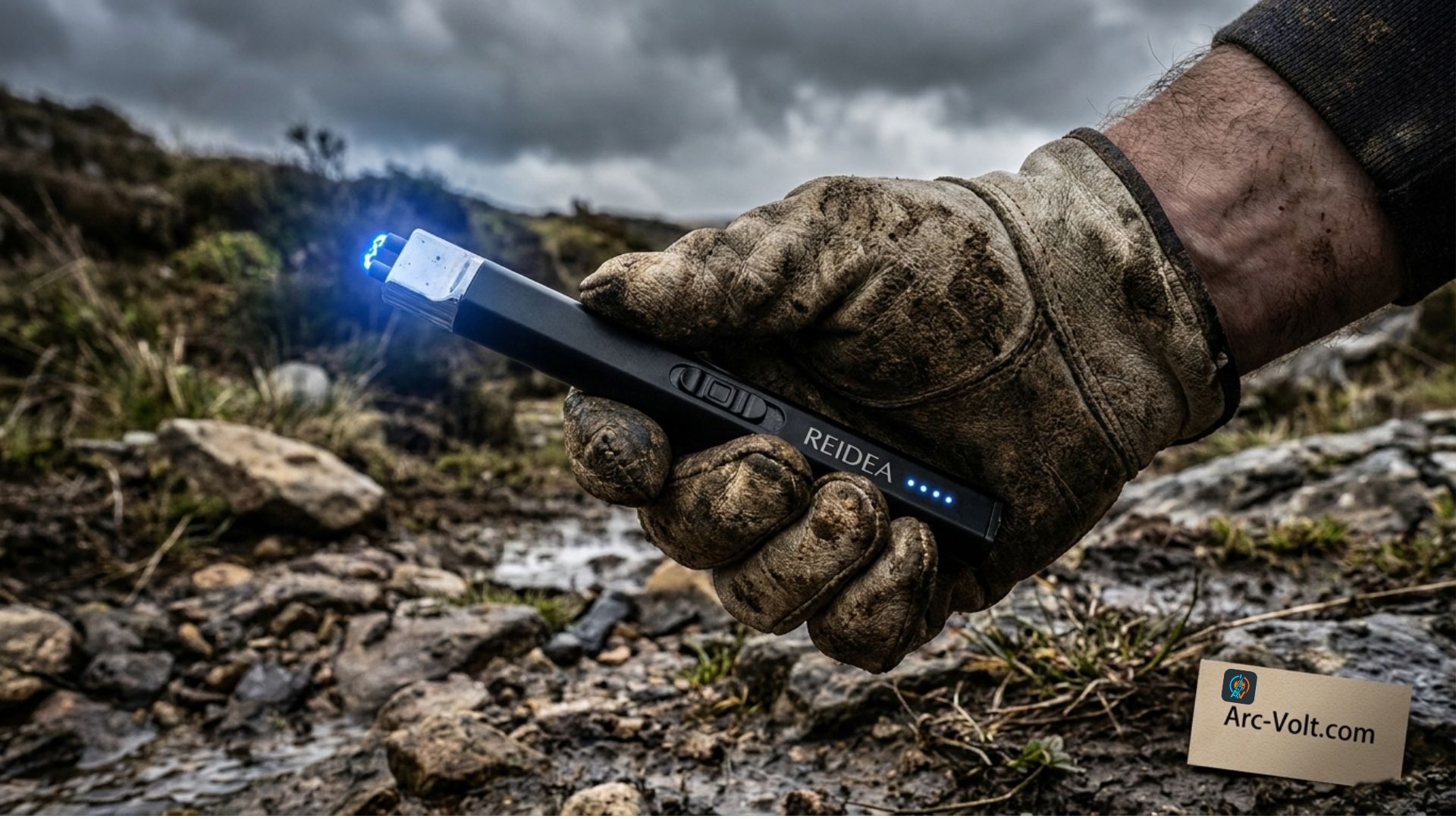
Many dual-arc lighters are marketed with an IP56 waterproof rating. However, daily use reveals a strict limitation to this claim. The IP56 rating almost exclusively applies to the lighter only when the protective casing is latched shut. The exposed plasma arcs themselves cannot ignite in active, heavy rain, though they remain exceptionally windproof against heavy gusts.
Single Arc vs. Dual Arc Performance Comparison
| Feature | Single Arc | Dual Arc (X-Pattern) |
|---|---|---|
| Ignition Speed | Moderate (Requires precision) | Fast (Large surface area) |
| Wind Resistance | High | Extreme |
| Battery Life | 250-300 lights | 100-180 lights |
| Best Use Case | Tight spaces, cigarette lighting | Camping, candles, emergencies |
| Sound Profile | Low hum | High-pitched whine |
User Pain Points and Considerations
Beyond battery life, dual-arc systems present two distinct usability challenges. First, the physical design requires a narrow gap between the four electrodes, strictly limiting the size of the items you can ignite—making them ill-suited for thick cigars. Second, the operation emits a high-frequency, high-pitched whine. As visualized in the satisfaction data below, acoustic comfort is the lowest-rated feature among dual-arc users.
Safety Standards
Given the increased power of a dual-arc layout, leading brands (like REIDEA R1 Pro, LC-fun, and Icfun) have implemented stringent safety standards. Current market models—typically ranging from 29.99—feature a 7 to 10-second auto-shutoff function. Combined with physical safety locks, these features effectively prevent accidental ignition while stored in pockets or backpacks.
Final Verdict
A dual-arc lighter is an outstanding upgrade for users who need extreme wind resistance and fast ignition for camping, emergencies, or household candle lighting. It is less ideal for users who are sensitive to high-pitched sounds, need to light large-diameter items, or want to go weeks without recharging.
Pre-Purchase Checklist
- Check the charging port: Ensure the model uses modern USB-C rather than legacy Micro-USB.
- Verify the lock: Look for a physical safety latch to prevent pocket misfires.
- Assess your use case: Confirm the items you intend to light will fit between the narrow electrode gap.
- Understand waterproof limits: Remember that IP56 applies to the closed case, not the active arcs.