What Are the Real Limits of Rechargeable Fire-Starting Tools?
Explore the real limits of rechargeable plasma lighters. We analyze battery degradation in extreme cold, waterproof claims, and physical ignition constraints.
Executive Summary
Rechargeable plasma lighters provide a highly effective, windproof, and fuel-free alternative to traditional butane tools, but they are bounded by strict environmental and physical limits. While high-quality units deliver between 100 and 300 ignitions per USB-C charge, their lithium-ion batteries lose substantial efficiency in sub-freezing temperatures—dropping to an estimated 70% efficiency at 32°F and 45% at 10°F. Additionally, their narrow 3-5mm electrode gap struggles with thick tinder, and “waterproof” claims apply only to external casings, meaning wet electrodes will short-circuit until thoroughly dried.
Environmental Limitations: Cold Weather and Moisture
Lithium-Ion Battery Degradation
The primary limiting factor of rechargeable fire-starting tools is battery chemistry. Lithium-ion batteries degrade rapidly in cold environments. Performance begins to drop significantly below freezing (32°F/0°C). For reliable winter operation, users must keep the tool close to their body heat.
The Reality of “Waterproof” Claims
Many leading plasma lighters advertise an IP67 waterproof rating. However, this rating only applies to the sealed outer casing. Waterproof does not mean operable while wet. If moisture contacts the internal electrodes, the plasma arc cannot form, resulting in a short-circuit effect. The tool is rendered useless until the electrodes are completely wiped dry.
Physical & Operational Constraints
Ignition Surface Area
The physical design of dual-arc lighters creates an inherent limitation: the narrow arc gap. Typically measuring just 3-5mm across, this small surface area requires exact pinpoint accuracy. Thick materials like birch bark, large candle wicks, or fibrous tinder bundles are difficult to ignite without careful fraying and precise positioning. Furthermore, some users report difficulty lighting deep-recessed candles or camp stoves due to the short neck length of standard models.
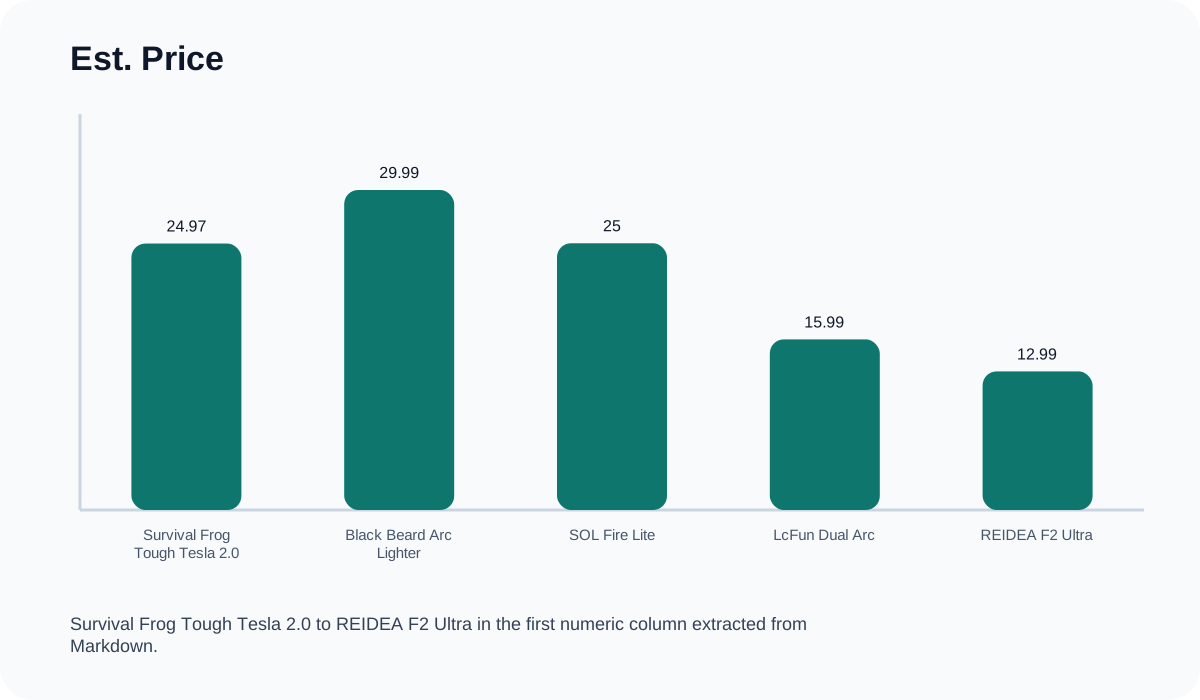
Comparison of Leading Rechargeable Fire Starters (2026)
| Model | Est. Price | Waterproof Rating | Ignitions / Charge | Charging Type |
|---|---|---|---|---|
| Survival Frog Tough Tesla 2.0 | $24.97 | IP67 | 300+ | USB-C |
| Black Beard Arc Lighter | $29.99 | IP67 | 250+ | USB-C |
| SOL Fire Lite | $25.00 | IPX7 | 100 | Micro-USB |
| LcFun Dual Arc | $15.99 | IP56 | 100-200 | USB-C |
| REIDEA F2 Ultra | $12.99 | N/A | 60-100 | USB-C |
Maintenance, Safety, and User Pain Points
Beyond environmental constraints, maintaining operational capability requires specific care:
- Electrode Buildup: Carbon and wax quickly accumulate on the electrodes. This buildup is a primary cause of failure. Regular cleaning with a soft brush or nail file is mandatory for long-term functionality.
- Thermal and Electrical Safety: Most reputable models feature a 7-10 second automatic shut-off to prevent internal circuitry overheating. Users should be aware of a high-voltage shock hazard if electrodes are touched during discharge, and a risk of thermal runaway if the lighter is stored in vehicles exceeding 120°F.
- Hardware and Sensory Issues: Real-world usage highlights specific pain points: cheap plastic hinges on waterproof cases are prone to snapping in the field, and the high-pitched frequency noise during ignition can be bothersome to pets and sensitive individuals.
Final Verdict
Rechargeable plasma lighters excel as windproof, everyday fire starters and perform exceptionally well in moderate conditions. However, their reliance on lithium-ion batteries and unshielded electrodes means they should not be your sole survival tool in extreme cold (below 32°F) or heavy precipitation. For serious backcountry use, always carry a secondary fire-starting method, such as a traditional ferro rod or butane lighter.
Buyer Pre-Trip Checklist
- Charge Level: Is the tool fully charged via USB-C prior to departure?
- Electrode Cleanliness: Have you brushed away carbon/wax residue from previous uses?
- Storage Location: In winter, is the lighter stored in an inner jacket pocket to preserve battery efficiency via body heat?
- Tinder Prep: Are your tinder materials frayed thin enough to fit within a 3-5mm arc gap?
- Dry Cloth: Do you have a dry cloth available to wipe the electrodes if the IP-rated casing is opened in the rain?