What Counts as a Meaningful Durability Test for Arc Lighters?
Discover what makes an arc lighter truly durable. We break down IP ratings, battery cycle lifespans, and the mechanical tests that matter for survival gear.
Executive Summary
A meaningful durability test for an arc lighter evaluates the synergy between electrical reliability and mechanical ruggedness. To be considered a legitimate piece of survival gear rather than a novelty gadget, a plasma lighter must maintain a consistent 1100°C+ plasma arc after repeated 1-meter drop tests and total moisture exposure. Real-world durability testing must go beyond simple ignition checks to assess specific benchmarks: IP-rated ingress protection (IP56 or IP67), total battery cycle longevity (300 to 500 recharges), and physical hardware resilience.
The Truth About Waterproof Claims
Many arc lighters are marketed as “waterproof,” but a meaningful test requires strict adherence to standardized Ingress Protection (IP) ratings.
- IP56 Rating: Protects against high-pressure water jets and heavy spray. Suitable for rain, but not immersion.
- IP67 Rating: Allows for 30-minute complete immersion in water up to 1 meter deep.
Crucially, field tests reveal that most consumer lighters fail moisture tests if the external seal is not manually latched by the user. An open latch negates any IP rating instantly, allowing moisture to short the electrical components.
Battery Runtime vs. Cycle Life
Manufacturers often market battery runtime in “ignitions per charge”—typically ranging from 100 to 300 uses. However, a proper durability assessment focuses on total cycle life.
A durable arc lighter should deliver 300 to 500 full charge cycles before suffering a 20% loss in total capacity. Furthermore, the industry standard for charging has shifted from Micro-USB to USB-C, which offers improved charging port durability and faster top-off times (an estimated 60 minutes for a full charge).
Identifying Real User Pain Points
When evaluating high-end models, the primary point of failure shifts away from electrical misfires to mechanical breakdowns. Benchmarking durability requires testing the hinge mechanisms and maintaining the ceramic electrodes.
As the data indicates, routine maintenance (cleaning carbon buildup off electrodes) prevents 30% of perceived failures, while mechanical hinge fatigue accounts for a significant 20% of device deaths.
Required Safety Considerations
Durability must be paired with safety to protect both the user and the device’s internal components. A rigorous test ensures the lighter features:
- 10-Second Automatic Shut-off: Prevents the internal high-voltage transformer from overheating.
- Dual-Action Safety Locks: Requires a flip-top opening followed by a button press, preventing accidental pocket discharges.
- UN 38.3 Certification: Ensures the lithium-polymer cells remain stable during air travel and high-impact drop tests.
- Circuit Protection: Built-in safeguards against short circuits and overcharging to prevent thermal runaway.
Comparison of High-Durability Arc Lighters (2026 Models)
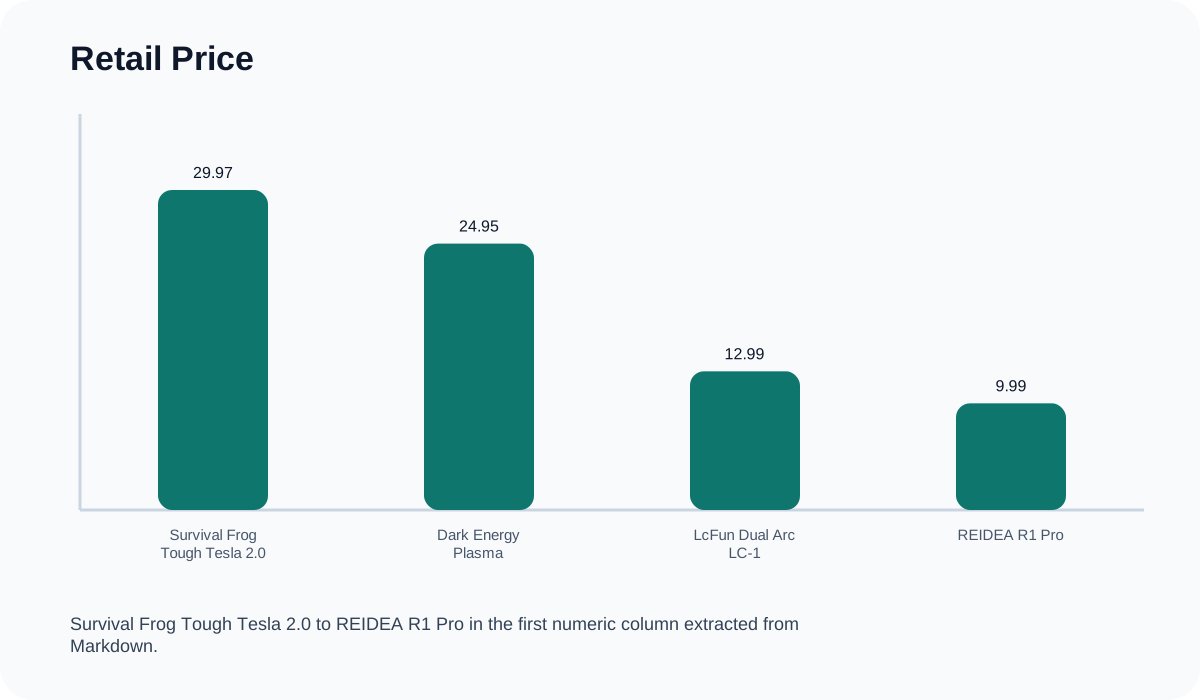
The following table highlights how top-market options stack up regarding crucial durability metrics and pricing.
| Product Name | Retail Price | IP Rating | Battery Capacity | Charging Type |
|---|---|---|---|---|
| Survival Frog Tough Tesla 2.0 | 49.95 | IP67 (Submersible) | 400 mAh | USB-C |
| Dark Energy Plasma | 35.00 | IP67 (Submersible) | 300 mAh | USB-C |
| LcFun Dual Arc LC-1 | 18.50 | IP56 (Jet-proof) | 220 mAh | Micro-USB/USB-C |
| REIDEA R1 Pro | 15.99 | IPX4 (Splash-proof) | 220 mAh | USB-C |
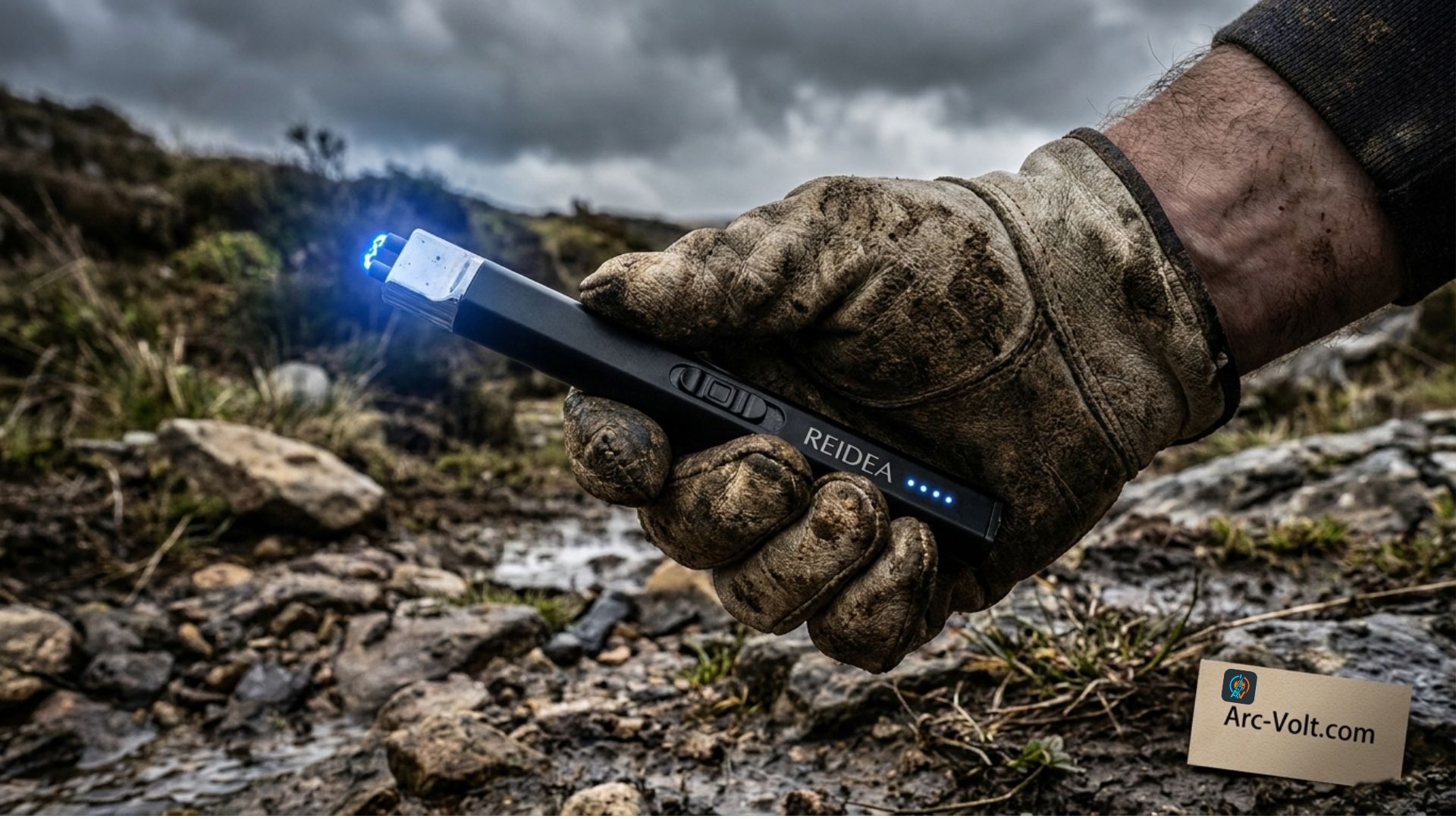
(Note: Other notable premium models like the Exotac TitanLight are also recognized for robust build quality in the field, though arc-specific metrics vary.)
Final Verdict
A meaningful durability test proves whether an arc lighter can survive real-world outdoor hazards. Consumers should prioritize lighters with an explicit IP67 rating, a USB-C charging interface, and a proven track record of enduring 1-meter drop tests without hinge failure. Models like the Survival Frog Tough Tesla 2.0 currently lead the pack by combining maximum water resistance with higher (400 mAh) battery capacities.
Durability Checklist for Buyers
Before purchasing an arc lighter for outdoor or survival use, verify the following:
- Does it have an IP67 rating? (Required for full water submersion).
- Is the charging port USB-C? (More physically robust than Micro-USB).
- Does it have a locking latch? (Essential for keeping the waterproof seal intact).
- Are safety features listed? (Look for 10-second auto shut-off and UN 38.3 battery certification).
- Are the electrodes accessible? (You must be able to clean off carbon buildup to ensure longevity).