What Happens to Lithium-Ion Cells in Freezing Weather?
Discover how freezing temperatures affect lithium-ion batteries, the dangers of lithium plating, and how modern self-heating technology prevents permanent damage.
Executive Summary
Freezing temperatures radically alter the chemical behavior of lithium-ion and Lithium Iron Phosphate (LiFePO4) batteries. If you are using arc lighters, power banks, or off-grid storage in extreme cold, here is what you need to know immediately:
- Capacity Drop: Freezing weather temporarily reduces usable battery capacity by 20% to 40% due to increased internal resistance.
- Discharging is Safe: You can safely discharge (use) most lithium cells down to -4°F (-20°C).
- Charging is Dangerous: Charging any lithium battery below 32°F (0°C) without internal heating causes permanent damage known as “lithium plating.”
- Modern Solutions: Top-tier batteries now include self-heating technology and a Battery Management System (BMS) with Low-Temperature Cut-Off (LTCO) to prevent catastrophic winter damage.
The Science: Why Cold Weather Kills Battery Performance
When ambient temperatures drop, the chemical reactions inside a lithium-ion cell slow down. At 0°F (-18°C), the internal resistance of a battery can quadruple compared to its resistance at room temperature.
This spike in resistance leads to significant voltage sag. For end-users, this manifests as premature “low battery” cut-offs—your device might shut down thinking it is empty, even when a substantial charge remains. This capacity loss is temporary; once the battery returns to room temperature, the “lost” capacity is restored.
Temperature vs. Available Capacity
The colder the environment, the less energy the battery can effectively deliver.
The Critical Danger: Lithium Plating
While discharging in the cold is generally safe, charging below 32°F (0°C) is the most critical risk for lithium cells.
During a normal charge cycle, lithium ions travel from the cathode to the anode and embed themselves into the graphite structure (intercalation). However, when the battery is frozen, the graphite structure becomes too restrictive. Instead of smoothly intercalating, the lithium ions coat the surface of the anode—a phenomenon called lithium plating.
Lithium plating causes two severe problems:
- Irreversible Capacity Loss: The plated lithium is permanently removed from the active chemical reaction, permanently degrading the battery’s lifespan.
- Dendrite Growth: Plated lithium can form sharp, microscopic spikes called dendrites. Over time, these can pierce the internal separator, causing a dangerous internal short circuit.
How Modern Batteries Solve the Cold Weather Problem
To combat cold-weather charging dangers, manufacturers have implemented advanced safety and heating technologies.
- BMS Low-Temperature Cut-Off (LTCO): High-quality batteries use an integrated BMS that automatically blocks incoming charge currents when the core temperature drops below 32°F (0°C).
- Self-Heating Technology: Modern off-grid batteries feature internal heating pads. When connected to a charger in freezing conditions, the BMS diverts the charging current to the heating pads (typically consuming 50W–100W). Once the internal temperature reaches a safe 41°F (5°C), the BMS switches the current from the heaters to the battery cells, beginning a normal charge.
- Condensation Protection: Cold weather often brings dampness. Leading RV and marine lithium batteries target an IP65 (splash-proof) or IP66 (heavy water jet protection) rating to safeguard internal electronics from condensation.
Leading Cold-Weather Battery Comparison
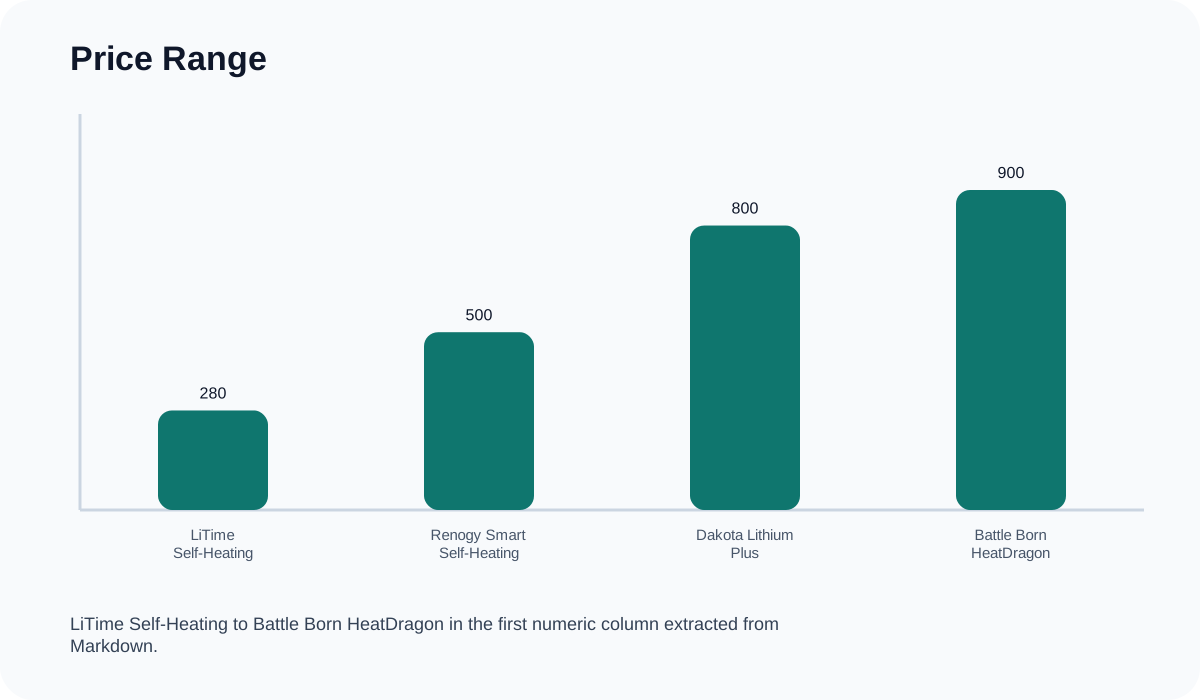
If you are investing in off-grid power for winter conditions, self-heating models are becoming the industry standard. Below is a comparison of top-tier 12V 100Ah self-heating options for 2026.
| Product | Price Range | Heating Technology | Waterproof Rating | Safe Charging Limit (with heat) |
|---|---|---|---|---|
| LiTime Self-Heating | 400 | Internal heating pads | IP65 | -4°F (-20°C) |
| Renogy Smart Self-Heating | 650 | Automatic BMS-driven heater | IP65 | 32°F (0°C) / requires heat below |
| Dakota Lithium Plus | 950 | Internal heating system | IP65 | -20°F (-29°C) |
| Battle Born HeatDragon | 1,050 | Proprietary internal heat film | IP65 | -4°F (-20°C) |
Final Verdict
Operating lithium-ion and LiFePO4 cells in freezing weather is entirely viable, provided you respect the charging limitations. For budget-conscious consumers, the LiTime Self-Heating battery offers remarkable cold-weather resilience at an entry-level price. For mission-critical off-grid systems in extreme sub-zero conditions, the Dakota Lithium Plus boasts the lowest temperature tolerance on the market.
Winter Battery Safety Checklist
Before taking your lithium-powered gear into freezing temperatures, verify the following:
- Check for LTCO: Ensure your battery’s BMS explicitly lists Low-Temperature Cut-Off for charging.
- Warm Before Charging: If your device lacks self-heating, physically bring it inside and let it reach room temperature before plugging it in.
- Expect Reduced Runtime: Plan for up to a 50% drop in battery life if operating in temperatures near -4°F (-20°C).
- Inspect Weather Sealing: Ensure your battery casing is rated at least IP65 to prevent cold-weather condensation from shorting the BMS.