What IPX Ratings Mean for Camp and Beach Gear
Understand IPX water resistance ratings for outdoor gear. We analyze IPX4 vs IPX7, user pain points, safety risks, and compare top products.
Executive Summary IPX (Ingress Protection) ratings measure a device’s resistance to liquid and dust intrusion on a scale of 0 to 8. For campers, an IPX4 (splash-proof) rating is generally sufficient to survive light rain. However, beach environments necessitate IPX7 or IPX8 (submersible) gear due to drop-in risks and saltwater exposure. Consumers face a 30% to 50% price premium when upgrading from IPX4 to IPX7/8. Furthermore, while ratings are certified in factory conditions, real-world issues like rubber seal fatigue and saltwater corrosion frequently lead to unexpected gear failures after 6 to 12 months of use.
The Reality of IPX Ratings in the Wild
The IPX standard (defined by IEC 60529) specifies precise laboratory testing parameters, but outdoor conditions introduce variables that standard tests do not cover.
- IPX4 (Splash-Proof): Protects against splashing water from any direction. It is the baseline for outdoor gear, covering standard camping rain but failing during submersions.
- IPX7 / IPX8 (Submersible): IPX7 guarantees survival in 1 meter of water for 30 minutes. IPX8 extends this depth and duration. These are required for beach or boating applications.
- Dust Resistance (e.g., IP67): When an “X” is replaced by a number (like the 6 in IP67), the device has been certified against solid intrusion. A rating of 6 indicates a completely dust-tight seal, which is critical for sandy beach environments where grit can jam charging ports.
Market Distribution of Ingress Protection
There is a notable disparity in water resistance depending on the category of gear. While 60% of portable speakers boast IPX7 protection, an estimated 70% of leading camping lanterns lag behind, offering only IPX4.
Leading Camp and Beach Gear Comparison
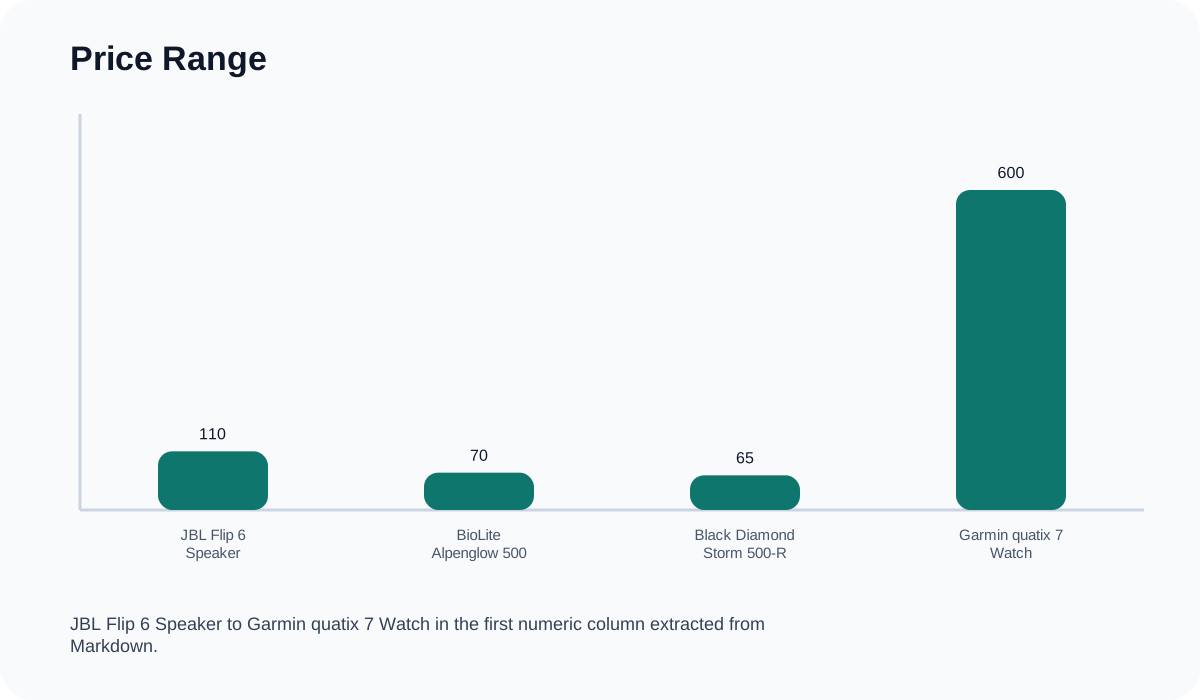
The table below highlights the specifications, claims, and price ranges of popular outdoor electronic gear.
| Product | Price Range | IP/IPX Rating | Waterproof Claim | Battery Runtime | Charging Method |
|---|---|---|---|---|---|
| JBL Flip 6 Speaker | 130 | IP67 (Dust/Water) | Submersible 1m / 30 min | 12 Hours | USB-C |
| BioLite Alpenglow 500 | 80 | IPX4 | Splash Resistant | 5 - 200 Hours | Micro-USB |
| Black Diamond Storm 500-R | 75 | IP67 | Submersible 1m / 30 min | 7 - 350 Hours | Integrated Li-ion (Micro-USB) |
| Garmin quatix 7 Watch | 700 | 10 ATM (IPX8 equiv+) | 100m Depth | Up to 18 Days | Proprietary Plug |
Analysis: The Hidden Failures Beyond the Rating
Even high-end, IPX8-rated gear is vulnerable to specific outdoor hazards. User reports and testing highlight four primary pain points that bypass official IP ratings:
- Seal Fatigue and Port Failures: Most waterproof devices rely on rubber gaskets over charging ports (e.g., USB-C or Micro-USB). These flaps commonly tear or lose their seating tension after 6 to 12 months, stripping the device of its IPX rating.
- Saltwater Corrosion: IPX ratings are exclusively tested using fresh water. Saltwater is highly corrosive and leaves residue that destroys exposed charging pins—even if the internal seals remain intact.
- Condensation Damage: Rapid temperature fluctuations (such as moving gear from intense beach sun into cold water) can cause internal fogging behind IPX-rated lenses, potentially damaging delicate electronics over time.
- Misleading Marketing: Many consumer products are marketed as “Waterproof” while only meeting IPX4 (splash-proof) standards, leading to accidental submersion failures.
Safety Considerations and Maintenance
Proper handling is required to maintain the safety and integrity of battery-powered outdoor gear:
- Never Charge While Wet: Introducing a charging cable to a damp port can cause an immediate short circuit, even on IPX7 or IPX8 devices.
- Avoid High-Pressure Water: IPX7/IPX8 devices are rated for static submersion, not high-pressure jets. Taking a plunge into water at high speeds or using a pressure washer on gear forces water past seals.
- Beware of Battery Swelling: Over time, degrading lithium-ion batteries can swell. This internal pressure compromises factory seals, quietly rendering the original IPX rating void.
Final Verdict
For casual forest campers, sticking to IPX4-rated gear like the BioLite Alpenglow 500 is a cost-effective choice, avoiding the 30-50% price premium of higher ratings. However, for beachgoers, kayakers, or backpackers in monsoon regions, upgrading to an IP67-rated device is non-negotiable. The addition of dust protection (“6”) prevents sand intrusion, while the “7” guarantees survival during accidental submersions.
Buyer’s Maintenance Checklist
- Rinse after the beach: Always rinse saltwater off IPX7/8 devices with fresh water before the salt dries.
- Inspect rubber seals: Check port covers monthly for micro-tears or loss of elasticity.
- Air dry completely: Ensure charging ports are 100% bone-dry before connecting to power.
- Check for swelling: If the device casing appears warped or bulged, assume water resistance is compromised.