What Makes a Good Emergency Backup Ignition Tool
Discover the technical specifications, performance data, and real user pain points of emergency backup ignition tools, featuring plasma arc technology.
Executive Summary
A high-quality emergency backup ignition tool must prioritize environmental resilience—specifically windproofing and waterproofing—to ensure reliable fire-starting when traditional options fail. For modern survival kits, a dual-system approach is optimal: a plasma arc lighter providing 1,100°C+ flameless heat with an IPX7-rated casing, paired with a manual ferrocerium (ferro) rod. This combination mitigates the inherent sub-zero temperature weaknesses of lithium-ion batteries while maximizing success rates in heavy wind and rain. The ideal electronic tool features a dual-arc design, a ruggedized locking clasp, and USB-C compatibility.
Leading Products and Technical Specifications
When evaluating emergency ignition tools, quantifiable hardware metrics are critical. Most dedicated survival plasma lighters run on a 220mAh to 280mAh lithium-ion battery. This capacity yields approximately 100 to 300 ignitions per charge, requiring 1.5 to 2 hours to fully recharge via Micro-USB or modern USB-C ports, easily integrating with portable solar panels or power banks.
Current market leaders in the electronic and manual space include:
- LcFun Waterproof Dual Arc Lighter: An entry-level electronic option (15).
- Survival Frog Tough Tesla 2.0: A ruggedized, mid-tier choice (30).
- SOL (Survive Outdoors Longer) Dual Arc: A premium survival plasma tool ($26).
- Exotac fireROD: An industry-benchmark manual ferro rod ($30).
- UCO Stormproof Matches: The standard for chemical backup ($10).
Comparative Ignition Analysis
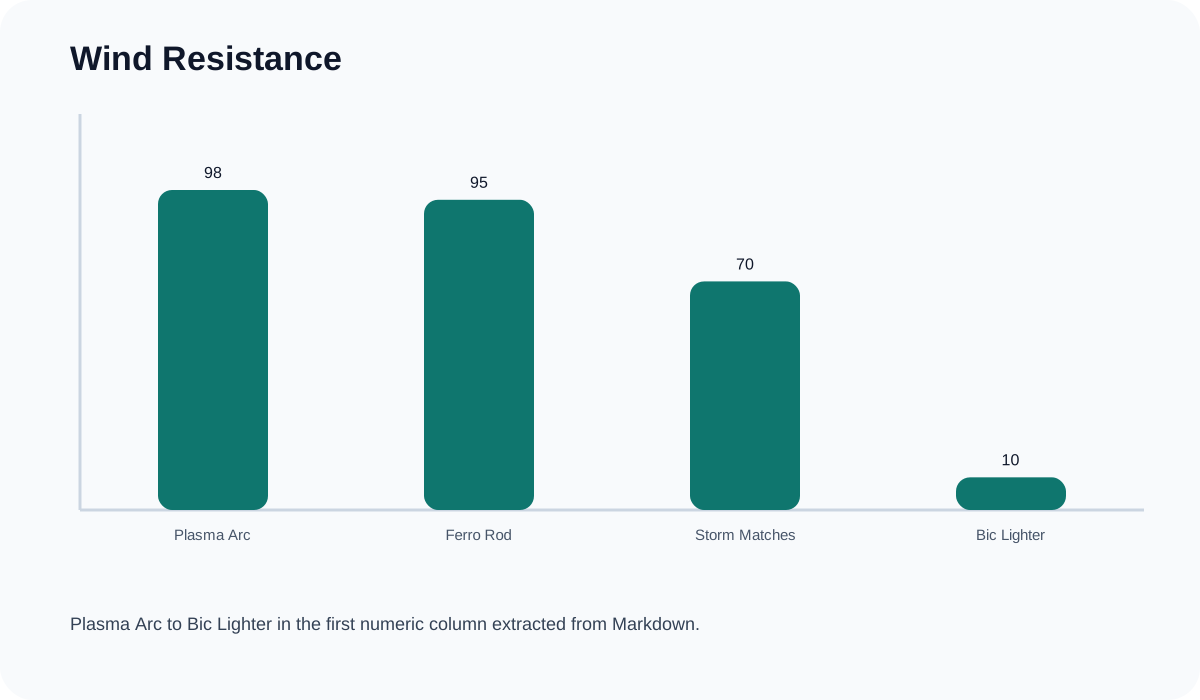
The following table outlines the foundational differences in wind resistance, water resistance, fuel type, and estimated cost across primary ignition categories.
| Tool Type | Wind Resistance | Water Resistance | Fuel/Power | Cost Range |
|---|---|---|---|---|
| Plasma Arc | 98% | High (IPX7) | USB-C / Micro-USB | 30 |
| Ferro Rod | 95% | Excellent | Manual / Striker | 25 |
| Storm Matches | 70% | High | Chemical | 12 |
| Bic Lighter | 10% | Low | Butane | 2 |
Success Rate by Environmental Condition
Understanding how different tools perform under extreme duress is critical for emergency preparedness.
Real-World Limitations and User Pain Points
While plasma lighters excel in wind and moderate rain, field data and user feedback highlight specific operational limitations:
- Electrode Gap Constraints: Users frequently cite the small gap between the electrodes as a primary frustration. Unlike an open flame, the tight arc space makes it difficult to ignite thicker tinder, requiring precise preparation of fine, dry materials.
- Sub-Zero Battery Depletion: Lithium-ion battery voltage drops rapidly in extreme cold environments (below 32°F). As shown in the data, plasma ignition reliability drops to roughly 55% in freezing temperatures, necessitating a manual backup like a ferro rod.
- Acoustic Frequencies: The high-pitched frequency noise generated during dual-arc operation can be bothersome to users or nearby animals, though it does not impact ignition capability.
Safety Features and Travel Regulations
For emergency kits transported via commercial air travel, strict adherence to TSA guidelines is mandatory. Arc lighters are permitted in carry-on bags only if they feature a clear safety latch preventing accidental activation. They are strictly prohibited in checked baggage.
At a hardware level, a viable emergency lighter must include:
- 10-Second Auto-Shutoff: Prevents battery overheating and potential damage to the device.
- Dual-Latch Locking Mechanism: Essential for maintaining the integrity of the IPX7 waterproof seal and meeting TSA carry-on compliance.
Final Verdict
A plasma arc lighter is an excellent primary ignition tool for a bug-out bag or emergency kit, provided it features a dual-arc design, an IPX7 rating, and a dual-latch lock. However, due to inherent lithium-ion battery vulnerabilities in sub-zero temperatures and tight electrode gaps, a plasma lighter should never be your only tool. The ultimate emergency backup ignition strategy pairs a ruggedized plasma lighter (such as the Survival Frog Tough Tesla 2.0 or SOL Dual Arc) with a traditional ferro rod (like the Exotac fireROD).
Emergency Ignition Checklist
- Does the electronic lighter have an IPX7 waterproof rating?
- Is the charging port USB-C compatible for modern power bank integration?
- Does it feature a mechanical dual-latch for TSA compliance and water resistance?
- Is there a 10-second auto-shutoff feature to prevent overheating?
- Have you packed a manual secondary backup (e.g., Ferro Rod) for sub-zero temperatures?