What USB-C Charging Really Improves for Outdoor Gear
Discover how USB-C Power Delivery, IP68 internal sealing, and 10,000-cycle durability are transforming 2026 outdoor gear, alongside common C-to-C pitfalls.
Executive Summary
The transition to USB-C in outdoor gear extends far beyond cable convenience; it marks a shift toward intelligent power management. For 2026, the primary advantages of USB-C include the adoption of GaN 5.0 efficiency for smaller form factors, a baseline port durability of 10,000 insertion cycles, and internal IP68 waterproofing that eliminates the need for fragile rubber covers. Additionally, USB-C Power Delivery (PD 3.1) enables high-capacity power banks to recharge to 50% in under 20 minutes. However, buyers must remain vigilant against “fake” USB-C ports on mid-range devices lacking CC1/CC2 resistors, which prevent charging via standard C-to-C cables.
The Technical Leap: Speed and Durability
Historically, outdoor electronics relied on Micro-USB, a standard limited by low power transfer and mechanical fragility. USB-C provides quantifiable improvements in both charging speed and physical longevity.
- Durability Cycles: USB-C ports are rated for 10,000+ insertion cycles, doubling the 1,500 to 5,000 cycle lifespan of standard Micro-USB ports.
- Rapid Charging (PD 3.1): Emergency trail recharges are significantly safer and more viable. Using USB-C PD 3.1, a standard outdoor power bank can reach 50% capacity in less than 20 minutes.
- GaN 5.0 Efficiency: Modern charging blocks utilizing Gallium Nitride (GaN) 5.0 technology manage heat better in humid environments while reducing the physical footprint in an everyday carry (EDC) kit.
Solving the Waterproofing Problem
Previous generations of rechargeable outdoor gear relied on exterior rubber caps to maintain IP (Ingress Protection) ratings. These caps frequently tore or degraded under UV exposure and extreme temperatures, resulting in water damage.
In 2026, leading models have transitioned to internally sealed ports. Devices like the Fenix HM55R achieve an IP68 rating (fully submersible) with a permanently exposed USB-C port, relying on internal gaskets rather than external barriers. This eliminates a primary point of failure for hikers and campers.
Current Pain Points: The “Fake” USB-C Hurdle
Despite its advantages, USB-C implementation in outdoor gear is not flawless. Users report two primary pain points in field conditions:
- Missing CC1/CC2 Resistors: Many mid-tier outdoor products utilize cheaper “fake” USB-C ports. Because they lack the requisite CC1/CC2 resistors needed for Power Delivery handshakes, they will not charge when connected via a C-to-C cable. Users are forced to carry legacy USB-A to USB-C cables, defeating the “one cable” EDC philosophy.
- Mechanical Fragility: While rated for high insertion cycles, the female port tongue of a USB-C connection is susceptible to lateral force (torque) damage. Furthermore, extreme grit and coastal sand can jam the internal pins.
2026 Product Landscape
The market currently offers a range of USB-C powered tools, scaling from ultralight budget options to ruggedized expedition gear.
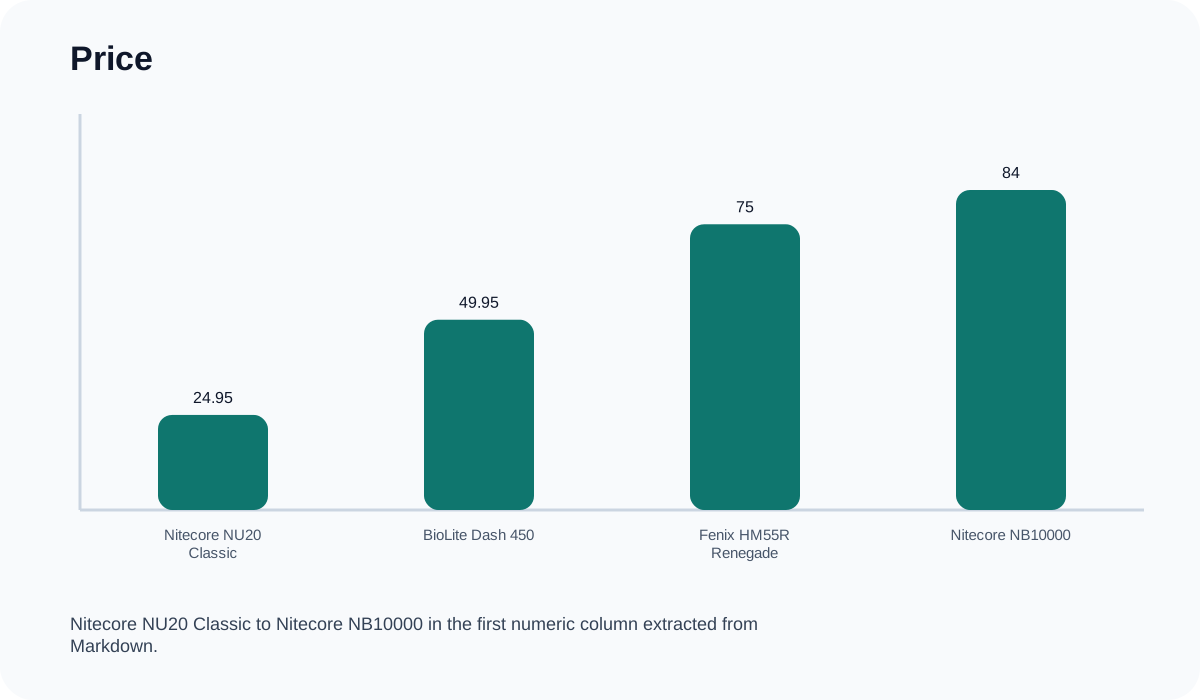
| Product | Category | Price | Waterproof Rating | Charging Method | Key Benefit |
|---|---|---|---|---|---|
| Nitecore NU20 Classic | UL Headlamp | $24.95 | IP66 (Dust-tight) | USB-C (Shock cord) | Ultralight (1.34oz) / Budget Friendly |
| BioLite Dash 450 | Headlamp | $49.95 | IPX4 (Splashproof) | USB-C (Capped) | Pass-through charging (use while charging) |
| Fenix HM55R Renegade | Headlamp | $75.00 | IP68 (Submersible) | USB-C (Internal Seal) | 1200 Lumens / Replaceable Battery |
| Nitecore NB10000 | Power Bank | $84.00 | IPX5 (Rainproof) | Dual USB-C (PD 3.0) | Carbon Fiber / Ultralight (5oz) |
(Note: Other notable USB-C gear for 2026 includes the Black Diamond Distance 1500, Anker Nano Power Bank A1638, and Garmin InReach Messenger).
Pre-Purchase Checklist
Before upgrading your outdoor kit to a new USB-C device, verify the following specifications:
- C-to-C Compatibility: Confirm the manufacturer explicitly supports C-to-C charging to avoid the “fake port” issue.
- Internal Sealing: Look for an IP68 or IP67 rating achieved via internally sealed ports rather than rubber caps.
- Power Delivery (PD): If purchasing a power bank, ensure it supports at least PD 3.0 for fast emergency recharges.
- Pass-Through Charging: For lanterns and headlamps, check if the device can operate while plugged into an external power bank.
Final Verdict
USB-C fundamentally improves outdoor gear reliability and efficiency, provided buyers select devices with correct internal architecture. The elimination of Micro-USB effectively doubles connector lifespan and enables rapid charging speeds critical for emergencies. However, budget-conscious buyers must check for proper CC1/CC2 resistor implementation to ensure true universal cable compatibility.