Why Arc Distance and Electrode Shape Matter in Plasma Lighters
Discover how electrode geometry and arc distance dictate plasma lighter performance. We analyze ionization thresholds, dual-arc setups, and the 3-5mm sweet spot.
Executive Summary
The short answer: The efficiency of a plasma lighter comes down to how easily it can ionize air into plasma. Pointed electrodes and a standard 3–5mm arc distance provide the optimal balance of ignition reliability, battery conservation, and surface area utility.
Electrode geometry and arc distance dictate the breakdown voltage required to create an electrical arc. Understanding the physics behind these tools—specifically Paschen’s Law and the Corona Discharge effect—reveals why modern survival and pocket lighters are engineered the way they are. This guide breaks down the data behind arc configurations, electrode shapes, and what it means for everyday use and reliability.
The Physics of Electrode Shape: Pointed vs. Rounded
The short answer: Pointed electrodes are vastly superior to rounded ones because they concentrate electric fields, allowing arcs to form at much lower voltages.
To create plasma, a lighter must reach an air ionization threshold of approximately 30kV/cm.
- Pointed (Needle-like) Electrodes: These designs utilize the corona discharge effect to concentrate electric field intensity at the very tips. This electrical efficiency means the 220-300mAh lithium batteries standard in most units don’t have to overwork to spark an arc.
- Rounded Electrodes: Flatter or rounded shapes disperse the electric field, requiring significantly more power to achieve the same 30kV/cm ionization threshold. This leads to faster battery drain and inconsistent ignition, especially in adverse conditions.
Gap Distance Dynamics: Finding the Sweet Spot
The short answer: A gap of 3–5mm is the industry standard because it maintains a near 100% ignition reliability while providing enough plasma surface area to ignite materials like tinder or candle wicks.
The gap distance dictates the total volume of the plasma channel. If the gap is too narrow (e.g., 2mm), ignition is mathematically guaranteed, but the lighting surface is practically useless for larger materials. If the gap is too wide (e.g., 8mm), the arc becomes highly unstable and rapidly depletes battery reserves.
Single vs. Dual Arc Configurations
The short answer: Dual-arc models offer 50% more heat intensity for faster lighting, but they consume battery life roughly twice as fast as single-arc versions.
When selecting a lighter, the configuration directly impacts performance metrics. A typical 220–300mAh lithium battery yields 100 to 300 ignitions per charge, depending heavily on whether the unit fires one or two arcs simultaneously. Modern designs often utilize retractable prongs alongside dual-arc arrays to balance intense ignition power with physical durability.
Market Configuration Comparison
| Product | Arc Type | Battery Capacity | Waterproof Rating | Charging Port | Price Range |
|---|---|---|---|---|---|
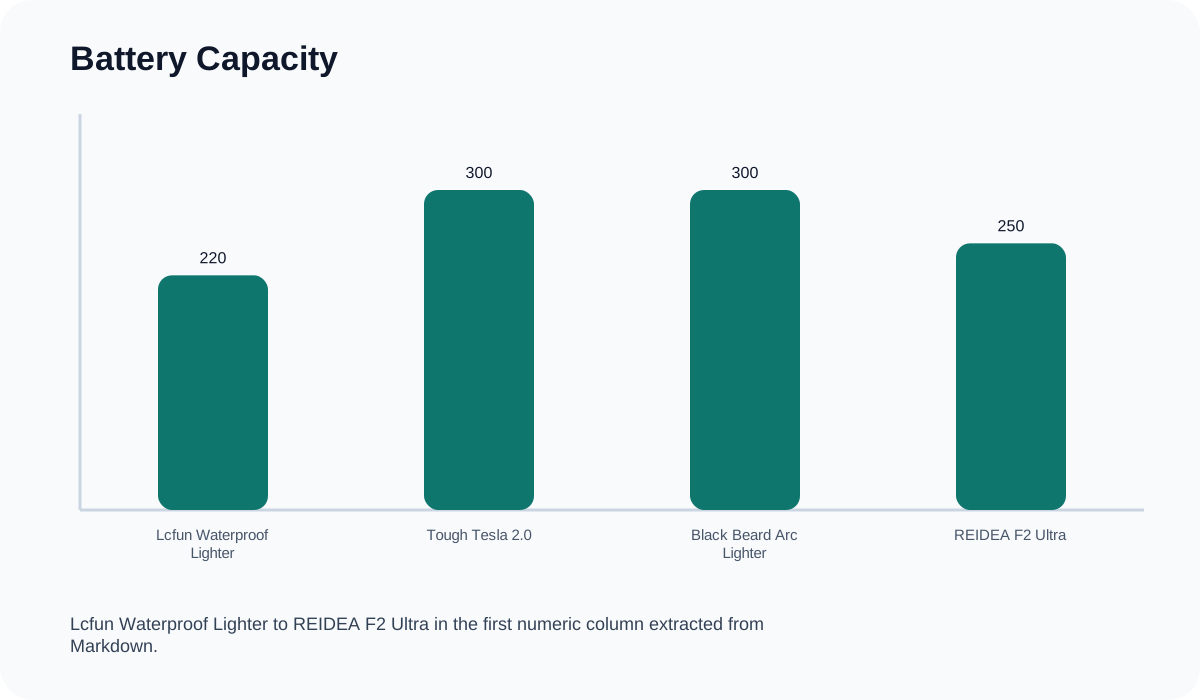
| Lcfun Waterproof Lighter | Dual Arc | 220mAh | IP56 | USB-C | 16 |
| Tough Tesla 2.0 | Dual Arc | 300mAh | IP57 | Micro-USB | 25 |
| Black Beard Arc Lighter | Dual Arc | 300mAh+ | Full Submersion | USB-C | 30 |
| REIDEA F2 Ultra | Single Arc | 250mAh | None | USB-C | 12 |
User Safety & Long-Term Maintenance
The short answer: Residue buildup on the electrodes and high-pitched ultrasonic noise are the two primary user pain points associated with plasma arc mechanics.
- Residue Buildup: Ash, wax, or carbon buildup on the electrode tips drastically increases electrical resistance. Over time, this reduces arc stability and forces the battery to work harder. Regular cleaning of the prongs is required to maintain the baseline 30kV/cm ionization efficiency.
- Ultrasonic Noise: The rapid frequency of the electric arc generates a high-pitched whine ranging from 5kHz to 20kHz. While completely safe, this ultrasonic frequency can be irritating to users with sensitive hearing or to household pets.
Final Verdict & Buyer’s Checklist
Electrode design is the functional core of any plasma lighter, dictating everything from heat output to battery lifespan. When evaluating your next purchase, follow this checklist:
- Inspect the Tips: Ensure the lighter utilizes pointed (needle-like) electrodes rather than flat or rounded ones to leverage the corona discharge effect.
- Verify the Gap: Look for a 3–5mm gap to ensure a reliable balance of ignition consistency and usable lighting area.
- Match the Configuration to Your Needs: Choose a Single-arc model for maximizing battery life (ideal for indoor candle lighters), or a Dual-arc model for maximizing heat intensity (crucial for outdoor survival).
- Plan for Maintenance: Commit to keeping the prongs clear of debris to prevent electrical resistance buildup.