Why Arc Lighters Need Better Charging Habits Than Disposable Lighters
Arc lighters require monthly charging and electrode cleaning to survive. Learn why lithium-ion plasma lighters demand different maintenance than a standard BIC.
Executive Summary
While disposable butane lighters offer a “flick-and-forget” shelf life that can span up to a decade, electric arc lighters require active maintenance to remain functional. Because they rely on sensitive lithium-ion batteries, arc lighters suffer from self-discharge and can suffer permanent battery failure if left completely drained. Without a monthly “vitality” charge and regular electrode cleaning, an arc lighter can degrade into a paperweight within 6 to 12 months. Understanding these unique maintenance requirements is critical for users relying on plasma technology for outdoor survival, camping, or daily use.
The Shelf-Life Disparity: Lithium-Ion vs. Butane
The fundamental difference between an arc lighter and a disposable lighter is energy storage. A standard BIC disposable lighter physically contains butane gas and a flint; it can retain fuel and spark reliability for 5 to 10 years in storage.
Conversely, arc lighters utilize lithium-ion batteries that experience “vampire drain” (self-discharge) even when powered off. If a lithium-ion cell sits at 0% for an extended period, the chemistry degrades, preventing the battery from accepting a future charge.
Note: Arc lighters drop sharply in readiness after 6 months of inactivity due to battery self-discharge and lack of top-up charging.
Leading Lighters Compared: Features and Runtimes
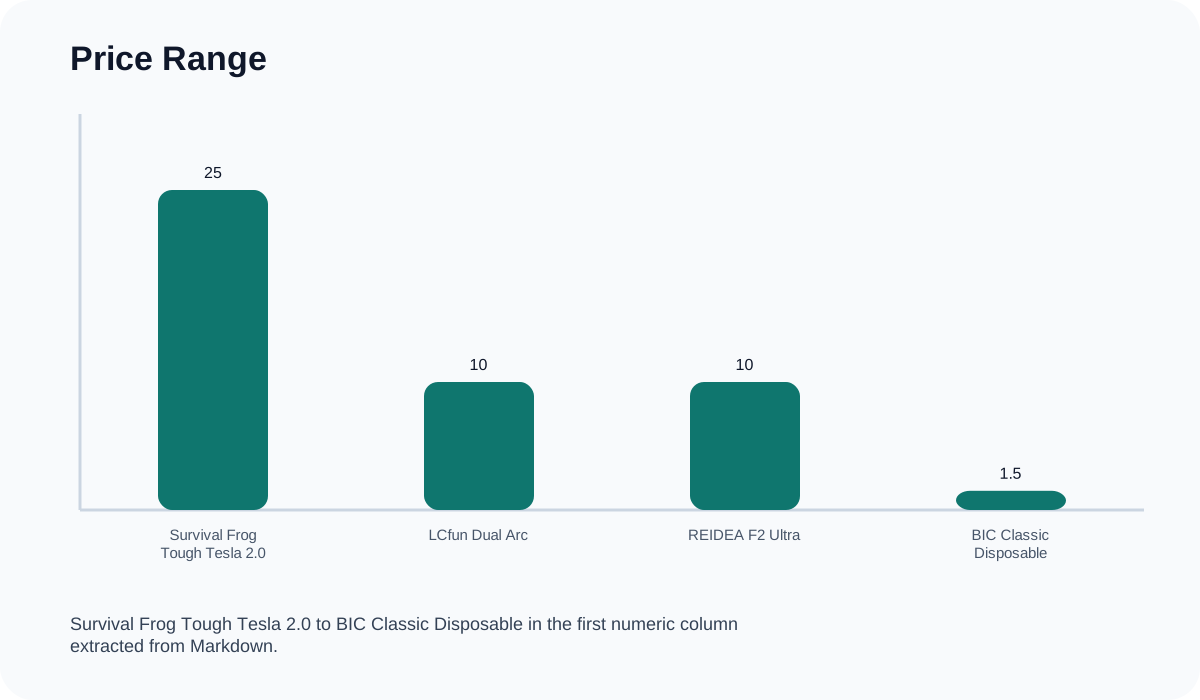
Choosing the right lighter depends on your willingness to perform basic upkeep. Below is a comparison of leading arc lighters versus a standard disposable option.
| Product | Price Range | Charging Port | Waterproof Claim | Runtime (Lights per Charge) | Top Feature |
|---|---|---|---|---|---|
| Survival Frog Tough Tesla 2.0 | 30 | Micro-USB | IPX7 / Submersible (Capped) | 300 | Flashlight & Whistle |
| LCfun Dual Arc | 15 | USB-C (limited PD) | IP56 (Capped) | 100 - 200 | Rugged Zinc Alloy |
| REIDEA F2 Ultra | 18 | USB-C | None | 600 (advertised) | 360° Flex Neck |
| BIC Classic Disposable | 2.00 | N/A | Works after drying | 3,000 (1-sec lights) | Zero Maintenance |
3 Hidden Challenges of Arc Lighter Ownership
1. The USB-C Charging Protocol Trap
One of the most documented user pain points with modern arc lighters revolves around USB-C hardware. Many budget “USB-C” arc lighters lack the correct Power Delivery (PD) negotiation resistors. As a result, they will only charge via older USB-A to USB-C cables. If you attempt to plug them into a high-wattage laptop or phone charger using a C-to-C cable, the charger will fail to recognize the device, resulting in a dead lighter.
2. “Ghost Failures” and Electrode Fouling
Users frequently report instances where their lighter shows a full battery indicator but refuses to generate an arc. This is typically a “ghost failure” caused by electrode fouling. Invisible layers of carbon buildup or melted candle wax coat the ceramic tips, disrupting the electrical current. This requires the user to intervene by cleaning the nodes with a swab soaked in isopropyl alcohol.
3. Charging Safety and Overcharging Risks
Unlike modern smartphones, many budget arc units lack advanced smart IC controllers to manage battery intake. Manufacturers strongly advise against overnight charging, as leaving the device plugged in continuously increases fire risk and degrades the battery span.
Essential Maintenance Checklist for Arc Lighters
To ensure your plasma lighter survives beyond its first year, adopt these specific habits:
- Charge Monthly: Provide a “vitality charge” once a month, even if the lighter has been sitting unused in a drawer.
- Avoid C-to-C Cables: Keep a dedicated USB-A to USB-C cable for charging to bypass Power Delivery negotiation failures.
- Do Not Charge Overnight: Unplug the lighter immediately once the indicator shows a full charge to prevent battery stress.
- Clean the Nodes: Wipe the ceramic ignition prongs regularly with isopropyl alcohol to clear carbon and wax residues.
- Mind the Auto-Shutoff: Adhere to the standard 7-10 second auto-shutoff to prevent the electrodes from overheating.
- Be Aware of Pets: The high-frequency pitch (estimated at 15-20kHz) emitted during ignition can cause distress for pets and young children; use with situational awareness.
Final Verdict
Arc lighters are phenomenal tools for windproof performance and reducing plastic waste. However, they are electronics first and fire-starters second. If you need a reliable flame for a bug-out bag that will sit untouched for five years, a BIC disposable remains superior. But if you want a rugged, weather-resistant tool for weekly camping trips or household use—and are willing to incorporate monthly charging and occasional swabbing into your routine—an arc lighter like the Survival Frog Tough Tesla 2.0 or REIDEA F2 Ultra is an excellent investment.