Why Arc Lighters Need Dry Electrodes to Perform Well
Discover why arc lighters require bone-dry electrodes for reliable ignition, how moisture impacts plasma arcs, and which top models perform best outdoors.
Executive Summary
Arc lighters require bone-dry electrodes because water is a potent electrical conductor that short-circuits the device’s high-voltage gap. When moisture bridges the electrodes, the 1,000V+ electrical current grounds out across the housing rather than ionizing the air into a 1,100°C plasma arc. While many modern outdoor models boast IP56 waterproof ratings to protect their internal 170mAh to 300mAh lithium-ion batteries, this protection does not extend to an open electrode gap. If the prongs are saturated, ignition reliability plummets to an estimated 5%, resulting in a crackling sound rather than a usable flame. For consistent performance, users must adopt a “wipe-dry” protocol before attempting ignition.
Featured Pick: REIDEA F2 Ultra
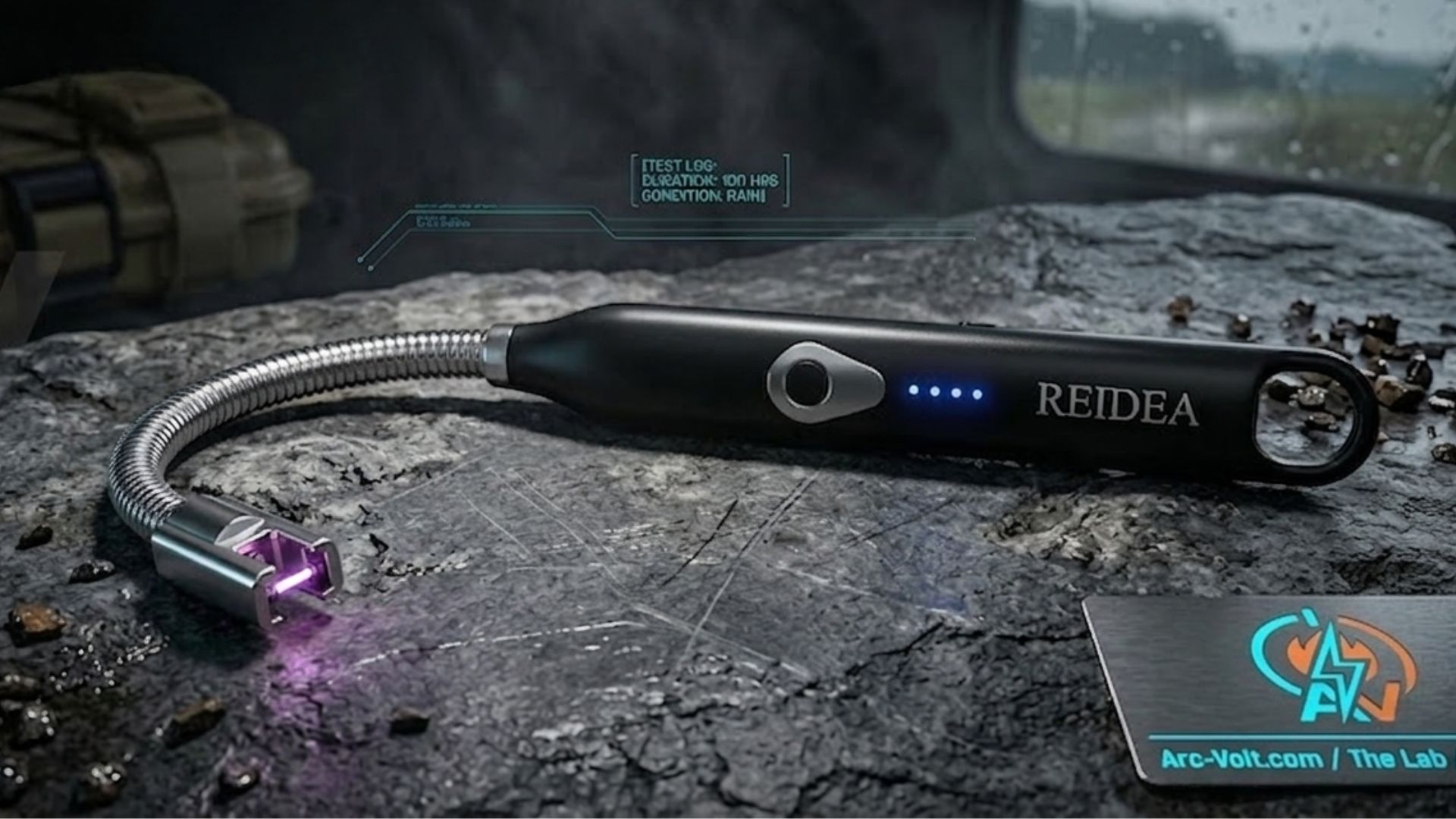
The REIDEA F2 Ultra is a flexible-neck candle lighter that fits deep jars, grills, pilot lights, and compact kitchen use while keeping USB-C charging and a slim indoor-friendly form factor.
The Science Behind Plasma Arc Failure in Wet Conditions
Arc lighters operate using a step-up transformer that generates upwards of 1,000 volts to break down the dielectric resistance of air. Once this resistance is overcome, a concentrated plasma beam is formed between the ceramic or tungsten tips.
When electrodes are wet:
- Conductive Bypass: Water on the surface provides an easier path for the electricity. The current follows this moisture across the gap’s surface instead of jumping through the air.
- Dielectric Breakdown Failure: Without sufficient resistance to build up voltage across the gap, the air cannot ionize.
- User Experience: Users often report a distinct “hissing” or “crackling” noise. This indicates the current is actively short-circuiting rather than producing a stable arc.
Product Comparison: Waterproof Claims vs. Real-World Use
Leading survival models, such as the LcFun and Black Beard Arc, carry an IP56 rating. This rating ensures the lighter survives submersion only when the outer case is locked closed. The internal components, including batteries that deliver an estimated 100 to 300 lights per charge, remain safe. However, the external electrodes must still be dried post-immersion.
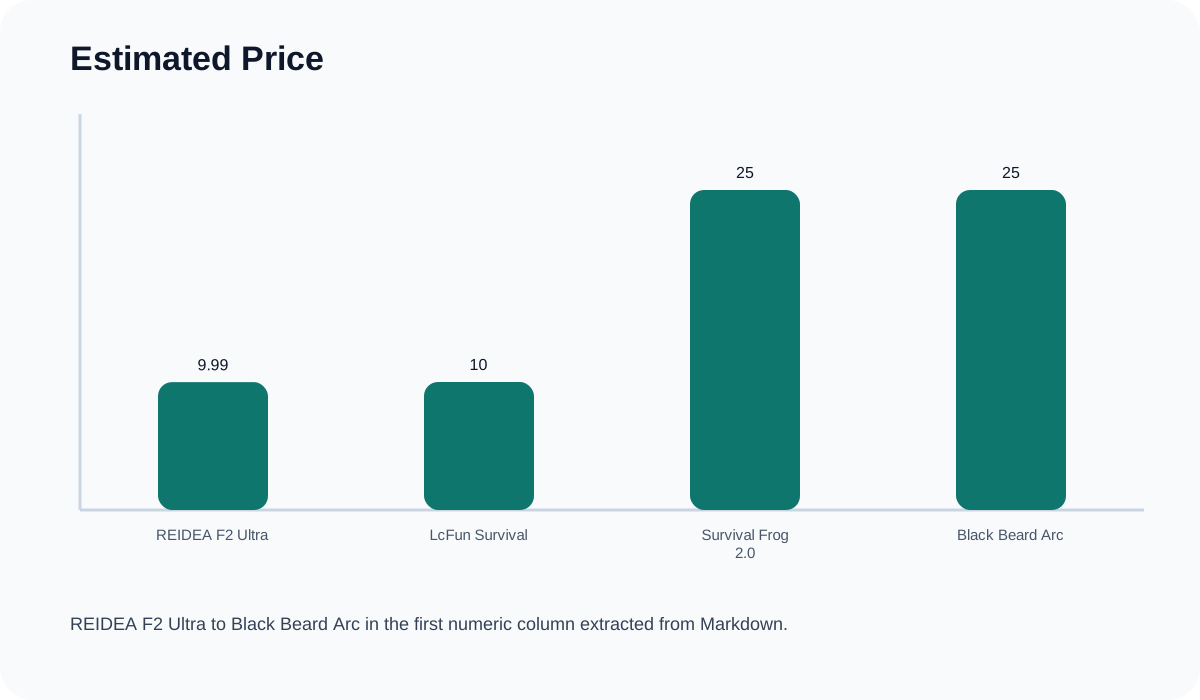
| Model | Estimated Price | Waterproof Rating | Charging | Best For |
|---|---|---|---|---|
| REIDEA F2 Ultra | 12.99 | Splash-resistant | USB-C | Kitchen/Home & Candles |
| LcFun Survival | 12 | IP56 | Micro-USB | Camping/EDC |
| Survival Frog 2.0 | $25 | IP56 | USB | Survival Kits |
| Black Beard Arc | 30 | Heavy Duty | USB | All-Weather |
Safety Features and Battery Limitations
To prevent the 1,100°C plasma arc from overheating the unit or causing safety hazards during a short circuit, modern arc lighters feature a 7 to 10-second automatic shut-off mechanism.
Beyond moisture, users should be aware that extreme cold (freezing temperatures) significantly degrades lithium-ion battery performance. Furthermore, long-term exposure to high-humidity environments can induce oxidation on the tungsten or stainless steel electrodes, further reducing efficiency over time.
Final Verdict
Arc lighters are highly capable, windproof ignition tools, but they are not entirely impervious to water during active operation. While an IP56-rated case excellently protects the internal battery from total failure, the exposed electrodes are subject to the fundamental laws of electricity. If you intend to rely on a plasma lighter for survival or heavy outdoor use, keeping a dry cloth or your sleeve handy to dry the prongs is a strict requirement.
Maintenance and Use Checklist
To maximize your arc lighter’s lifespan and reliability in the field, follow these protocols:
- Wipe Before Striking: Always dry the ceramic/tungsten tips with a cloth after removing the lighter from a wet environment.
- Lock the Case: Ensure the IP56 locking mechanism is fully secured before crossing rivers or venturing into heavy rain.
- Avoid Continuous Firing: Rely on the 7–10 second automatic shut-off, and do not immediately re-trigger if the prongs are wet (listen for the “crackling” short-circuit sound).
- Clean Oxidation: Routinely check for rust or humidity-induced oxidation on the prongs to maintain a clear electrical path.
- Monitor Temperature: Keep the lighter in an inside pocket during freezing weather to protect the 170mAh–300mAh battery capacity.