Why Arc Lighters Sometimes Fail After a Drop
Discover why dropping your arc lighter causes electrode misalignment and internal solder fractures, plus how to choose the most durable models.
Executive Summary
Arc lighters typically fail after a drop because the precise 6-7mm gap required between the electrodes to sustain the high-voltage plasma arc becomes misaligned. Even a minor physical impact can shift the metal prongs, preventing the 15,000-volt current from jumping the gap. Additionally, the heavy internal transformers inside these devices are often secured by fragile solder joints that snap under G-force, severing the connection to the 3.7V lithium-polymer battery.
For buyers, this means investing in impact-resistant or waterproof models is critical if the lighter will be subjected to outdoor or rugged use.
Post-Drop Failure Mechanisms
When an arc lighter hits a hard surface, the external casing may survive, but the delicate internal electronics take the brunt of the kinetic energy.
1. Electrode Misalignment (42% of Failures)
The primary failure point is the shifting of the metal prongs. An arc lighter operates by sending an electrical current across a strict 6-7mm gap to generate an 1,100°C plasma “flame.” If a drop widens or skews this gap, the current cannot bridge the distance, or worse, it will arc to the lighter’s own metal casing.
2. Internal Solder Fractures (28% of Failures)
Budget arc lighters utilize high-voltage transformers that are relatively heavy compared to the thin-gauge wires connecting them to the printed circuit board (PCB). The G-force of a drop frequently snaps these delicate solder joints, completely cutting off power from the battery to the high-voltage output.
3. Ceramic Insulator Damage (15% of Failures)
The electrodes are surrounded by ceramic housings to prevent the 15kV current from grounding to the handle. A drop can cause microscopic cracks in the ceramic. This leads to “leakage,” where the arc fires inside the chassis instead of between the visible tips.
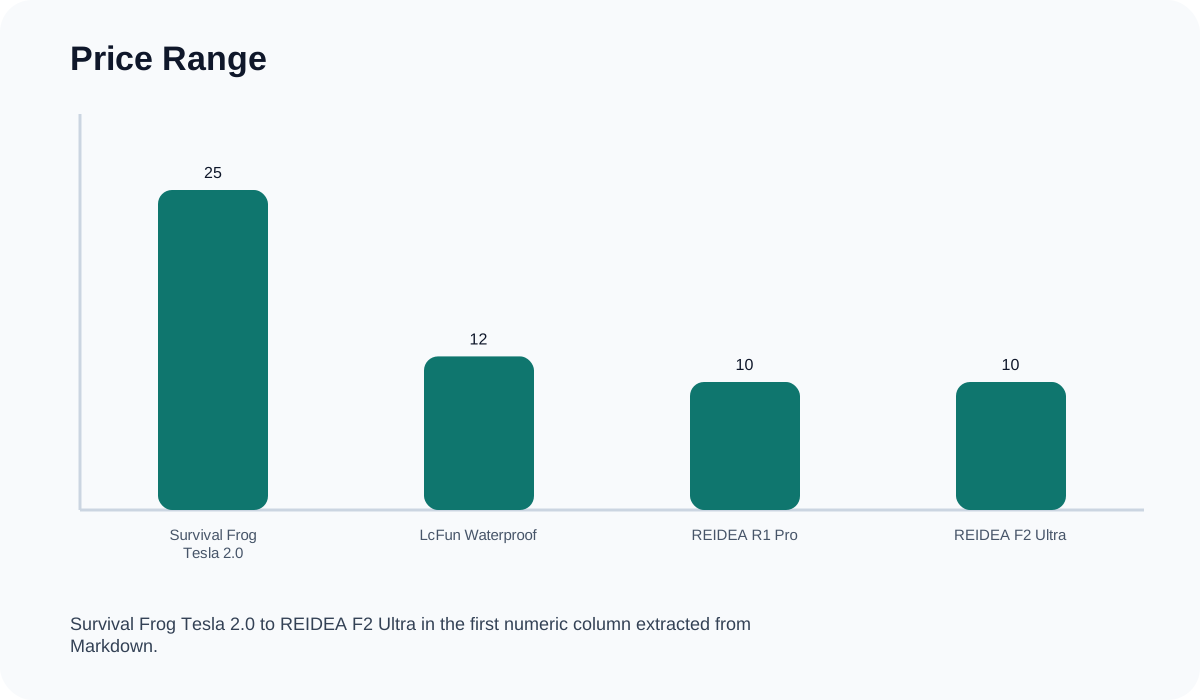
Comparing Durability in Leading Arc Lighters
Not all plasma lighters are built equally. Some models are engineered specifically to absorb impact and protect the internal circuitry.
| Brand & Model | Price Range | Waterproof Claim | Battery Runtime | Charging Method | Durability Rating |
|---|---|---|---|---|---|
| Survival Frog Tesla 2.0 | 30 | IPX7 | 300+ Lights | Micro-USB | Very High |
| LcFun Waterproof | 18 | IPX7 | 200-300 Lights | Micro-USB | High (Impact Case) |
| REIDEA R1 Pro | 14 | None | 300+ Lights | USB-C | Moderate |
| REIDEA F2 Ultra | 15 | None | 500+ Lights | USB-C | Low (Neck Stress) |
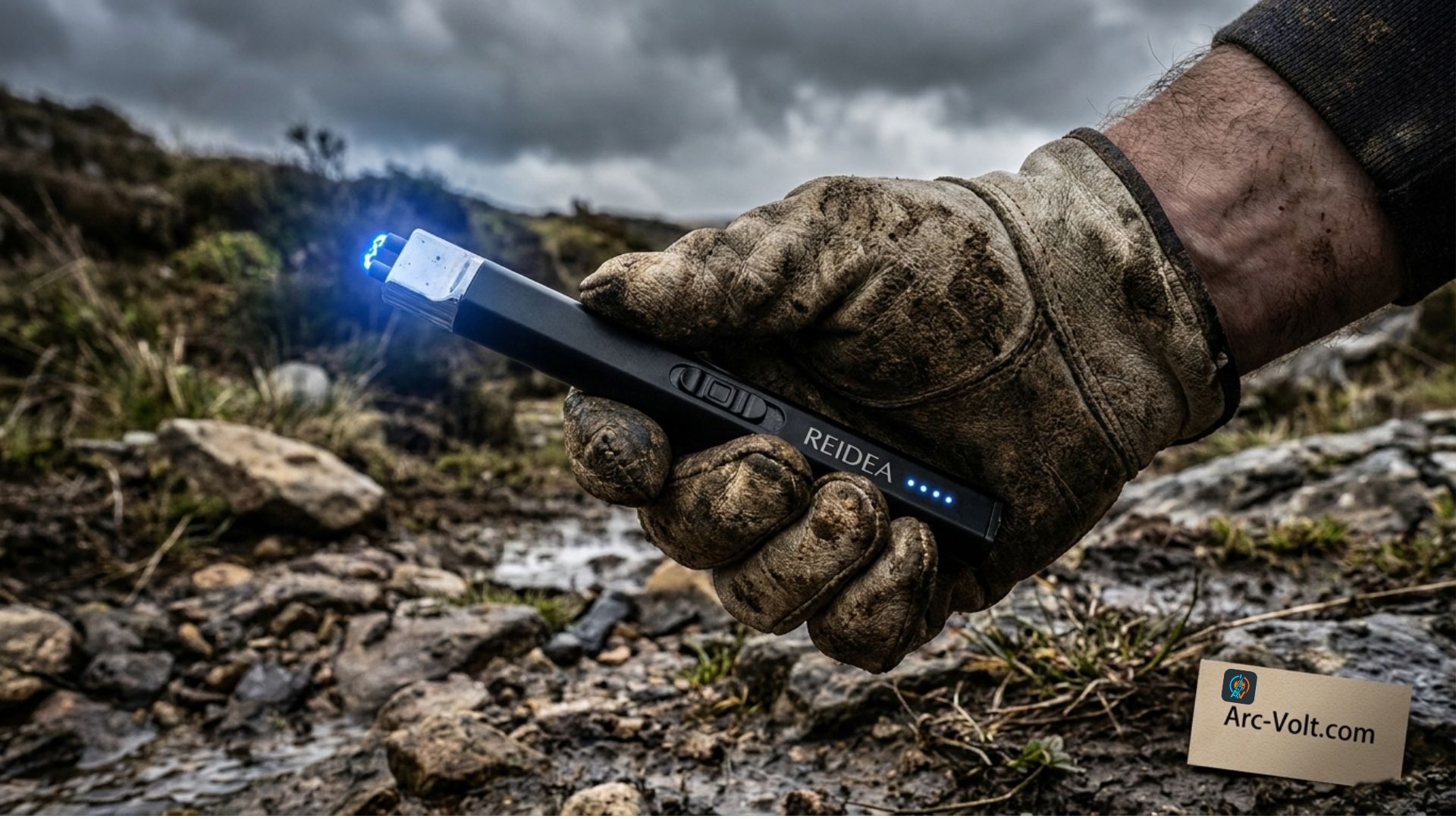
Note: Drop impacts can also ruin “waterproof” ratings. In IPX7 models, a severe drop can deform the plastic chassis or dislodge O-rings, rendering the device vulnerable to moisture even if it continues to produce a spark.
Safety Considerations After a Drop
Continuing to use a damaged electric lighter poses several distinct hazards:
- High Voltage Risk: Arc lighters generate approximately 15,000 volts. If internal insulators crack, the outer shell can become electrified, delivering painful shocks to the user.
- Battery Puncture: The 3.7V lithium-polymer battery can shift during an impact. If it swells or punctures against shattered internal plastics, it creates an immediate fire risk.
- Hearing Safety: Damaged circuits or misaligned transformers may produce an amplified, high-frequency ultrasonic pitch that can cause physical ear discomfort.
Final Verdict
Arc lighters are incredible, fuel-free tools, but their internal physics rely on absolute precision. If you are prone to dropping your gear or plan to use an arc lighter outdoors, bypass the standard aluminum pocket models and invest in an impact-rated, IPX7-cased lighter like the Survival Frog Tough Tesla 2.0 or the LcFun Waterproof. The rubberized casings on these models absorb the kinetic energy that would otherwise shatter ceramic insulators or sever internal wires.
Post-Drop Diagnostic Checklist
If you drop your arc lighter, perform this brief check before attempting to use it:
- Inspect the gap: Are the prongs visibly bent or uneven?
- Listen for rattles: Shake the lighter gently. If you hear a rattle, a solder joint or ceramic piece has likely broken. Do not use it.
- Check the casing: Ensure there are no cracks where moisture could enter or voltage could escape.
- Listen to the pitch: If you test fire it and the high-pitched whine is significantly louder than usual, internal circuitry is likely damaged.