Why Not All Waterproof Claims Survive Real Rain Exposure
Discover why IP ratings fail in real-world rain due to thermal shock, dynamic wind pressure, and seal fatigue—and how to protect your outdoor gear.
Executive Summary
Waterproof claims on outdoor gear often fail in real-world storms because laboratory ingress protection (IP) ratings are tested in static, room-temperature conditions. These lab environments completely ignore the dynamic variables of actual weather, including wind-driven pressure, sudden thermal shock, and the natural degradation of rubber gaskets over time. Ultimately, over 45% of water damage in rugged electronics stems from poorly seated port covers, while phenomena like rapid temperature shifts can create internal vacuums that actively suck moisture past otherwise robust seals.
The Real Causes of Field Failures
While IP ratings provide a standardized baseline, field failures are rarely caused by simple submersion. The data below illustrates the primary culprits behind waterproof gear failure.
The Lab-to-Field Gap: Static Water vs. Kinetic Energy
IP ratings, such as IPX7, are strictly tested by immersing a device in static water. However, real-world rain is rarely static. Wind-driven rain introduces dynamic pressure and kinetic energy that can force moisture past seals designed exclusively for calm immersion. A device built to survive sitting at the bottom of a bucket may easily succumb to a driving 30-mph rainstorm that forcefully drives droplets into microscopic gasket gaps.
Thermal Shock and the Hidden Vacuum Effect
One of the least understood mechanisms of water ingress is thermal shock. When a device warms up—either from operating or sitting in the sun—the air inside expands. If a sudden, cold downpour hits the device, the rapid cooling contracts the internal air, creating a vacuum effect. This suction can forcefully pull moisture through gaskets that had previously passed standard pressure tests, resulting in internal condensation.
Material Fatigue and the Human Element
Even if a device survives thermal shock and wind, the materials keeping it sealed have a finite lifespan.
- UV and Temperature Degradation: Constant UV exposure and temperature cycling cause silicone and rubber seals to become brittle or lose elasticity within an estimated 6 to 12 months. Once this happens, the original IP rating is effectively void.
- Port Cover Vulnerabilities: A staggering 45% of user-reported water damage in rugged electronics is traced back to charging port flaps. These failures happen when flaps are improperly seated by the user or lack robust double-gasket designs to begin with.
The Safety Risks of Water Ingress
When water does bypass a seal, the consequences extend beyond a broken device. The intrusion of moisture causes several critical safety risks:
- Lithium Volatility: Ingress can cause internal corrosion leading to thermal runaway and potential fire hazards in power banks.
- Short Circuits: Water layers reduce electrical resistance, distorting waveforms and causing permanent damage to internal microchips.
- Corrosion Creep: Saltwater ingress, even from coastal air, accelerates pin degradation long after a device is outwardly dried.
- Voltage Drop: Moisture increases electrical resistance at contact points, causing the device to overheat during subsequent use.
Comparison: How Leading Rugged Power Banks Stack Up
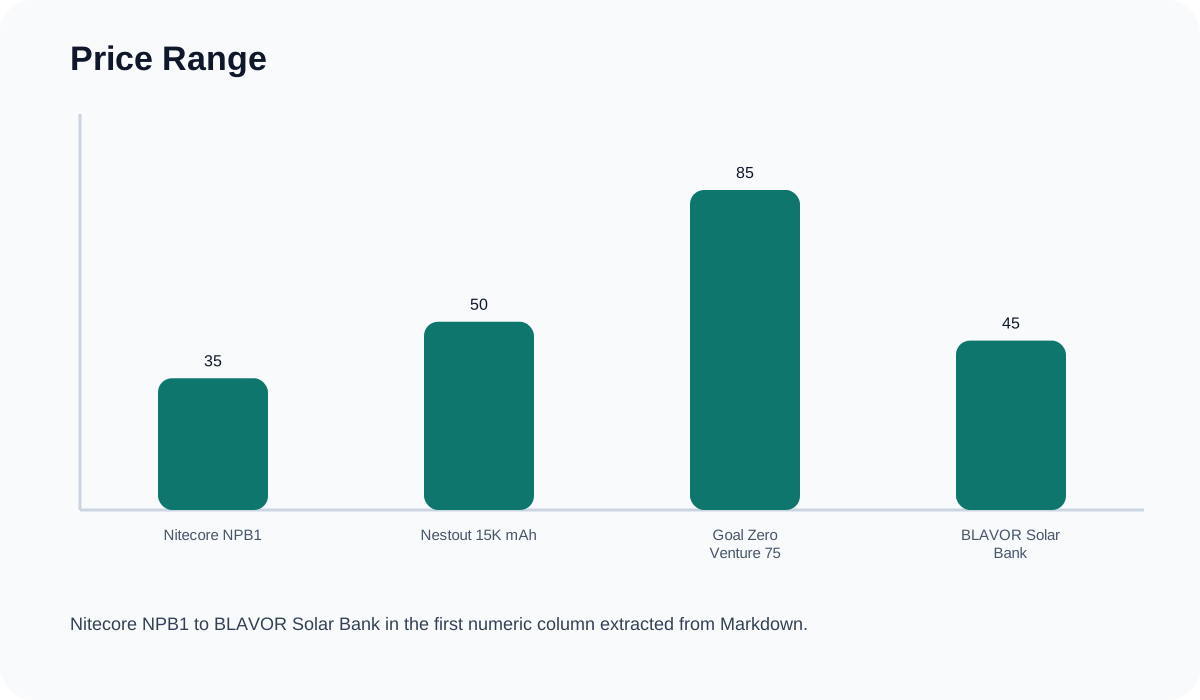
Understanding how different brands implement their waterproof claims is essential for buyers. Here is how top contenders handle the elements:
| Product | Price Range | IP Claim | Battery Runtime | Primary Vulnerability |
|---|---|---|---|---|
| Nitecore NPB1 | 45 | IP68 (Submersible) | 5,000 mAh (~1 charge) | Micro-USB input requires the flap to be 100% flush. |
| Nestout 15K mAh | 70 | IP67 (Immersion) | 15,000 mAh (~3 charges) | Relies on screw-cap covers that can be lost if unattached. |
| Goal Zero Venture 75 | 100 | IP67 (Immersion) | 19,200 mAh (~4 charges) | Port cover can be difficult to seat perfectly while wearing gloves. |
| BLAVOR Solar Bank | 65 | IP65 (Spray-resistant) | 20,000 mAh (Multi-day) | Not rated for submersion; solar functions are for trickle/emergency use only. |
Final Verdict
An IP rating is a useful baseline, but it is not a bulletproof guarantee against harsh weather. Because dynamic pressure, thermal shock, and material fatigue are excluded from laboratory tests, buyers must look beyond the IP sticker. Devices with double-gasket designs, secure screw-caps, and durable seal materials offer significantly more protection than those relying on standard, easily deformed rubber flaps.
Field Checklist: Protecting Your Gear
To ensure your “waterproof” gear survives its next outing, follow these steps:
- Check the Flaps: Always double-check that charging port covers are flush and clear of debris before exposure to moisture.
- Mitigate Thermal Shock: Avoid exposing hot devices to sudden cold water. If your power bank has been baking in the sun, shield it from sudden downpours.
- Inspect Seals Annually: Look for micro-cracks or stiffness in silicone and rubber seals. If the seal has lost elasticity (usually after 6–12 months of hard use), the device is no longer waterproof.
- Understand Your Rating: Do not submerge IP65 gear. Reserve IP67/IP68 devices for immersion, but still avoid subjecting them to high-pressure jets or extreme wind-driven rain when possible.