Why Saltwater Is So Hard on Small Outdoor Electronics
Discover the mechanics of saltwater corrosion on outdoor electronics, safety risks like lithium-ion thermal runaway, and how marine-grade gear survives.
Executive Summary
Saltwater destroys small outdoor electronics through a “triple threat” mechanism: immediate electrical shorting, aggressive chemical corrosion, and mechanical crystallization. Because seawater is 100 to 1,000 times more conductive than fresh water, it accelerates electrolysis upon contact with charged internal components. Even after drying, saltwater leaves behind a hygroscopic (moisture-attracting) residue that creates a perpetual corrosion loop, destroying copper traces and jamming tactile buttons. For outdoor gear like arc lighters, power banks, and action cameras, specialized sealing (IP67 or IP68) and immediate freshwater rinsing are non-negotiable requirements to prevent critical failure and potentially dangerous battery fires.
The Mechanics of Saltwater Corrosion
1. Accelerated Electrical Conductivity
The primary reason saltwater is fatal to unsealed electronics is its massive conductivity spike. Dissolved sodium (Na+) and chloride (Cl-) ions make seawater up to 1,000 times more conductive than fresh water. If saltwater bridges the gap between active electrical pathways, it causes immediate short circuits. Furthermore, this high conductivity accelerates electrolysis, rapidly converting copper traces into verdigris (green copper corrosion) and pitting charging terminals.
2. The Hygroscopic “Perpetual Corrosion Loop”
Unlike fresh water, which eventually evaporates and leaves minimal trace, saltwater leaves behind salt crystals. These crystals are highly hygroscopic, meaning they pull ambient humidity from the air. A device that appears bone-dry on the outside can remain wet inside as salt deposits continuously draw moisture, sustaining the corrosion process long after the initial exposure.
3. Mechanical Crystallization
Saltwater evaporates to form hard, abrasive crystals. In small outdoor electronics, this mechanical buildup manifests in distinct user pain points:
- “Sticky” Tactile Buttons: Crystals form in tight clearances, jamming switches and power buttons.
- Blocked Ports: Micro-USB and USB-C ports become packed with conductive debris, frequently triggering “Moisture Detected” lockout errors.
- Terminal Pitting: Exposed metal charging pins erode unevenly, breaking the physical connection needed for charging.
The Hidden Safety Risk: Thermal Runaway
Beyond ruining a device, saltwater intrusion presents a severe safety hazard when it interacts with internal power sources. The US Coast Guard has issued official warnings regarding the delayed ignition risks of saltwater in lithium-ion batteries.
When highly conductive salt water penetrates a battery housing, it can cause internal bridging between battery cells. This initiates a short circuit that generates immense heat. Because of the hygroscopic nature of salt, this chemical reaction can smolder for hours or days before erupting into thermal runaway—turning compromised devices into “ticking time bombs” long after you’ve returned from your trip.
Comparing Marine-Ready Electronics
Leading manufacturers mitigate saltwater damage through sealed internal batteries, inductive (wireless) charging, and rigorous IPX7/IPX8 waterproofing.
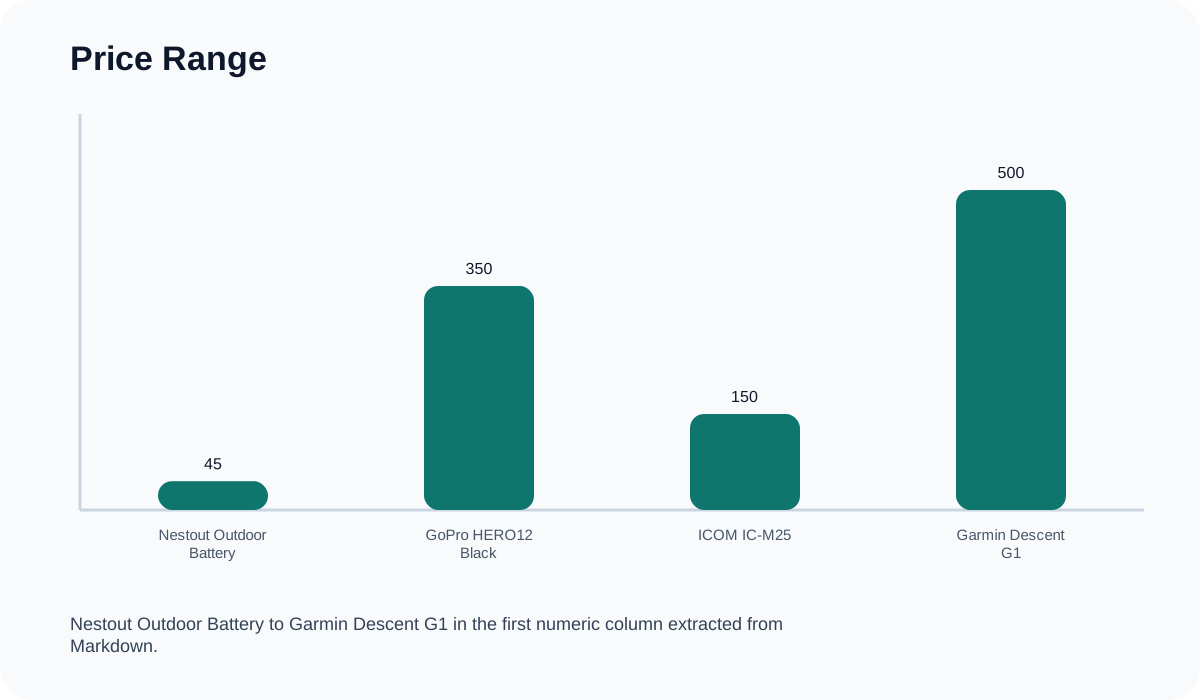
| Product | Category | Price Range | Waterproof Claim | Charging Method |
|---|---|---|---|---|
| Nestout Outdoor Battery | Power Bank | 70 | IP67 (1m submersion) | Sealed USB-C |
| GoPro HERO12 Black | Action Cam | 400 | IPX8 (10m) | Internal USB-C |
| ICOM IC-M25 | Marine Radio | 180 | IPX7 (Floating) | Micro-USB (Sealed) |
| Garmin Descent G1 | Dive Watch | 550 | 10 ATM (100m) | Clip-on Pins |
Note: Devices relying on clip-on pins (like the Garmin) require meticulous cleaning post-dive to prevent terminal pitting.
Final Verdict
Saltwater is fundamentally incompatible with standard electronics. When purchasing gear for marine or coastal environments, do not rely on standard “water-resistant” labels. Opt for devices with an IP67 or IP68 rating, sealed battery compartments, and protected (or inductive) charging methods. Exposed metal contacts will inevitably fail in high-salinity environments without obsessive maintenance.
Saltwater Survival Checklist for Small Electronics
If you are taking arc lighters, power banks, or cameras into marine environments, follow these rules:
- Verify IP Ratings: Ensure the device is rated at least IP67 (submersible to 1 meter). Splash-proof (IPX4) is insufficient for saltwater spray.
- Rinse Immediately: Always rinse devices with fresh, clean water immediately after exposure to ocean spray or submersion.
- Do Not Charge Wet: Never plug a cable into a device that has recently been exposed to saltwater. Ensure ports are completely dry and free of salt crystals.
- Monitor for Heat: If a device that was dropped in saltwater becomes unusually warm to the touch, place it in a fire-safe outdoor area immediately to guard against thermal runaway.