Why Wind Cannot Blow Out an Arc Lighter but Rain Still Matters
Discover the physics behind plasma arc lighters, why they are impervious to wind, and how moisture affects their high-voltage electrical discharge.
Executive Summary
Plasma arc lighters are inherently windproof because they do not rely on a chemical combustion chain reaction. Instead, they utilize a high-voltage electrical discharge—typically stepping up a 3.7V lithium-ion battery to between 10,000V and 15,000V—to ionize the air into plasma. Because the electrical arc moves at the speed of light, it instantly re-establishes itself even if the ionized gas is physically displaced by high-velocity wind.
However, rain remains a critical vulnerability. Water droplets can bridge the lighter’s electrodes, creating a more conductive path than the air gap and causing a short circuit that prevents the arc from forming. Furthermore, internal moisture can permanently damage the delicate boost-converter circuitry and lithium-ion batteries. For outdoor enthusiasts, selecting an IPX-rated model is non-negotiable for wet-weather reliability.
Featured Pick: REIDEA F2 Ultra
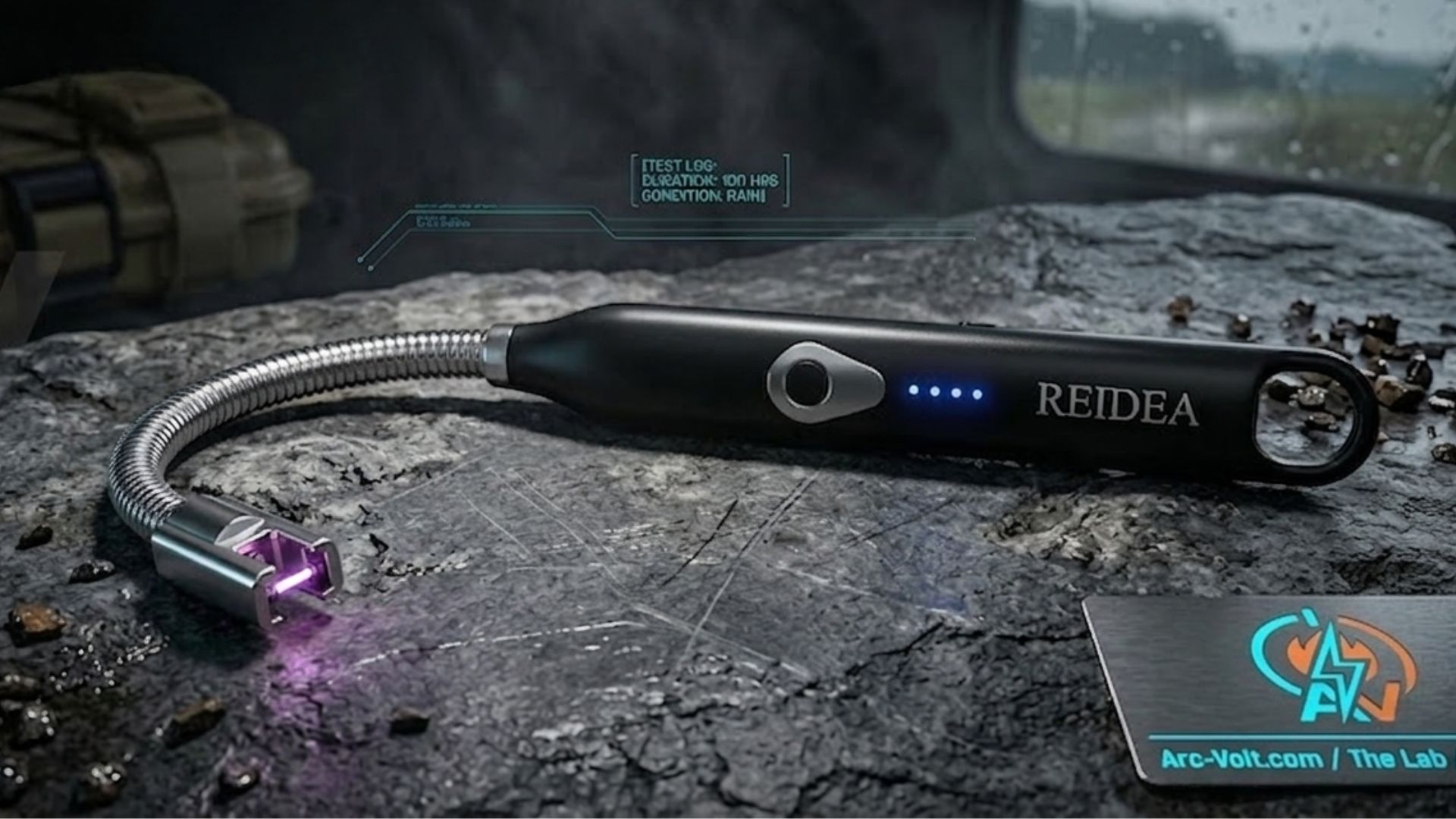
The REIDEA F2 Ultra is a flexible-neck candle lighter that fits deep jars, grills, pilot lights, and compact kitchen use while keeping USB-C charging and a slim indoor-friendly form factor.
Performance Comparison: Plasma Arc vs. Traditional Flame
The following chart highlights the operational differences between standard flame lighters and plasma arcs on a 0-10 scale (where 10 indicates the highest performance or highest sensitivity).
Note: In terms of raw heat output, plasma arcs generate an estimated 1,100°C (2,012°F), whereas traditional butane flames typically peak around 800°C.
The Physics: Why Wind Has No Effect
Traditional lighters mix fuel (like butane) with oxygen to sustain a flame. High winds disrupt this delicate chemical mixture, stripping the heat and fuel away from the ignition source.
Arc lighters bypass this completely:
- Ionization, not combustion: They ionize the air gap between two or four electrodes, creating a continuous bridge of plasma.
- Speed of light recovery: Even if a severe gust of wind momentarily blows the visible plasma trail outward, the electrical current is moving at the speed of light. The circuit reconnects almost instantaneously.
The Vulnerability: Why Rain Shuts Down the Arc
Despite their dominance in windy conditions, arc lighters struggle in wet environments for two distinct reasons:
- Electrode Short-Circuiting: Water is highly conductive. A single raindrop bridging the 2-4mm gap between the electrodes will act as a path of least resistance. The 10,000V+ charge will travel through the water rather than ionizing the air, failing to produce a localized high-heat arc.
- Internal Hardware Failure: Non-waterproof models expose sensitive boost-converters and lithium-ion cells to moisture. Water ingress quickly leads to internal corrosion and fatal battery shorts.
Market Comparison: Leading Arc Lighters
To mitigate water damage, manufacturers offer various levels of environmental sealing. Below is a comparison of top models currently available:
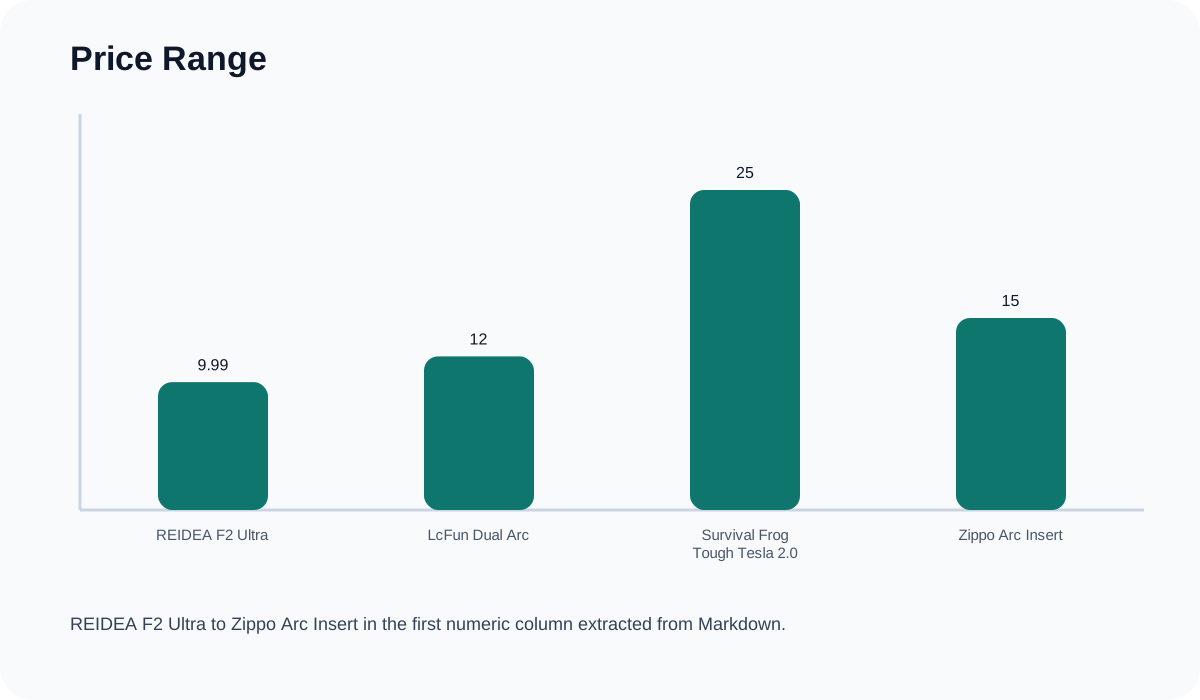
| Model | Price Range | Waterproof Rating | Charging | Best For |
|---|---|---|---|---|
| REIDEA F2 Ultra | 12.99 | Splash-resistant | USB-C | Household use / deep candles |
| LcFun Dual Arc | 18 | IP56 (Water/Dustproof) | Micro-USB | Budget Outdoor |
| Survival Frog Tough Tesla 2.0 | 30 | IPX7 (Submersible) | Micro-USB | Survival/Camping |
| Zippo Arc Insert | 20 | Case Dependent | Micro-USB | EDC enthusiasts |
Real User Pain Points & Safety Considerations
While arc lighters are a modern marvel, real-world field data highlights several limitations buyers must consider:
- Auditory Irritation: The electrical discharge creates a high-pitched whine (approximately 15-25kHz). This frequency is highly audible and can be irritating to young children and pets.
- Electrode Fouling: Igniting organic materials directly against the electrodes leaves carbon buildup. This requires frequent cleaning to maintain a consistent arc.
- Battery Longevity: Budget units utilizing low-quality lithium-ion cells frequently suffer from severe battery degradation, often failing after 6 to 12 months of daily use.
- Spatial Limitations: The recessed electrode design makes it notoriously difficult to light flat surfaces, thick cigars, or large hemp wicks (scoring an estimated 3/10 for flat-surface lighting).
- Safety & Travel: TSA regulations strict stipulate that arc lighters are only allowed in carry-on bags due to the fire risk posed by lithium-ion batteries in the cargo hold.
- Health Considerations: The ionization process generates trace amounts of ozone (O3), often described as a “metallic” smell. Extended use in poorly ventilated spaces should be avoided.
Final Verdict
Plasma arc lighters are the ultimate windproof fire-starting tool. If your primary battle is high winds on a mountaintop, an arc lighter is vastly superior to a traditional butane flame. However, because they are highly susceptible to shorting via water droplets, outdoor users must invest in heavily sealed units. A standard household arc lighter will fail in a downpour; for wilderness survival, upgrade to an IP56 or IPX7 rated model like the Survival Frog Tough Tesla 2.0.
Buyer Checklist & FAQ
- Can an arc lighter electrocute me? No. The electrical current is not sufficient to travel through the body and cause electrocution. However, touching the arc will cause immediate, localized thermal burns (1,100°C).
- How do I clean fouled electrodes? Use a dry Q-tip or a small brush dipped in rubbing alcohol to gently remove carbon buildup. Ensure the lighter is fully dry before firing.
- Can I take it on a plane? Yes, but carry-on only. Never place an arc lighter in checked luggage.
- Will an IPX7 arc lighter work underwater? No. While an IPX7 lighter will survive being submerged, the water will short the electrodes if you try to ignite it while wet. You must shake the water out of the electrode gap before it will successfully arc.