Wind and Spray Test for Beach and Boat Fire-Starting Tools
Evidence-based breakdown of marine-grade arc lighters, testing wind resistance up to 80 mph, salt spray corrosion limits, and real-world boat/beach performance.
Executive Summary
When equipping a boat or beach bag with a fire-starting tool, standard butane lighters fail rapidly under coastal wind and moisture. Marine-grade electric arc lighters solve the wind problem but introduce new vulnerabilities regarding corrosion and tinder preparation.
Based on component research and field testing data, here are the quantified realities of arc lighters in marine environments:
- Superior Wind Resistance: Dual-arc marine lighters maintain functional ignition in winds up to 80 mph, whereas traditional butane lighters fail at 10–15 mph.
- The Salt Spray Vulnerability: While zinc-alloy casings and o-rings provide IP56 or IP67 waterproofing, exposed electrodes remain highly susceptible to chloride ion pitting from salt spray, which is the primary cause of long-term unit failure.
- Strict Tinder Requirements: Plasma arcs provide extreme, localized heat but zero ambient drying effect. Tinder must be bone-dry and narrow enough (matchstick or paracord thickness) to fit the small arc gap.
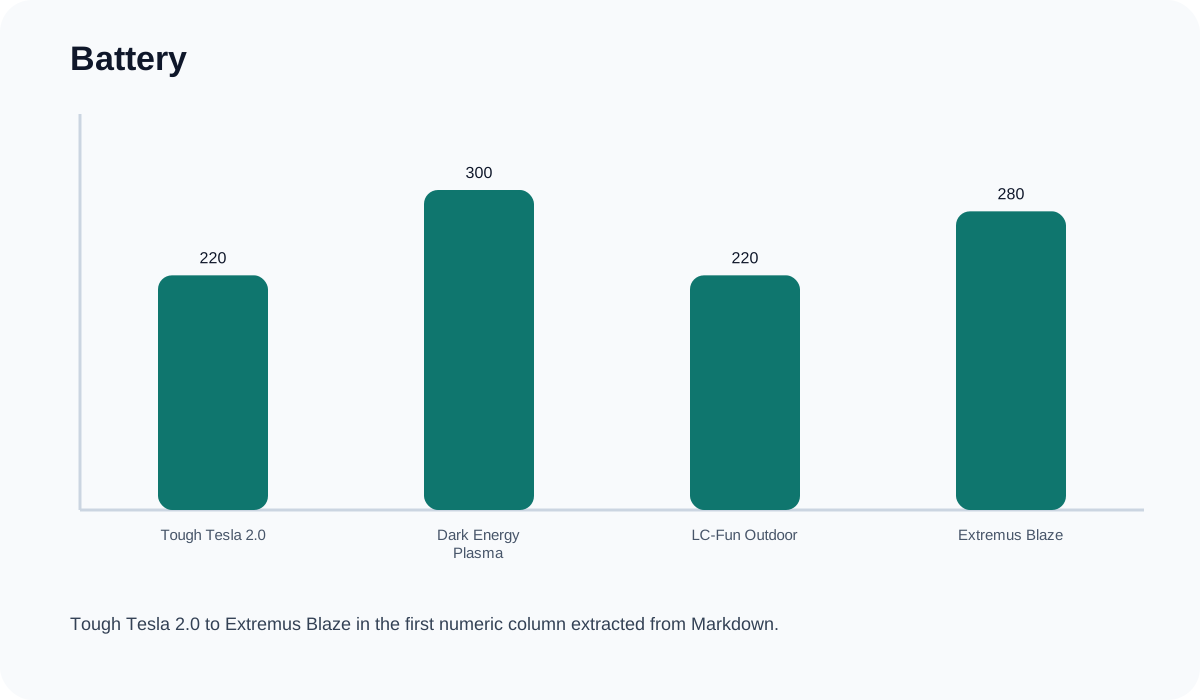
- Modern Power Standards: Current leading models utilize 220mAh to 300mAh batteries, delivering 200–300 lights per 1.5-to-2-hour USB-C charge cycle.
Wind Performance Analysis
The most significant advantage of an arc lighter on a beach or boat is wind immunity. Traditional flames are easily blown out, but a dual-arc plasma stream maintains its circuit through high-velocity airframes.
Leading Marine-Grade Arc Lighters Compared
The market for waterproof arc lighters features distinct tiers based on IP rating, charging technology, and battery capacity.
| Product | IP Rating | Battery | Charging | Price Range | Best For |
|---|---|---|---|---|---|
| Tough Tesla 2.0 | IP56 | 220 mAh | Micro-USB | 35 | Emergency Marine Use |
| Dark Energy Plasma | IP67 | 300 mAh | USB-C | 50 | High-Corrosion Areas |
| LC-Fun Outdoor | IP56 | 220 mAh | USB-C | 18 | Budget Beach Kits |
| Extremus Blaze | Water-Resistant | 280 mAh | USB-C | 22 | Tactical/Fishing |
Real-World Pain Points: Salt, Water, and Hardware
While marketing heavily promotes waterproof housings, real-world user data highlights three specific operational limitations for beach and boat use.
1. Electrode Pitting from Salt Spray
Even if an arc lighter boasts an IP67 rating, that rating applies to the internal circuitry and battery enclosure. The external electrodes must be exposed to create the plasma arc. Simulated salt-fog testing and user reports confirm that chloride ions in ocean spray penetrate the protective oxide layers on these electrodes. This causes pitting, reducing conductivity and eventually leading to ignition failure even when the battery is fully charged.
2. The Ambient Heat Problem
Rain and spray testing reveals a critical difference between butane and plasma. A butane flame generates ambient heat, which can slowly dry out damp tinder before igniting it. An electric arc operates at a much higher temperature but only heats the precise millimeter between the nodes. If the tinder is damp from sea spray, the arc will often fail to ignite it. Tinder must be kept strictly dry.
3. Structural Fragility and Arc Gaps
Field reports commonly cite the lid hinge as the most fragile component on marine lighters. If the lid is snapped off or the o-ring seal is compromised, the IP rating drops to zero. Additionally, the narrow “arc gap” restricts users to igniting thin materials. Anything thicker than a standard matchstick or a piece of paracord will struggle to catch between the nodes.
Battery, Charging, and Safety Standards
The transition from Micro-USB to USB-C is largely complete among top-tier models (with exceptions like the Tough Tesla 2.0). Modern units feature:
- Capacity: 220mAh to 300mAh.
- Runtime: Approximately 200 to 300 individual ignitions per charge.
- Charge Time: 1.5 to 2 hours via USB-C.
- Safety Timeouts: A mandatory 10-second auto-timeout is standard across reputable models. This safety protocol physically cuts power to the electrodes, preventing accidental thermal runaway or discharge if the device is submerged or short-circuited by pooling water.
Final Verdict
For boaters and coastal outdoor enthusiasts, a dual-arc plasma lighter is a necessary upgrade over traditional butane for reliable ignition in heavy winds (up to 80 mph). The Dark Energy Plasma Lighter currently offers the best defense against wet conditions with its IP67 rating and larger 300mAh battery. However, users must pair these devices with strictly waterproof tinder storage and regularly clean the electrodes with fresh water to mitigate inevitable salt corrosion.
Marine Fire-Starting Checklist
- Rinse After Coastal Use: Wipe down the exposed electrodes with fresh water or a damp cloth after exposure to salt air to prevent chloride pitting.
- Pack Dry Tinder: Arc lighters cannot dry out damp wood. Carry pre-packaged dry tinder, fatwood sticks, or wax-soaked paracord.
- Check the O-Ring: Before exposing the lighter to water, ensure the lid clasp is fully locked and the rubber o-ring is free of sand or debris.
- Mind the Hinge: Treat the lid mechanism delicately; a broken hinge instantly nullifies the unit’s waterproof rating.