Winter Car Kit Test: Which Electronics Stay Usable After Overnight Freeze?
Discover which emergency electronics survive sub-zero temperatures. We analyze battery chemistry, cold-weather jump starters, and vital safety considerations.
Executive Summary
When your vehicle is parked in sub-zero temperatures overnight, the reliability of your emergency electronics depends entirely on battery chemistry and material selection. Standard lithium-ion batteries lose 20% to 50% of their effective capacity at 0°F (-18°C), while alkaline batteries suffer critical failures. To build a cold-proof winter car kit, you must rely on lithium primary cells (like CR123A), which maintain over 90% capacity in extreme cold. Furthermore, standard PVC cables will snap, and LCD screens will fail. Upgrading to braided nylon or silicone cables and devices with analog or LED indicators is mandatory for winter vehicle storage.
Battery Chemistry Performance in Freezing Temperatures
The primary failure point for cold-weather electronics is the power source. Not all batteries survive the freeze-thaw cycle of a winter vehicle interior.
- Lithium Primary Cells (CR123A / AA / AAA): The gold standard for winter storage. These non-rechargeable batteries maintain up to 95% of their capacity at 0°F.
- Lithium-ion (Li-ion): Standard rechargeable cells suffer a significant drop in output, losing an estimated 20% to 50% capacity at 0°F. They also pose a severe safety risk if charged while frozen.
- NiMH Rechargeables: Offer mediocre cold-weather performance, retaining roughly 60% capacity.
- Alkaline Cells: Prone to leaking during freeze-thaw cycles, retaining only around 25% of their capacity. Alkaline batteries should not be kept in winter car kits as leaks can permanently destroy expensive electronics.
Material and Component Failures
Cold temperatures impact more than just the battery core. Our research highlights three common physical failures reported by users during winter breakdowns:
- Cable Snapping: Standard PVC-coated charging cables become brittle and break like twigs when uncoiled in -10°F weather. Silicone or braided nylon cables are required for sub-zero durability.
- Screen Ghosting: LCD (Liquid Crystal Display) screens, commonly found on high-end chargers and GPS units, suffer from ghosting or become completely unresponsive. Devices with simple LED indicators or analog gauges are highly preferred.
- Casing Cracks: The plastic casings of standard power banks easily crack if dropped while frozen.
Winter Car Kit Product Comparison
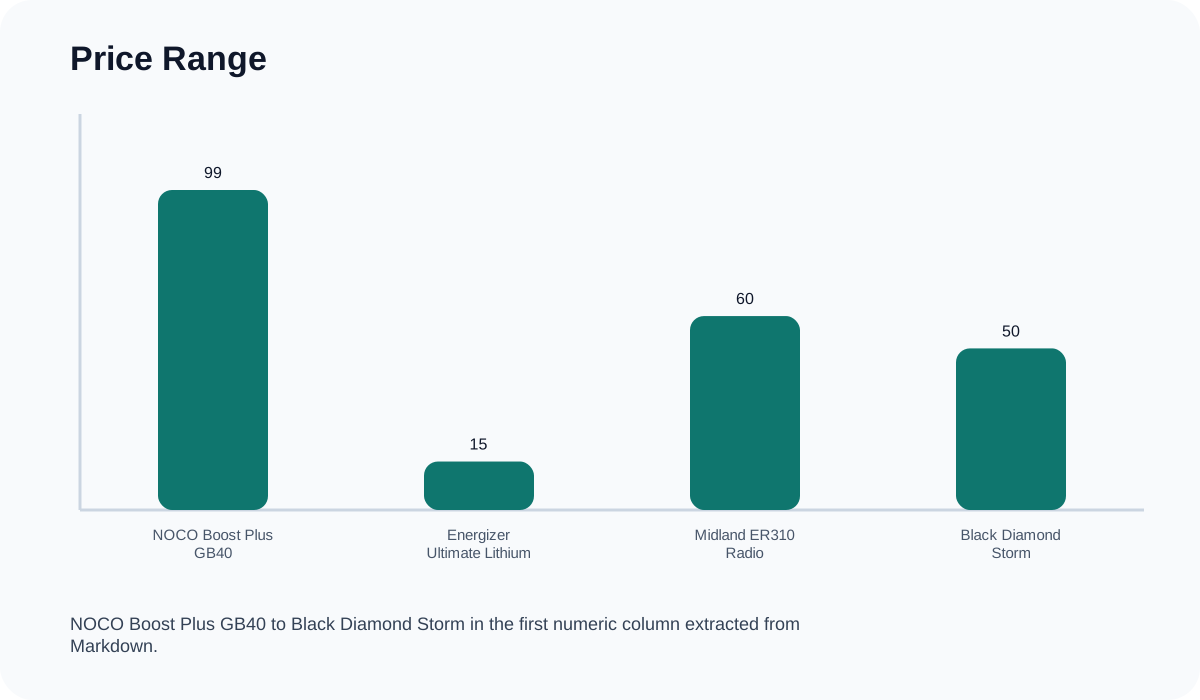
Leading emergency devices are rated for specific temperature thresholds. Below is an evaluation of popular winter car kit electronics based on current performance data.
| Product | Price Range | Battery Type | Waterproof Rating | Cold Performance Notes |
|---|---|---|---|---|
| NOCO Boost Plus GB40 | 125 | Lithium-ion | IP65 | Discharge ok to -4°F; cannot charge below 32°F. |
| Energizer Ultimate Lithium | 25 (8-pack) | Lithium Primary | N/A | Operational down to -40°F; ideal for flashlights. |
| Midland ER310 Radio | 75 | Li-ion / AA Alt | Weather Resistant | Crank/Solar charging slow in winter; use Lithium AA backup. |
| Black Diamond Storm | 65 | Dual Fuel (Li-ion/AAA) | IP67 | Switch to AAA Lithium for overnight car storage. |
Note: Prices are estimates based on standard retail ranges.
Critical Safety Considerations
Operating electronics that have been frozen overnight introduces unique safety hazards.
- Thermal Runaway Risk: Never charge a frozen lithium-ion battery (like a jump starter or power bank). Charging before the device has warmed up causes metallic lithium plating, which can lead to thermal runaway and fire.
- Condensation Shorts: Bringing a frozen electronic device into a warm, humid car cabin creates condensation on the internal circuitry, which can cause immediate short circuits.
- Parasitic Drain: Flashlights or radios with standby modes should be physically locked out or have their batteries separated. Parasitic drain will deplete weakened cells, leaving the device dead when an emergency strikes.
Final Verdict
For a reliable winter car kit, prioritize devices powered by Lithium Primary batteries (CR123A or AA/AAA). Dual-fuel devices like the Black Diamond Storm headlamp offer the best versatility, allowing you to store them with lithium primary cells while preserving rechargeability for warmer months. For essential lithium-ion gear like the NOCO Boost Plus GB40 jump starter, thermal insulation is necessary for multi-day storage, and you must adhere strictly to the -4°F discharge limit. Replace all PVC charging cables with silicone alternatives and avoid gear dependent on LCD touchscreens.
Winter Electronics Checklist
- Replace all alkaline batteries with lithium primaries (e.g., Energizer Ultimate Lithium).
- Swap PVC charging cords for silicone or braided nylon cables.
- Ensure jump starters (like NOCO Boost) have high Peak Amps and are insulated.
- Verify emergency radios and flashlights operate on analog controls or LED indicators rather than LCDs.
- Safety Check: Never plug in a frozen lithium-ion battery to charge.