Best Portable Backup Power for Storm Prep and Evacuation Kits
Discover the top LiFePO4 portable power stations for 2026 storm prep, featuring rapid-charging 1000Wh units and rugged waterproof options for emergencies.
Executive Summary
For 2026 storm preparedness, the optimal portable backup power strategy relies almost exclusively on LiFePO4 (Lithium Iron Phosphate) battery chemistry. Offering a 10-year lifespan and over 3,000 charge cycles, LiFePO4 provides superior thermal safety during emergencies compared to older lithium-ion (NMC) models.
The current sweet spot for a shelter-in-place kit is a 1000Wh power station, which typically weighs between 25 and 30 lbs and provides enough energy to run a CPAP machine for roughly 18 hours or a full-size refrigerator for approximately 5 hours. Rapid AC charging has become the critical specification for 2026, with top models restoring 0 to 100% capacity in just 60 to 80 minutes—a vital feature for harvesting power during rolling blackouts. However, water resistance remains a major industry gap. Most flagship power stations are only rated IP20 (strictly for indoor use), making ruggedized, waterproof units like the Bluetti AC240 a distinct necessity for harsh storm environments. For rapid evacuation scenarios, lighter sub-300Wh units are strongly recommended.
If your immediate use case is hurricane-season planning specifically, we also broke out a more focused stack guide here: Best Portable Backup Power for Hurricane Prep and Evacuation Kits.
2026 Portable Power Station Comparison
| Model | Capacity | IP Rating | Primary Use Case | Est. 2026 Price |
|---|---|---|---|---|
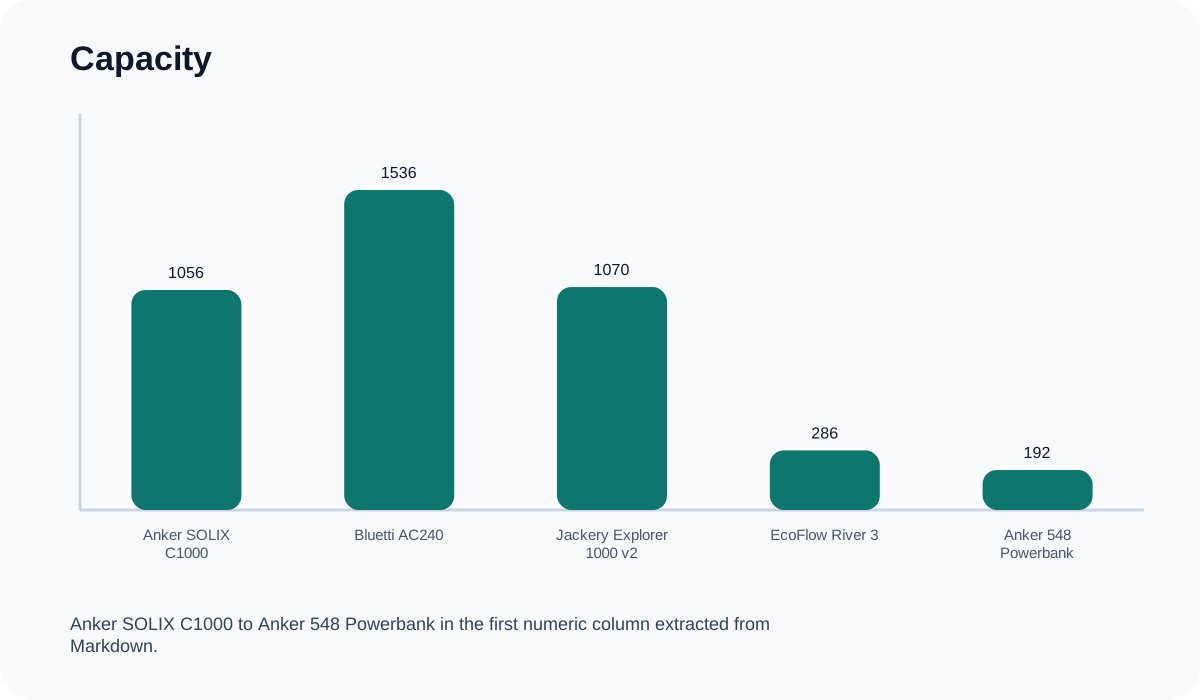
| Anker SOLIX C1000 | 1056Wh | IP20 | Best Overall / Fast Charging | 799 |
| Bluetti AC240 | 1536Wh | IP65 | Waterproof / Rugged Storm Use | 1,500 |
| Jackery Explorer 1000 v2 | 1070Wh | IP20 | Reliability / User Friendly App | 800 |
| EcoFlow River 3 | 286Wh | IP20 | Evacuation Kit (Grab-and-Go) | 280 |
| Anker 548 Powerbank | 192Wh | IPX4 | Small Electronics / Emergency Light | 170 |
Performance Under Outage Conditions
Understanding exactly what a standard 1000Wh unit can run is essential for building an effective evacuation or shelter-in-place kit. The chart below estimates the maximum runtime or charge quantity for common emergency devices operating on a single 1000Wh cycle.
Core Analysis: Choosing the Right Backup Power
Battery Chemistry and Safety
The transition to LiFePO4 (LFP) chemistry is complete for 2026 emergency backup power. Compared to standard NMC (Nickel Manganese Cobalt) lithium-ion, LFP models significantly lower fire risks caused by physical damage or overheating. They yield over 3,000 life cycles before dropping to 80% original capacity, ensuring the battery will remain viable even if stored continuously in a storm kit for a decade.
Hyper-Charging Capabilities
Charging speed dictates utility during rolling blackouts or brief periods of generator access. High-performance models like the Anker SOLIX C1000 and EcoFlow Delta 3 Plus feature AC hyper-charging, replenishing from 0% to 100% in roughly 60 to 80 minutes. This ensures maximum power can be stored quickly before grid failures resume.
The Waterproofing Gap
A critical hazard in storm preparation is water exposure. The majority of 2026 flagship models—including the EcoFlow Delta 3 Plus and Jackery Explorer 1000 v2—hold an IP20 rating. This means they offer zero protection against moisture and must be operated in dry, indoor environments. For applications where exposure to tropical storm elements is unavoidable, the Bluetti AC240 is one of the rare market exceptions, offering an IP65 rating that withstands dust and low-pressure water jets.
Weight vs. Capacity
Capacity dictates the unit’s weight, creating a physical constraint for rapid evacuations. A standard 1000Wh power station typically weighs 25 to 30 lbs. While manageable for most adults, this weight-to-power ratio can impede elderly users or families carrying multiple emergency bags. For strict grab-and-go evacuation kits, experts recommend sub-300Wh units like the EcoFlow River 3, which dramatically reduce physical load while still securing communications and basic lighting.
Final Verdict
For standard home shelter-in-place scenarios, a ~1000Wh LiFePO4 station with hyper-charging capabilities is the baseline requirement. The Anker SOLIX C1000 remains highly recommended for general use due to its rapid charging speeds and efficient capacity footprint. For households in flood zones or those requiring a unit capable of enduring rain exposure outside a shelter, the Bluetti AC240 is an essential, albeit more expensive, waterproof upgrade. Finally, keep an ultra-portable unit like the EcoFlow River 3 strictly designated for vehicle evacuation kits.
Storm Prep Power Checklist
- Verify Chemistry: Ensure any new purchase specifies LiFePO4 (LFP) for longevity and maximum fire safety.
- Check Recharging Speed: Confirm the unit can charge fully via AC within 90 minutes to capitalize on intermittent grid uptime.
- Assess Water Risks: If your shelter location is prone to leaks or high humidity, invest in a dry-box enclosure or upgrade to an IP65-rated model like the Bluetti AC240.
- Match Capacity to Medical Needs: If relying on a CPAP or oxygen concentrator, calculate the device’s wattage against the station’s Wh rating (e.g., a 1000Wh station runs a 30W-60W CPAP for roughly 18 hours).
- Separate Kits: Maintain a heavier 1000Wh+ unit for the home and a lightweight sub-300Wh unit exclusively for rapid vehicle evacuation.