Best Portable Backup Power for Hurricane Prep and Evacuation Kits
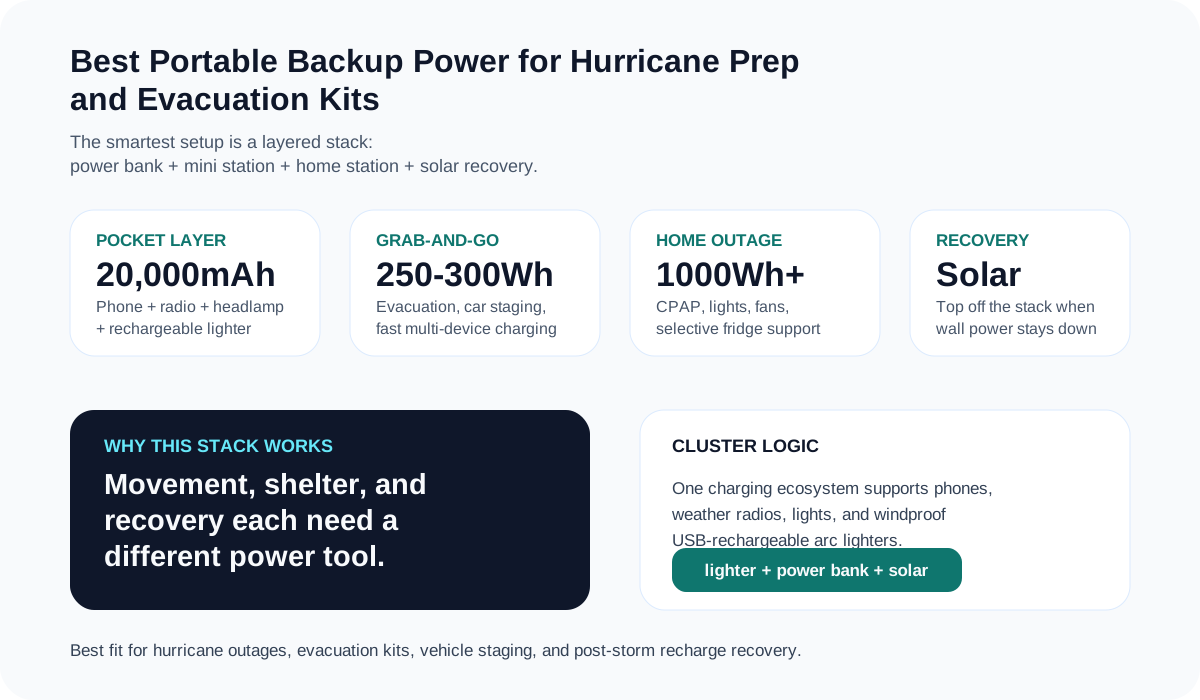
The best hurricane backup power setup is a layered stack: power bank, grab-and-go power station, solar recharge, and USB-ready tools like weather radios and windproof arc lighters.
Executive Summary
For hurricane prep, the best backup power strategy is usually not one giant battery. It is a layered system:
- a 20,000mAh-class USB power bank for phones, radios, and small electronics
- a sub-300Wh grab-and-go power station for evacuation speed
- a 1000Wh-class LiFePO4 station for shelter-in-place outages
- a foldable solar panel or vehicle charging path for recovery and extended downtime
That layered approach matters because hurricane disruptions are rarely one-dimensional. Some households need to leave quickly. Some stay put but lose grid power for multiple days. Some get partial access to charging through a car, a sunny window, or a brief return of utility power. A flexible stack handles those transitions better than a single oversized box.
It also connects directly to the rest of the emergency-kit ecosystem. Once you already carry USB power for phones, lights, and weather radios, tools like windproof rechargeable arc lighters become easier to justify because they pull from the same backup energy pool instead of needing separate fuel logistics. For that specific ignition angle, see Why Extreme-Weather Emergency Kits Should Use Pure-Electric Windproof Lighters Instead of Traditional Gas Lighters.
Why Hurricane Power Planning Is Different
General outage prep and hurricane prep overlap, but they are not identical.
Hurricanes create a specific combination of constraints:
- multi-day outages are more common than brief blackouts
- wind and water can limit where gear can safely operate
- evacuation adds strict weight and portability limits
- gas stations and stores may be unavailable or heavily congested
- communications gear becomes as important as lighting or refrigeration
That is why a hurricane power kit should be designed around roles, not just watt-hours.
The Three-Tier Hurricane Power Stack
The simplest way to build a durable hurricane-ready setup is to separate it into three layers.
| Power Tier | Typical Capacity | Best Job | Hurricane Use Case |
|---|---|---|---|
| USB Power Bank | 74Wh class (20,000mAh) | Pocket electronics | Phone, NOAA radio, headlamp, rechargeable lighter |
| Grab-and-Go Power Station | 250Wh to 300Wh | Fast evacuation and car kit | Laptop, router, lights, multiple phone recharges |
| Shelter Power Station | 1000Wh to 1100Wh | Multi-day home outage | CPAP, fridge support, fans, communications, lighting |
This role-based setup also keeps costs under control. A household that buys only a large station often ends up missing the small devices that actually move most often: the bank that goes in a bag, the cable kit that lives in a glove box, the solar panel that restores the stack when wall power is gone.
At-a-Glance Capacity Math
The chart below uses estimated usable energy after conversion losses rather than marketing capacity alone. That gives a more honest picture of what each tier can actually support.
These numbers are not promises. They are planning estimates based on typical device loads and normal conversion losses. The important point is structural:
- the power bank keeps essentials alive during movement
- the mini station bridges evacuation, hotels, and vehicle staging
- the 1000Wh station carries the home base when outages drag on
Best Tools by Hurricane Scenario
1. Best Small-Load Option: 20,000mAh USB-C Power Bank
For most families, the smallest meaningful hurricane power purchase is still a quality 20,000mAh-class bank. It is light enough to carry everywhere, fast enough to matter, and broad enough in compatibility to keep phones, radios, flashlights, and lighter-sized USB gear alive without forcing a bigger equipment decision.
This tier is best for:
- evacuation bags
- glove boxes
- apartment stairwell outages
- quick charger access during shelter moves
If your lighter, headlamp, and radio all recharge over USB, this is the cheapest way to unify the kit.
2. Best Grab-and-Go Option: 250Wh to 300Wh Mini Power Station
This is the most underrated hurricane tier.
A sub-300Wh station is often the better evacuation choice than a 1000Wh unit because you can actually move it quickly. It keeps communications, lighting, tablets, routers, and smaller medical or comfort devices online without turning one bag into dead weight.
This tier is best for:
- hotel transfers
- vehicle staging
- keeping a router or Starlink accessory alive for short periods
- recharging multiple USB devices from one central box
The existing storm-prep market already supports this category well, and it is often the smartest second purchase after a good power bank.
3. Best Shelter-in-Place Option: 1000Wh-Class LiFePO4 Station
For households riding out a serious outage at home, 1000Wh remains the practical baseline. It is enough capacity to support communications, lights, fan use, device charging, and selective appliance duty without immediately jumping into extremely heavy or expensive systems.
This tier is best for:
- CPAP users
- limited fridge support
- nighttime lighting and ventilation
- multi-device family charging
LiFePO4 chemistry matters here because hurricane prep is fundamentally a storage problem. You want a battery that can sit charged, cycle for years, and present lower thermal risk than older chemistries.
For the broader, non-hurricane version of this buying logic, see Best Portable Backup Power for Storm Prep and Evacuation Kits.
Where Solar Actually Fits
Solar matters in hurricane prep, but usually not in the simplistic “just buy a panel” way.
A small foldable panel is best understood as a recovery tool, not a guaranteed full-speed primary source during the storm itself. Cloud cover, rain, debris, window placement, and safety concerns often reduce output sharply. But once conditions stabilize, solar becomes a very useful way to top off the small-device layer:
- recharge the power bank
- refill lights and weather radios
- top off a rechargeable windproof lighter
- reduce how often the larger station needs wall or vehicle charging
In other words, solar gives the stack resilience even if it does not fully replace the grid.
The Lighter + Power Bank + Solar Connection
This is the cluster logic behind the article.
Once a household adopts:
- one decent USB-C power bank
- one backup station
- one realistic solar recharge path
then a pure-electric windproof lighter stops being a standalone gadget and becomes part of the same rechargeable ecosystem.
That matters in hurricane response because ignition often becomes a small but important utility job:
- candles
- camp stoves
- grills
- lantern wicks
- quick outdoor lighting tasks during windy conditions
With gas lighters, the failure mode is usually fuel availability. With rechargeable lighters, the failure mode is charging discipline. In a kit that already revolves around backup charging, the second problem is often easier to manage than the first.
Related reading for that side of the stack:
- Best Plasma Lighters for Emergency Kits
- Best Emergency Recharge Options During a Power Outage
- Best Portable Backup Power for Storm Prep and Evacuation Kits
- Why Extreme-Weather Emergency Kits Should Use Pure-Electric Windproof Lighters Instead of Traditional Gas Lighters
What Most People Get Wrong
The most common hurricane backup-power mistakes are surprisingly consistent:
- buying a large station before buying a good power bank
- ignoring cable and port compatibility
- assuming solar recharge will be fast in bad weather
- overlooking evacuation weight
- forgetting that small tools like radios, lights, and lighters are often the most-used devices in the kit
The best system is not the most impressive one. It is the one that still feels usable when the house is dark, the car is packed, and everything needs to be charged from the same few ports.
Final Verdict
The best portable backup power setup for hurricane prep is a layered stack, not a single hero product.
The most practical order is:
- start with a reliable 20,000mAh USB-C power bank
- add a 250Wh to 300Wh mini station for evacuation speed
- keep a 1000Wh LiFePO4 station for home outage depth
- add solar or vehicle recharging as the recovery layer
That framework also makes the rest of the kit smarter. Phones, weather radios, lights, and rechargeable windproof lighters all become easier to maintain because they share one coherent backup-power system instead of four separate survival habits.