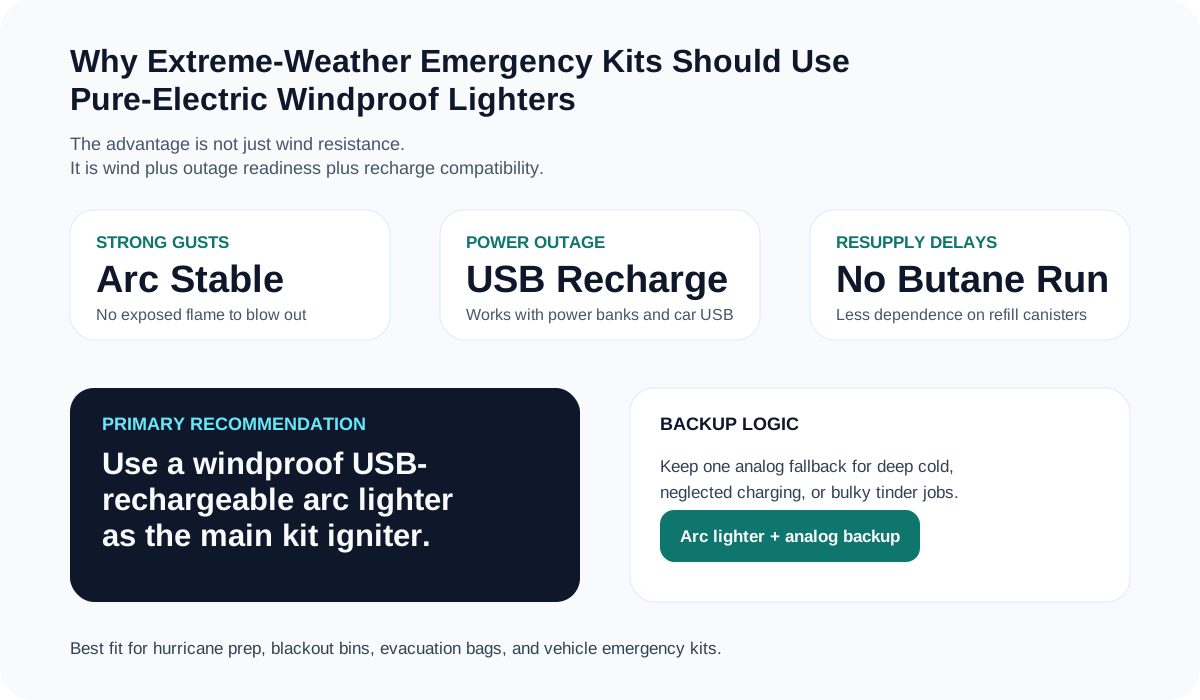
Why Extreme-Weather Emergency Kits Should Use Pure-Electric Windproof Lighters Instead of Traditional Gas Lighters
Extreme-weather kits work better with windproof USB-rechargeable arc lighters than traditional gas lighters when outages, gusts, and disrupted resupply become part of the scenario.
Executive Summary
For storm kits, blackout bins, evacuation bags, and vehicle emergency loadouts, pure-electric windproof lighters solve a more useful problem set than traditional gas lighters. They do not depend on butane refill access, they keep working in conditions where open flame becomes unreliable, and they can be recharged from the same infrastructure already recommended for emergency prep: power banks, vehicle USB ports, portable power stations, and solar-compatible charging setups.
That does not mean electric ignition should be your only backup. In true cold-weather or long-duration grid-down scenarios, a ferro rod or storm matches still make sense as secondary redundancy. But for the specific overlap of high wind + outage + delayed resupply, a USB-rechargeable arc lighter is the more rational primary tool.
That logic becomes even more relevant during the Atlantic hurricane season, where quiet news coverage can create false confidence. For the broader preparedness psychology behind that point, see our sister article on BestLighters: The Atlantic Hurricane Season “Calm” Trap.
Why This Matters in Extreme Weather
Federal emergency guidance still centers the basics: water, food, radios, flashlights, batteries, chargers, and backup essentials that can sustain a household for several days. Ready.gov specifically recommends a disaster supply kit with portable containers, backup batteries, chargers, and even matches in a waterproof container as an additional emergency supply. That is the key setup shift: once your kit already includes battery banks and charging gear, a rechargeable ignition tool stops being a novelty and starts fitting the rest of the system.
At the same time, NOAA continues to stress that even a below-normal Atlantic hurricane season is not a landfall guarantee and that one storm can still cause a disaster. A calm basin does not reduce the value of practical kit maintenance. It raises the odds that people delay it.
The Core Hardware Difference
Traditional gas lighters and pure-electric arc lighters fail in different ways.
| Condition | Traditional Gas Lighter | Pure-Electric Windproof Lighter |
|---|---|---|
| Strong gusts | Flame can bend, sputter, or blow out | Arc remains stable because there is no exposed flame |
| Long outage | Works only while fuel remains available | Recharges from stored USB power |
| Disrupted resupply | Needs butane canisters or replacement lighter | Needs only existing charging ecosystem |
| Wet cleanup / storm setup | Flame ignition can become finicky in gusts and spray | Still needs dry electrodes, but is less affected by crosswind |
| Everyday maintenance | Fuel level is often ignored until empty | Battery indicators encourage top-off habits |
This is why a pure-electric lighter belongs in the same decision category as a weather radio or a power bank. It is not just “a different way to make fire.” It is a battery-dependent emergency utility tool that integrates with the power stack many households already keep.
Decision Matrix: What Actually Changes During a Storm
The emergency question is not “Which lighter works in ideal conditions?” It is “Which one still fits the rest of the kit after wind, power disruption, and store closures enter the picture?”
The biggest gap is not wind alone. It is wind plus logistics. When roads are blocked, power is unstable, and local shelves are stripped, the better tool is the one that stays compatible with the gear you already charged ahead of time.
Why Windproof Beats Flame in the Real Use Cases
Storm prep usually involves tasks that are short, awkward, and outdoors-adjacent:
- lighting candles after a power cut
- igniting a camp stove or grill used during utility disruption
- starting tinder in gusty cleanup conditions
- relighting after repeated interruptions from wind and movement
A butane flame can absolutely work in some of those jobs. The problem is repeatability. We already broke down the wind side in Arc Lighter vs Butane Lighter in 30 mph Wind, where the practical takeaway is simple: once wind becomes a real variable rather than a mild inconvenience, arc tools separate themselves from open-flame tools very quickly.
That advantage is not theoretical in hurricane-adjacent weather. Even households that never plan to “survive outdoors” still end up using ignition tools in garages, porches, patios, driveways, balconies, and partially exposed spaces where gusts matter.
Why USB Recharging Beats Fuel Anxiety
Gas lighters look simple because they externalize their weakness. The problem only becomes visible when the fuel is low or gone.
Rechargeable lighters invert that logic:
- they expose battery status early through indicator lights
- they share charging cables with other emergency electronics
- they can be topped off before the storm instead of replaced after it
If your kit already contains a 10,000mAh or 20,000mAh power bank, then topping off a lighter is a very small energy cost relative to phones, flashlights, and radios. For households building around rechargeable gear, that makes the lighter more consistent with the rest of the loadout than a fuel-dependent disposable.
For adjacent charging strategy, see:
- Best Portable Backup Power for Hurricane Prep and Evacuation Kits
- Best Emergency Recharge Options During a Power Outage
- Best Portable Backup Power for Storm Prep and Evacuation Kits
- Best Plasma Lighters for Emergency Kits
Where Traditional Gas Still Retains an Edge
This is the part that keeps the recommendation honest.
Pure-electric lighters are not automatically superior in every emergency context.
Gas or analog backups still matter when:
- temperatures are well below freezing for extended periods
- you expect months-long storage without any charging discipline
- you need a broad open flame rather than a narrow arc gap
- your tinder is too bulky, wet, or poorly prepared for arc contact
That is why the strongest kit logic is not “replace everything with electric.” It is:
Use a windproof USB-rechargeable arc lighter as the primary modern ignition tool, and keep one analog backup for long-tail failure scenarios.
That same redundancy principle shows up in radios, lanterns, and charging gear. It should show up in ignition, too.
What to Buy for a Storm-Ready Lighter Setup
If the use case is extreme weather rather than casual candle lighting, prioritize the following in order:
- windproof arc ignition
- USB-C or common USB charging
- battery indicator lights
- safety lock / master switch
- enough reach for candles, grills, and utility tasks
- a storage case or dry pouch if the kit lives in a vehicle or garage
For readers comparing actual models rather than just the category logic, our storm-oriented shortlist starts with Best Plasma Lighters for Emergency Kits and Best Arc Lighters for Preppers Who Want Rechargeable Gear.
Final Verdict
For extreme-weather emergency kits, pure-electric windproof lighters make more system-level sense than traditional gas lighters. They align with the charging gear already recommended in disaster prep, they resist gust-related ignition failures better, and they reduce dependence on last-minute refill access.
The cleanest recommendation is straightforward:
- primary tool: USB-rechargeable windproof arc lighter
- secondary backup: storm matches or ferro rod
That combination gives you the everyday convenience of modern rechargeable gear without pretending batteries never fail. In real emergency planning, that is a much better answer than trusting a half-used gas lighter you forgot to check until the lights were already out.